The Medical Futurist – Read More
Longevity, especially the practical side of it, has become one of the biggest business opportunities in healthcare worldwide. Longevity clinics, practices, services and technologies have flooded the market, promising people a chance to live longer and healthier lives.
And while the word longevity often makes people think about cutting-edge biomarkers, biological age clocks, supplements, wearables, full-body MRI scans or expensive executive health packages, the simplest and most accessible practice remains much more ordinary: receiving regular medical checks and taking part in screening programs.
That sounds simple enough. In reality, I have written before about how hard it is to do it properly.
Either you have to pay extremely high fees to companies that take care of the whole process for you, combining laboratory tests, imaging, consultations, digital health data and medical interpretation into one comprehensive package; or you have to learn to do it device by device, test by test and specialist by specialist. In the latter case, you are lucky if you have a primary care physician you can discuss the results and next steps with.
This is one of the biggest practical gaps in preventive medicine today. We keep telling people to focus on prevention, early detection and lifestyle, but the system is still largely built around visits, waiting rooms, fragmented lab results and referrals.
But how about the middle part of this scale?
Something that is still done by physicians and medical professionals, but as quickly and comfortably as possible. Something more comprehensive than a smartwatch or an at-home lab test, but much less complex and expensive than a full longevity clinic package.
While thinking about this, I received an offer from MPCheck, a company based in Israel. A longevity screening service at my home.
What do they offer?
MPCheck offers mobile and home-based preventive medical screening services designed to make routine health checks more accessible and convenient. The company provides personalized medical examinations that can be performed at home, in the office, or at another client location, using digital questionnaires, portable point-of-care technologies, and medical staff when required.
Its services include rapid screening tests such as blood tests, urine tests, cervical cancer screening, hearing tests and other preventive examinations, with the aim of reducing the need for patients to visit multiple clinics or laboratories.
The process is built around convenience and personalization. Users first provide health and lifestyle information through a digital questionnaire, after which MPCheck recommends or arranges a relevant set of tests. The tests are then performed or collected, results are reviewed by qualified medical professionals, and users receive a summary with recommendations for follow-up where needed.
The company also positions its model for organizations, insurers and employers that want to offer preventive screening as part of employee health, workplace wellbeing, or risk assessment programs.
This is an important point. A service like this is not only relevant for health-conscious individuals who want a convenient snapshot of their health status. It could also become a model for companies that want to “bring healthcare” to their employees instead of asking employees to find time to visit multiple medical providers.
How did the screening go?
A medical professional came to my studio in Budapest and did the whole screening process in one hour.
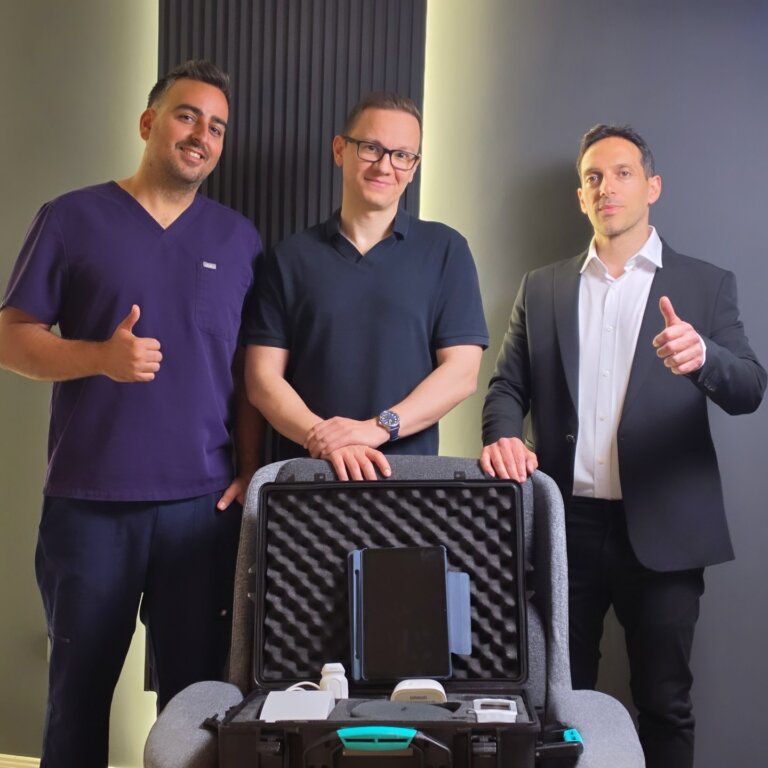
That was the most surprising part. Not the technologies themselves, as I have seen and tested many of them before, but the fact that so many measurements could be done in such a short and organized session without me having to go anywhere.
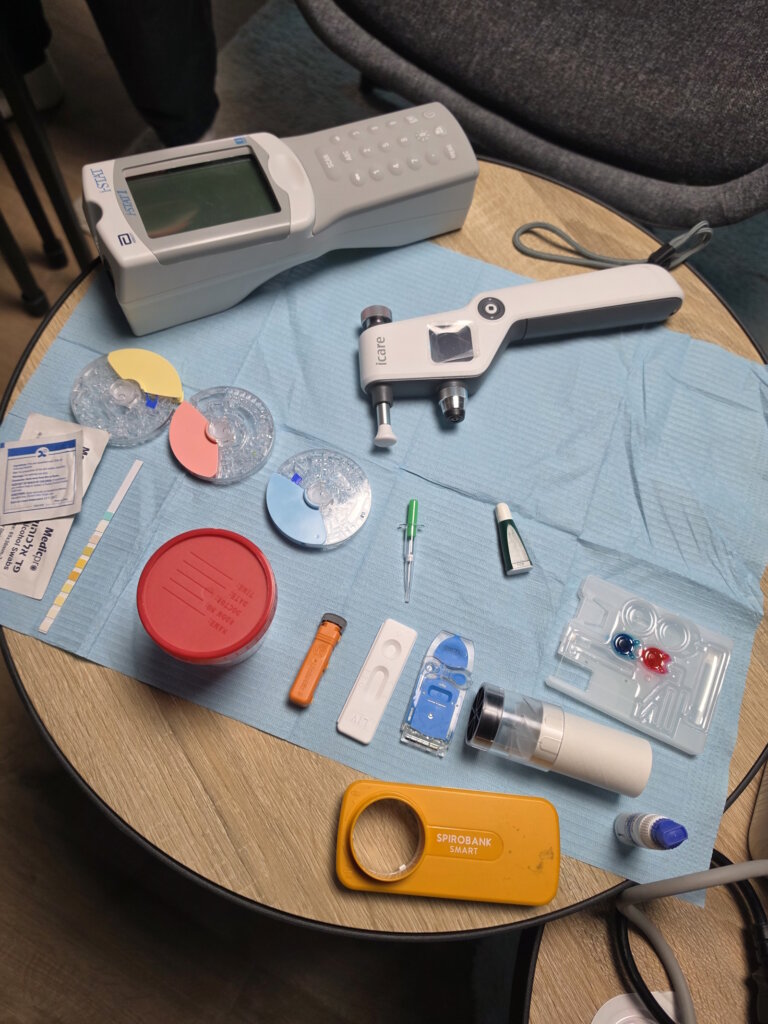
They performed all these during that time:
- Lipid profile, blood chemistry and HbA1c from a finger prick
- Urine test
- Blood pressure measurement
- 6/12-lead ECG
- Heart echocardiography
- Hearing test
- Spirometry
- FIT test
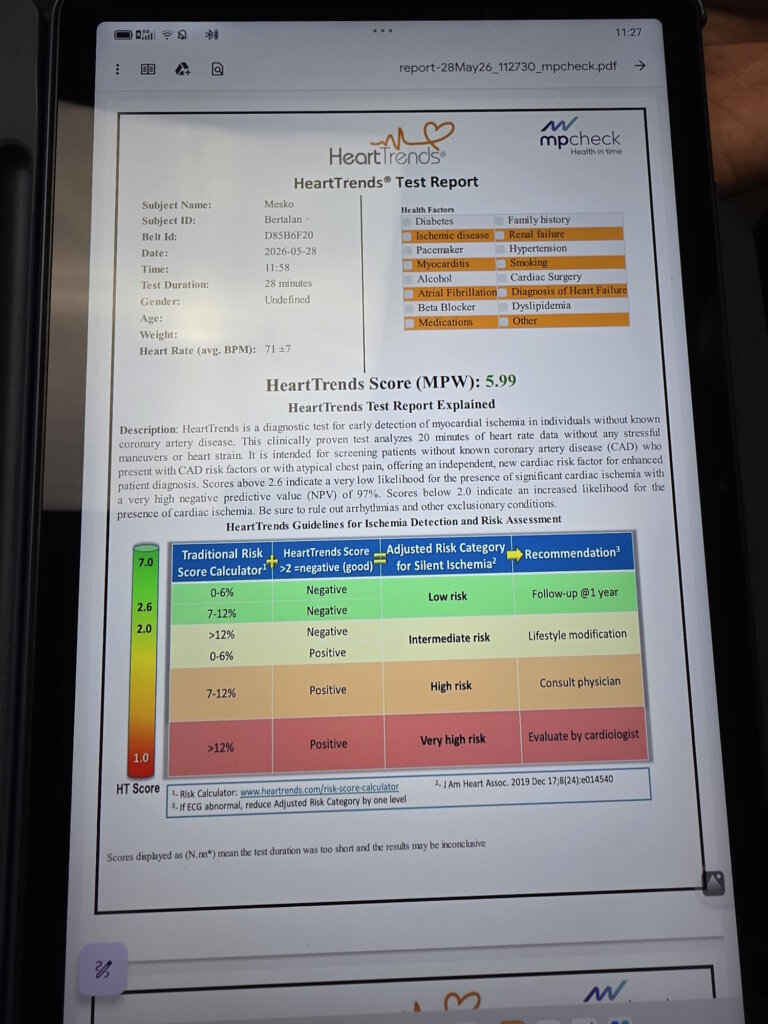
- Heart stress test based on ischemia and HRV
- Aortic aneurysm screening
Then I received the results and a PDF report, as well as the opportunity to discuss my questions with a physician.
The results were clean and understandable. Most measured systems were within the normal range or showed no clinically significant abnormalities. But the report did identify one practical optimization area: my lipid profile, especially LDL cholesterol.
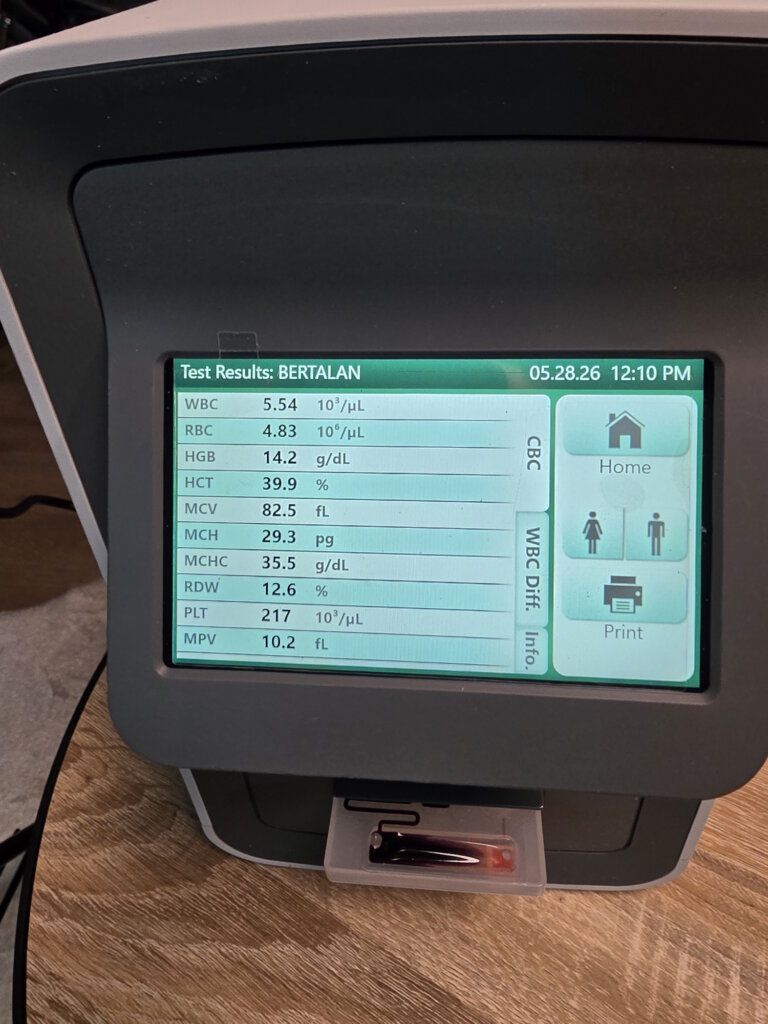
This was a useful example of what such screenings can realistically provide. Not a dramatic diagnosis, not a futuristic revelation, but a concrete, actionable nudge about something worth tracking and improving.
And while I am quite used to such tests and screenings, I still received a good tip or two. That is important because even people who are deeply familiar with their health data need interpretation. Data without context is just noise. Medical data without professional interpretation can even become anxiety-provoking.
There was one especially interesting outlier.
The AI that analyzed my heart ultrasound first estimated my cardiac age to be 55, while I am 41 and my biological age is around 36. Taken alone, that would sound worrying. But the physician explained why I should not interpret that score in isolation. The echocardiogram, ECG and ischemia screening did not show significant abnormalities, so this AI-generated number was best understood as a screening flag, not as a diagnosis.
This might have been the most important lesson of the whole experience. As more screening tools and portable devices include AI-based interpretations, we will increasingly see outputs that look precise but still require medical judgment. A single number can be misleading, especially when the technology is still improving, the clinical context is incomplete, or the measurement conditions are not ideal.
This is why the physician layer matters. Without that, a false or confusing result could easily lead to unnecessary worry or inappropriate follow-up.
I also had a very positive outlier around my HeartTrends Score. It’s worth doing all those exercises.
Where does this fit in the longevity landscape?
From individuals using digital health devices and at-home lab tests to getting a comprehensive longevity package like the one I had and shared with you last year, this approach stands in the middle.
It is not a replacement for a full medical workup. It is not a substitute for longitudinal care. And it cannot provide the depth of a comprehensive longevity clinic package that includes advanced imaging, genomics, microbiome analysis, continuous glucose monitoring, detailed consultations and long-term follow-up.
But it does something very useful: it lowers the friction of preventive screening.
That might sound less exciting than the newest biological age test, but in healthcare, convenience is often the difference between people doing something and not doing it at all.
I can easily imagine companies bringing healthcare to their offices this way, where one physician or medical team can screen a dozen people a day. For many people, that could be their first meaningful interaction with preventive medicine in years.
It also shows a possible direction for the future of screening: decentralized, portable, data-driven and supported by physicians. Instead of forcing every patient to navigate a fragmented system, parts of the system could come to them.
But this model should still be understood as screening, not diagnosis. It can identify signals, risk factors and areas for follow-up. It can lower the friction of preventive medicine. But it does not replace longitudinal care, a trusted physician, or the need to track important biomarkers over time.
Pros
- The whole process is done in one hour.
- You receive a comprehensive report and can talk with a physician.
- They use advanced digital health and medical technologies in a portable format.
- It significantly reduces the logistical burden of screening.
- It could work well for employers, insurers and organizations that want to offer preventive health checks at scale.
- It provides a useful health snapshot for people who otherwise might postpone routine checks.
Cons
- It has to take place in one setting and in person.
- It can only capture one time point in your health status.
- Some scores can be misleading as the devices they use constantly improve.
- The most useful findings, such as lipid optimization, still require long-term behavior change and repeat testing.
My conclusion
The future of healthcare will be shaped by services that make basic, evidence-based preventive care easier to access and easier to act on.
A one-hour home-based longevity screening will not solve the systemic problems of healthcare; it will not replace physicians, regular check-ups or the need for lifestyle change. But it can make the first step much easier, especially at large companies and organizations where employees’ health matters.
And in preventive medicine, making the first step easier might be one of the most important innovations of all.
The post When A Longevity Screening Come To Your Home appeared first on The Medical Futurist.