Healthline News RSS Feed – Read More
- A new study suggests that swapping high carb snacks for nuts can help curb sweet cravings.
- Participants at risk for metabolic syndrome who made the switch also tended to increase their protein intake.
- Nuts are high in satiating nutrients like healthy fats, protein, and fiber.
- If you’re allergic to tree nuts, seeds can make a good substitute.
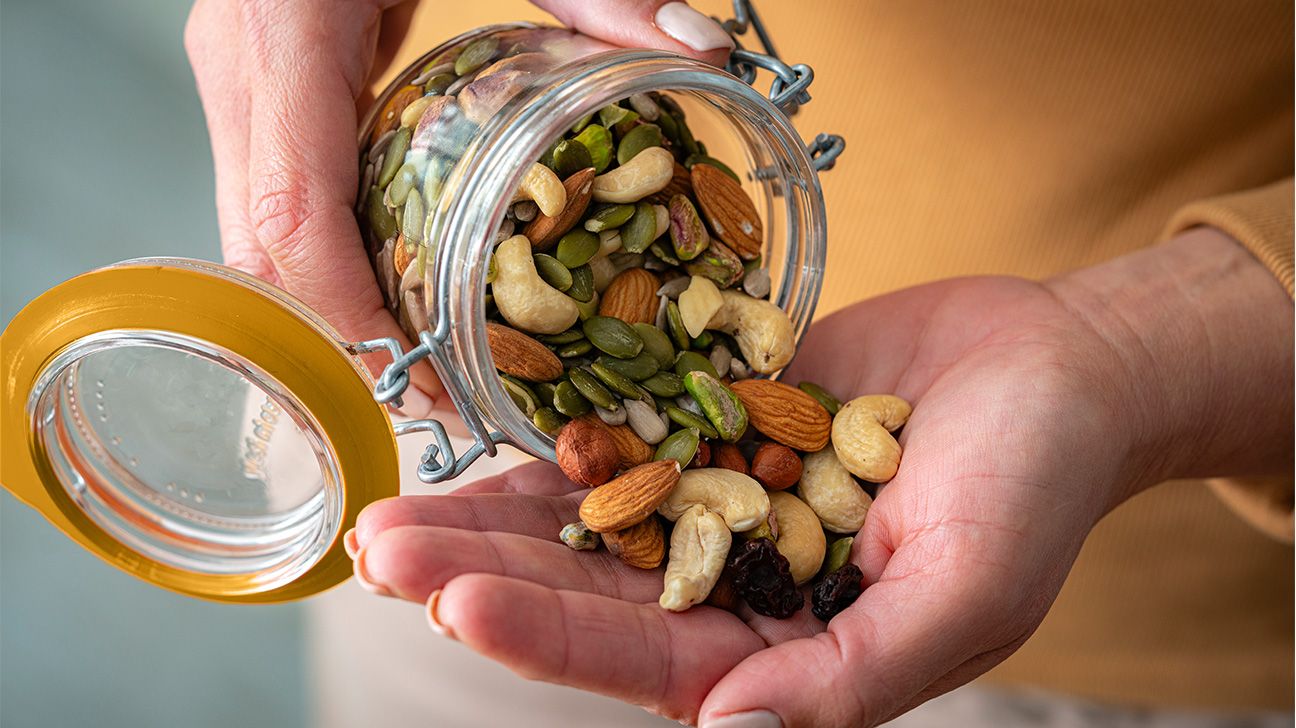
Swapping your usual between-meal snacks for a handful of mixed tree nuts could help cut cravings for sweets and fast food and improve the overall quality of your diet.
That’s according to a new study published on December 2 in Nutrients.
Researchers found that young adults at higher risk for metabolic syndrome who snacked on nuts daily for 16 weeks reported fewer urges for sugary and salty treats, ate more protein-rich foods, and scored better on a measure of diet quality.
Here’s what you need to know about the metabolic health benefits of nut consumption.
Nuts vs. high carb snacks
The research team at Vanderbilt University Medical Center recruited 84 males and females between the ages of 22 and 36.
All participants had at least one risk factor for metabolic syndrome — a cluster of conditions, such as high blood pressure, excess belly fat, and abnormal cholesterol levels, that raise the risk for heart disease and diabetes.
To qualify, participants had to have maintained a stable weight for at least three months and fall within a specific body mass index (BMI) range.
Those with nut allergies, chronic diseases like diabetes, or certain lifestyle factors such as smoking were excluded.
Before the main part of the trial began, everyone went through a two-week “run-in” period, eating a balanced diet that included typical high-carbohydrate snacks but no nuts.
After that, participants were randomly assigned to one of two groups:
- Tree nuts snack group: Ate a 33.5-gram mix of unsalted raw almonds, walnuts, pecans, macadamia nuts, hazelnuts, pistachios, and cashews twice a day.
- High-carbohydrate snack group: Ate snacks such as pretzels, animal crackers, graham crackers, or granola bars twice a day.
Both snack types were similar in calories, protein, fiber, and sodium, and were eaten between 6:00 a.m. and 6:00 p.m.
Participants met with registered dietitians every two weeks to receive counseling and their pre-portioned snacks.
The study lasted 16 weeks, during which researchers measured food cravings, daily food intake, and overall diet quality at both the start and end. They also collected blood samples to look at hormones related to appetite.
Nuts led to fewer sweet cravings, higher protein intake
By the end of the study, the nut-snacking group showed notable changes in their eating habits and cravings.
Participants who ate tree nuts reported:
- Less craving for sweets and fast food: Ratings for cravings dropped for items like cookies, brownies, donuts, candy, ice cream, chips, and pizza. For example, cravings for brownies fell by nearly half a point on a five-point scale, and cravings for cookies dropped by more than 0.6 points.
- Reduced preference for sweet taste: About 12.5% fewer people in the nut group said they preferred sweet flavors compared to at the start of the study.
- Eating fewer sugary and salty snacks: The frequency of eating frozen desserts and salty snacks went down.
- Eating more protein-rich foods: On average, they increased their daily servings of protein foods, especially from seafood and plant-based sources, by more than four servings.
These changes were linked to shifts in certain appetite-related hormones.
In the nut group, levels of GLP-1 — a hormone that can help regulate appetite — increased, and this rise was associated with reduced cravings for cakes, brownies, candy, and ice cream.
Furthermore, the nut group’s overall score on the Healthy Eating Index (HEI), which measures how well a person’s diet aligns with national dietary guidelines, improved by 19%. This bump reflected a higher intake of healthy unsaturated fats and protein-rich foods, as well as a lower intake of sodium and refined grains.
In contrast, the high-carbohydrate snack group did not see significant changes in food cravings or diet quality. In fact, they showed a small decrease in fruit consumption, an increase in daily calorie intake of approximately 350 calories, and an average weight gain of roughly 0.8 kilograms (about 1.8 pounds) over the 16-week period.
The nut group, on the other hand, did not gain weight, even though they were eating calorie-dense snacks. While they ate about 468 grams less total food by weight each day, their overall calorie intake stayed about the same. Hunger and fullness ratings did not change significantly in the nut group, suggesting they felt just as satisfied as before.
The findings suggest that replacing typical snack foods with a modest portion of mixed tree nuts may help young adults at risk for metabolic syndrome steer away from less healthy foods and make choices that improve the overall quality of their diets, without unwanted weight gain.
How nuts help reduce cravings for sweets
Kezia Joy, a registered dietitian and medical advisor with Welzo, noted that replacing higher-carbohydrate snack foods with nuts can help reduce cravings due to the balanced nutrients within nuts. Joy wasn’t involved in the new study.
They contain a high amount of fat, protein, and fiber.
“The slow digestion of these nutrients creates steady blood sugar and enhances feelings of being satisfied for longer periods,” she told Healthline.
Joy additionally noted that eating nuts helps regulate blood sugar.
“Steady blood sugars are associated with fewer or no fluctuations in blood glucose (spikes [and] drops), and the less frequent the spikes and dips, the less likely your body is to send signals of ‘urgent’ need for energy via hunger/cravings,” she said.
Joy concluded by saying that chewing nuts also requires more time and effort relative to other foods.
“[T]his additional time, along with providing a greater feeling of fullness, contributes to enhanced satisfaction post-meal and supports better long-term appetite regulation,” she said.
Guidelines for healthy nut consumption
Jacqueline A. Vernarelli, associate professor of Public Health and Director of Research Education and Consultation, College of Health Professions, Sacred Heart University, suggested aiming for about a quarter cup of nuts.
“Mix it up, literally and figuratively,” said Vernarelli, who wasn’t involved in the new study.
Vernarelli told Healthline that there are a variety of nuts — including almonds, cashews, walnuts, Brazil nuts, and macadamia nuts — that make a great high protein, satiating snack.
“Be sure to choose whole, raw or dry-roasted varieties,” she said, “and choose unsalted nuts when possible, as salted or flavored varieties are typically high in sodium.”
Allergic to tree nuts? “Seeds are a great protein-packed option,” said Vernarelli, “especially sunflower and pumpkin seeds.” They also contain healthy fats and fiber.
According to Joy, other alternatives to tree nuts include roasted legumes, such as roasted chickpeas and roasted edamame.
“Other balanced options that will help you feel full and aid your metabolism without the risk of an allergic reaction [from nuts] are Greek yogurt, hummus with vegetables, and whole grain foods eaten with a spread made from seeds,” she said.