Latest Stories – Pain News Network – Read More
By Pat Anson
Imagine what it would be like to know – with over 90% accuracy – that you’re going to have a migraine tomorrow.
You’d be able to plan ahead. Change your schedule. Get extra sleep. Stay hydrated. Avoid stress. And make a point of taking that migraine prevention drug that you often forget to take.
You may not be able to prevent tomorrow’s migraine, but you could reduce its severity.
A wearable neuromodulation device called Nerivio makes that advance warning possible, according to a new study published in the journal Neurology. Sponsored by Theranica, the maker of Nerivio, the study is based on an analysis of data from over 53,000 people who used the device for nearly five years.
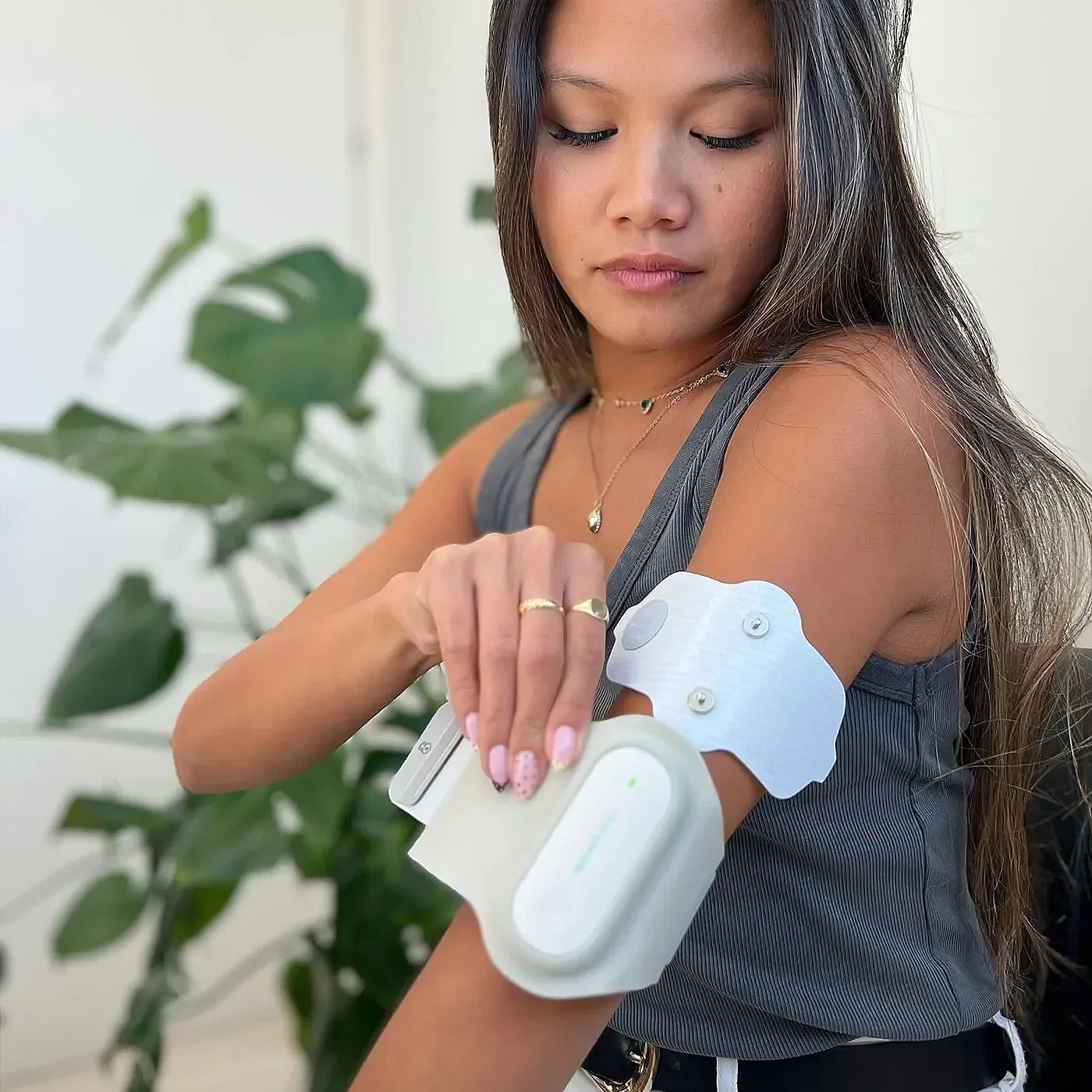
Nerivio is worn on the upper arm and controlled by a smartphone app that uses mild electrical pulses during 45-minute treatments to disrupt migraine pain in the brain. The device also collects a lot of data about users, such as the frequency and severity of their migraines, aura and other symptoms, demographic data, and even the weather where they live.
Using machine learning and artificial intelligence, Nerivio’s Your Day Ahead feature uses data from the app to predict the likelihood of a migraine over the next 24 hours with 91.2% accuracy. The app doesn’t diagnose migraine, but it does help patients take control of their lives by enabling them to plan ahead for a migraine attack.
Migraine experts have known for decades that patients have certain tendencies that can signal a migraine may be coming. They might have an aura, mood changes, yawn more frequently, or have muscle stiffness. These are known as “prodromal” symptoms.
But Theranica researchers found that those early warning signs contribute just 11% of Nerivio’s predictive performance. The stronger signal is the rolling average of a patient’s headache severity over the preceding 30 days. It turns out those long-term headache patterns are more of a tell than the prodromal cues.
“What this analysis suggests, in the largest dataset reported to date, is that the strongest predictive signal isn’t in that narrow pre-attack window. Instead, a patient’s own recorded pattern of headache severity over the preceding month turns out to be the most informative signal in the model,” said Chia-Chun Chiang, MD, Associate Professor of Neurology and a Headache Specialist at the Mayo Clinic.
“That’s a meaningful shift in how we think about forecasting migraine risk, and it matters for patients. Consistent, longitudinal patient-reported data isn’t just a record of what’s happened — it may be a window into what’s likely to come next.”
Migraine affects about 39 million people in the United States and 1.1 billion worldwide. In addition to headache pain, migraine can cause nausea, blurriness, and sensitivity to light or sound. Women are three times more likely to suffer from migraines than men.
The Nerivio device is FDA-approved for acute and/or preventive treatment of migraine in patients 8 years of age or older. Controlled by the user through the app, Nerivio provides relief during attacks and, when used regularly, helps reduce migraine frequency. The Your Day Ahead feature comes with the Nerivio app.
Nerivio is only available by prescription and is covered by many insurers. Commercially insured patients usually pay $49 for their first device, with refills and replacement units capped at $89. Each device or refill kit provides 18 separate 45-minute treatments. Without insurance, the cost ranges from $600 to $800.