
MedTech Intelligence – Read More
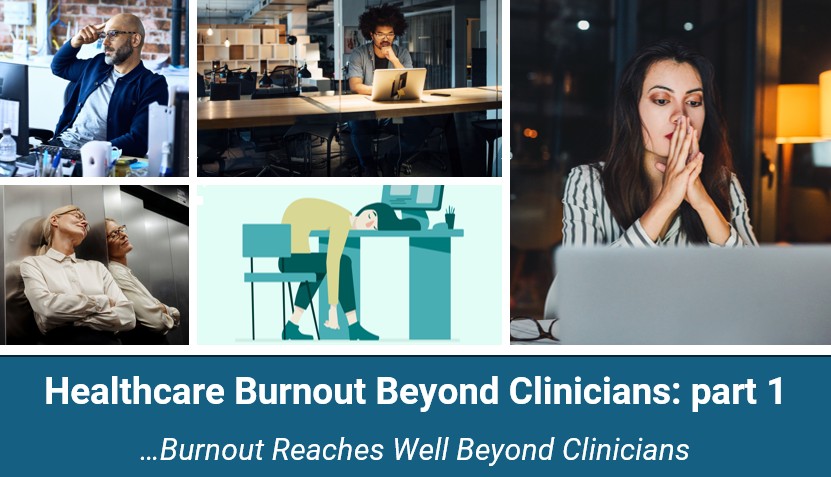
Clinician burnout dominates the conversation, but the administrators running simultaneous EHR migrations, AI pilots, CRM builds, and payer renegotiations are shouldering a transformation workload that most of the industry doesn’t see, and it’s taking a toll.
This 4-part series explores contributing factors – the operational risk of AI pilots that aren’t integrated with EHR infrastructure, how organizations are using workflow redesign to offset staffing shortages, or why contract negotiation has become a core strategic skill for healthcare administrators – and the shared burdens among healthcare leadership and their teams. Melissa Corneal, MBA, and Healthcare Administrator at Island Doctors in St. Augustine, Florida, discusses healthcare Burnout across the healthcare ecosystem and how MedTech is both, a solution and a problem.
Read part 1 of this series below…
Burnout Beyond Clinicians
At 8:12 a.m., the inbox is already full. Emails from IT about an EHR migration issue overnight sit next to a vendor follow-up on an AI pilot that needs revised data inputs. There’s a note from finance asking how a payer contract change will affect reimbursement timing, along with a reminder about a CRM build milestone that slipped two days.
By 9:00 a.m., the meetings start. Three, sometimes four, running in parallel: an EHR workstream, an AI pilot check-in, a revenue cycle discussion, a compliance review. You join one, monitor another, and delegate the third. This is the “divide and conquer” model in practice. It exists because the work no longer fits inside a single thread of execution.
Burnout in healthcare is most often framed around clinicians. That focus is warranted, but it does not reflect where transformation work is actually being carried. Healthcare burnout reaches well beyond clinicians. Administrative and operational leaders are managing simultaneous EHR migrations, AI pilots, CRM builds, and payer renegotiations, often at the same time, often with shared dependencies, and often without any reduction in day-to-day responsibilities.
But the issue is not just volume. It is concentration. The same group of people is carrying the majority of the responsibility for making these efforts work. As more initiatives are introduced, more stakeholders are involved and more people are at the table. But that does not always translate into shared ownership. In many cases, it increases coordination demands on the same operational leaders responsible for execution.
From the outside, transformation looks structured. Inside the organization, it overlaps. The same data is needed across multiple efforts. The same stakeholders are required in different places at the same time. The same decisions affect multiple systems downstream. The work layers, and the responsibility concentrates.
Research published in JAMA has shown that administrative burden and workflow complexity are strongly associated with burnout, particularly when work extends beyond clearly defined roles. A Health Affairs analysis also notes that as digital transformation expands, coordination demands increasingly shift to non-clinical roles. That shift is not evenly distributed. It concentrates in operational leadership.
This is where the conversation often goes wrong. It is easy to frame this as a capacity issue, but it is not just that. It is a distribution issue.
More initiatives are being launched and more stakeholders are involved, but the responsibility for connecting everything, aligning decisions, and ensuring execution still sits with the same core group. This is why the workday looks the way it does: overlapping meetings instead of sequential ones, constant inbox triage instead of structured decision cycles, delegation without full context followed by rework, and alignment happening after decisions, not before.
The system is not lacking activity. It is lacking balance.
Some organizations are already adjusting, not by slowing transformation, but by changing how execution is structured. They are expanding true ownership, not just participation, recognizing that more people at the table is not enough without clear accountability for decisions and outcomes.
They are also structuring work around integrated programs rather than isolated projects, grouping related initiatives under shared governance and aligned timelines. At the same time, they are reducing unnecessary coordination points. Not every decision requires a meeting, and clear decision rights reduce the need for constant alignment.
Finally, they are making operational capacity visible. Workload is often underestimated because it is spread across initiatives. When it becomes visible, prioritization improves.
For organizations, this improves execution. For medtech companies, it improves adoption.
When responsibility is distributed effectively, operational teams have the capacity to implement and sustain new solutions. When it is not, even strong solutions struggle to gain traction.
The issue is not that healthcare organizations are taking on too much transformation. It is that execution has not evolved to match it.
The same people are still carrying the system forward. That does not need to change because the work is impossible.
It needs to change because the way the work is structured no longer fits the reality of how much is being asked of it.
Read Melissa’s full series Healthcare Burnout: It Reaches Well Beyond Clinicians
Part 1 – Burnout Reaches Well Beyond Clinicians
Part 2 – Positioning AI pilots for success within EHR-integrated environments
Part 3 – How Workflow Redesign Is Helping Healthcare Organizations Offset Staffing Shortages
Part 4 – Why Contract Negotiation Has Become a Core Strategic Skill for Healthcare Administrators
The post The Healthcare Burnout Backlash (pt 1): Burnout Reaches Well Beyond Clinicians appeared first on MedTech Intelligence.