
HealthPopuli.com – Read More
Lower financial well-being and worsening financial conditions have been linked to declining brain function, according to new research from a team at the Columbia Mailman School of Public Health. The research, Changes in financial well-being and memory function and decline in middle-aged and older adults, was published this month in the American Journal of Epidemiology.
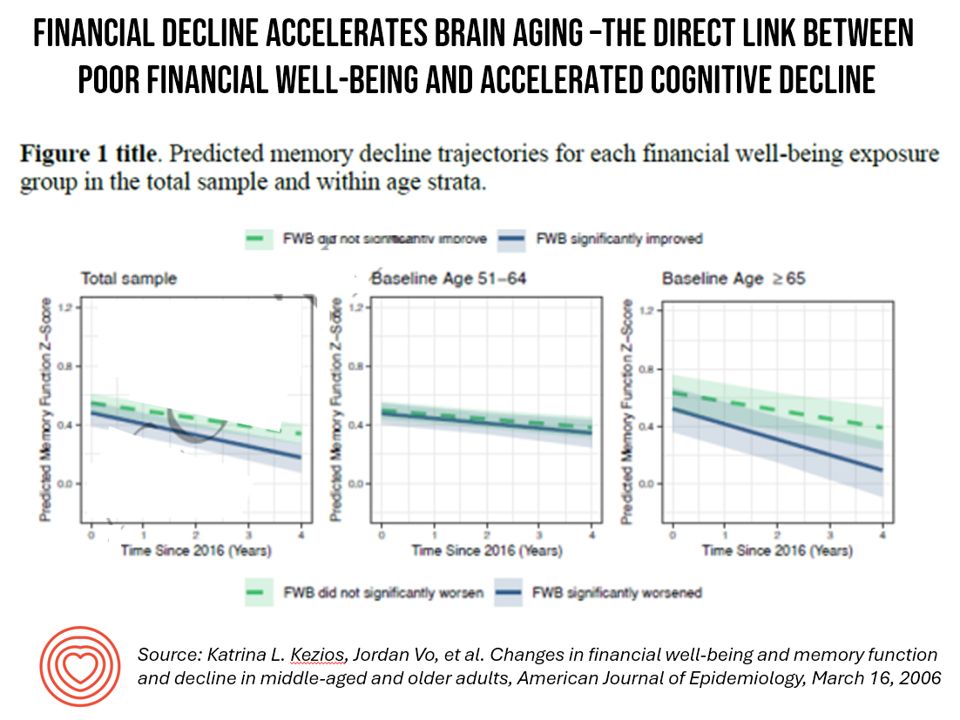
“Worse financial well-being in midlife and older age — and especially declines over time — are associated with lower memory scores and faster cognitive decline,” the study notes — among the first to scrutinize the relationship between brain health and poor financial well-being.
The methodology of the study used an 8-item index applied to data from 7,676 adults ages 50 and over, looking at “material hardship” such as difficulty paying bills, low income, and reduced access to basic needs, along with peoples’ perceived sense of financial dissatisfaction and stress.
It’s important to note that eventual financial improvements were not found to “rescue” — enhance or reverse — declining cognitive scores.
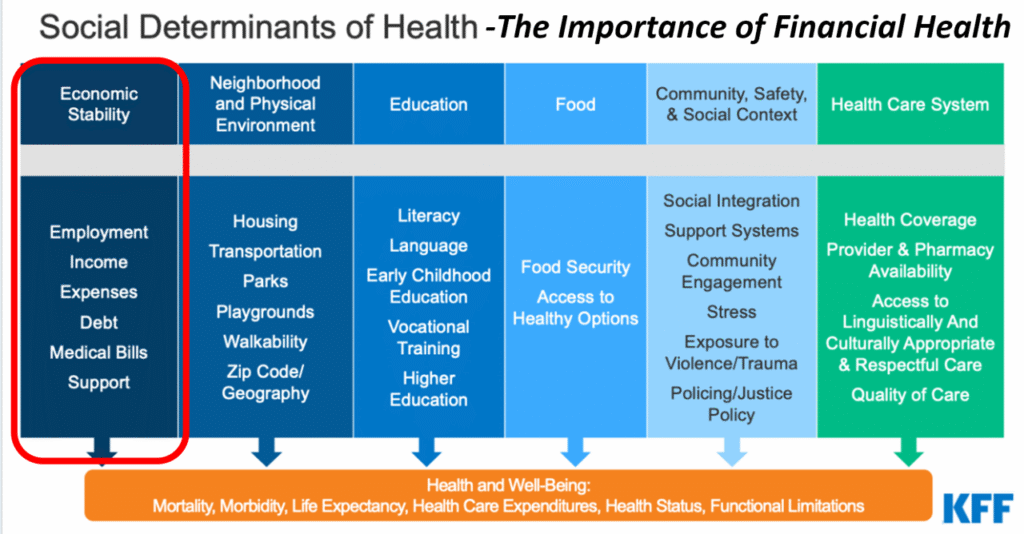
Health Populi’s Hot Points: Financial well-being — economic stability and security — is one of the key pillars of the social determinants of health (SDoH) as illustrated here on this chart from Kaiser Family Foundation.
What underlies economic stability are factors such as employment (think: a steady, consistent job), income earned, household expenses and debt (e.g., student loans, buy-now-pay-later commitments), medical bills, and child support).

I snapped a photo from my current issue of AARP The Magazine (dated February-March 2006) which features a section on “Money Stress” and how to tame it.
AARP’s community is made up of people 50+ years of age, so this research represents the very population for which AARP advocates.
Even with the safety nets of Social Security and Medicare to address medical and financial security for older Americans, the median savings at retirement age of 65 is $200,000.
That’s less than what a retiree in 2026 would need to cover health care costs in retirement, according to EBRI. Specifically,
“To have a 90 percent chance of meeting their health care spending needs in retirement, a man will need to have saved $212,000, and a woman will need to have saved $252,000. Couples enrolled in a Medigap plan with average premiums, meanwhile, will need to have saved $267,000 to have a 50 percent chance of covering their medical expenditures in retirement and $405,000 to have a 90 percent chance.”
The cognitive-financial research study notes a “vulnerability gap,” an association between financial stress and cognitive decline strongest among adults 65 and over, “who often have fewer options for financial recovery” as described by Neuroscience News.
The current health news cycle is trending toward stories about longevity as well as brain health. We should keep financial health top-of-mind when we are brainstorming new businesses and policies related to these popular topics — because they connect directly to financial well-being, a key pillar-driver of health.
Thanks to Dr. Jordan Shlain for the hat tip on the study,
The post The “Five-Month” Cognitive Penalty of Financial Decline: A Significant Loss of Financial Well-Being Correlates with About Five Months of Cognitive Decline A Year appeared first on HealthPopuli.com.