
HealthPopuli.com – Read More
In full transparency, I’ve been a fangirl of Kara Swisher since I first read her work with Walt Mossberg and Recode, coinciding with my own work on the early adoption of the Internet in health care. Today, Swisher is everywhere all-at-once, covering technology, politics, and now, seeking truths about the so-called longevity economy.
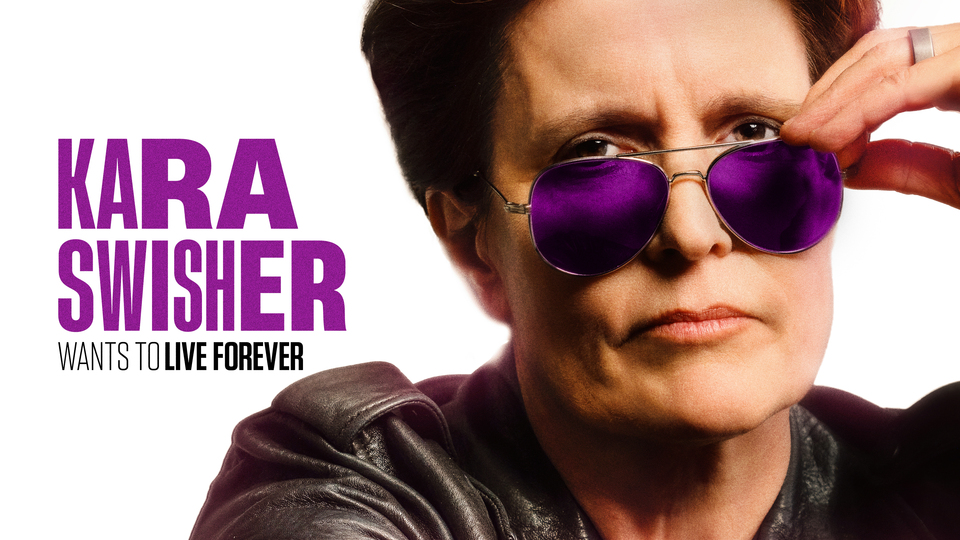
Swisher appeared with Nicolle Wallace on her podcast, The Best People, on 13th April, so I was keen to tune in. The conversation covered a lot of ground, and it was Swisher’s take on science and health that I was most interested to hear.
About 48 minutes into the session, Swisher provided the sound bite-insight I was seeking: that, “the #1 longevity hack is ‘don’t be poor.’”
With my being a health economist advising the broad health ecosystem for 30-some years, Swisher was preaching something to this choir-of-one that I’ve known-I’ve-known for years: that the basic drivers of health are things outside of the medical care system like education, healthy and accessible food, transportation, safe places to walk and play, and of course a good stable fair wage paying job (that, from a U.S. perspective, comes with health benefits). 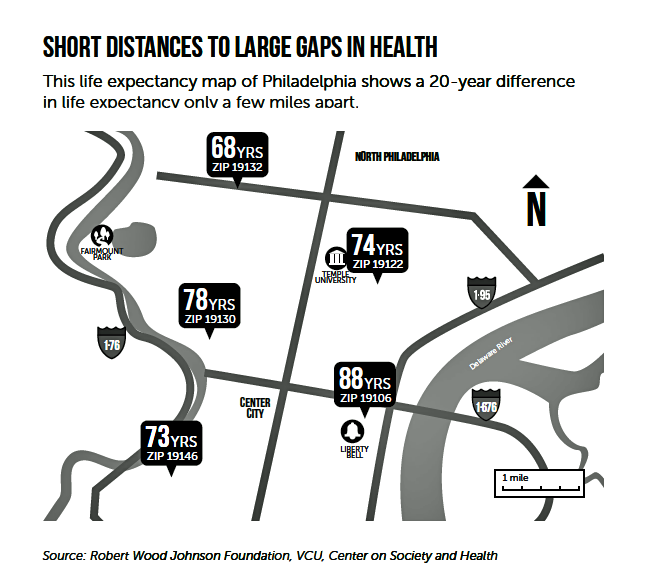
As Swisher went on to explain, factors like homelessness, lack of day care for children, and job and financial stress all feed into (or erode) the health status of a community and individuals who live in their ZIP code — the old mantra from public health guru Dr. Tony Iton being, “Your ZIP code is more important as your genetic code.” This graphic comes out of my 2019 book, HealthConsuming, which illustrates different life-spans (longevity) found in different ZIP codes in greater Philadelphia — from the most affluent neighborhood of Society Hill and Olde City near the Liberty Bell and Independence Hall (ZIP code 19106) to a lesser-well-to-do area, 19132, with achieved a life expectancy of 68 years: a 20-year difference just miles from each other.
When it comes to “longevity,” Swisher discussed the current go-go bullish marketplace of longevity solutions and stuff sold with the intention of bolstering peoples’ longer life, mostly sold without evidence bases or FDA regulatory scrutiny.
She asserted that the objective of longevity products and services should not be to “add a second to your life, but to make your life better while you are here.”
And that should include “all of us,” Swisher believes — not just for the most affluent in society.
Health Populi’s Hot Points: Earlier this month, the New York Times published a well-researched piece by Dana Smith titled “What, Exactly, Is Longevity Medicine?” beginning, “Longevity medicine is a confusing brew of noble intentions, cutting-edge care and expensive snake oil. That’s partly because there is currently no board certification, nor official guidelines, for practicing longevity medicine (also called geromedicine) in the United States.
Smith quoted someone’s experience I’ve long valued, Dr. Jordan Shlain, who called out that, “Longevity medicine can be kind of a bit of quackery, rebranded. Biomarkers give a veneer of rigor, and the supplements give it revenue, and the patient gets neither longevity nor honest conversations about things.”
I’ll take a contrarian view here, through Swisher’s lens, and return to basic drivers of health which for a human, begin even before we are conceived — a healthy Mom before conception provides a healthy growing environment for a fetus, and during the Mom’s nine months of pregnancy, prenatal care, healthy food, a stable home environment, and sound mental health contribute to the newborn’s health.
In youth, adverse childhood events scar a young person often for life, with a deep research library of evidence on ACEs and impacts on human health through life. Education fuels literacy, human capital, and brain health….which all contribute synergistically to longevity.
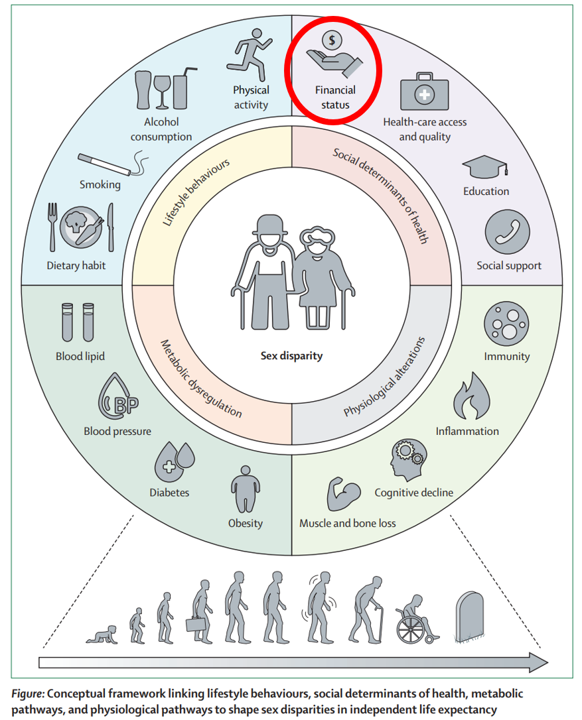
Swisher’s identification of a poverty-avoidance hack for longevity is spot-on and in its elegantly simply way, informs public policy options and bundles: looking closely into the last graphic, clipped from a Lancet research article on longevity and drivers of health in a large sample population in China, we can spot various policy options for lifestyle behaviors, physiological alterations, and those hugely influential social determinants of health that shape lifespan.
There’s a further longevity-health driver that Swisher talks about, particularly in conversations with Professor Scott Galloway in their Pivot podcast program — that is social health and personal connections. The Healthy China 2030 study found strong correlation, particularly for women, when taking into account loneliness versus social cohesion.
Do listen to the full podcast conversation between Swisher and Nicolle Wallace: you’ll come to appreciate the inter-relationships between the factors in the “wheel” diagram in the context of a very current read on America’s socio-economic-political landscape which Swisher so wittily and intelligently discusses.
The post “The #1 longevity hack is ‘don’t be poor’” — Kara Swisher is a health economist appeared first on HealthPopuli.com.