TIME – Read More
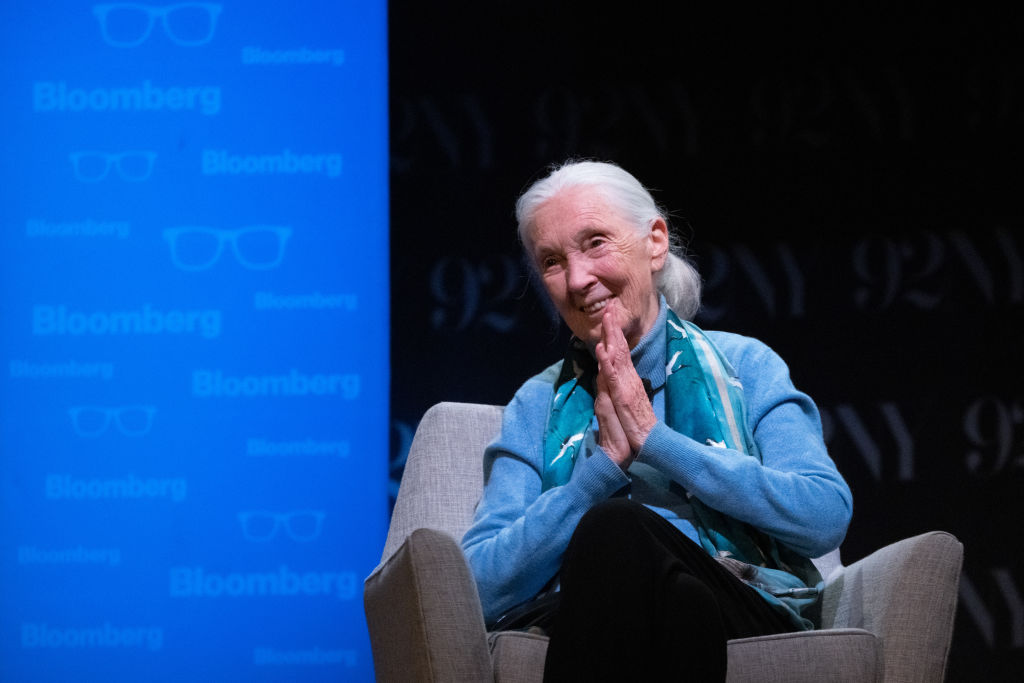
A year ago today, when Jane Goodall died in Los Angeles, the world lost an icon. I lost one of my oldest, closest friends. Thinking both about that moment and how we should mark this one, I hear her voice urging us to look forward, as fervently as she always did—to the future she spent years preparing others to build, and, above all, to the youth she inspired to follow her.
Years ago, as Jane and I shared a quiet dinner alone in New York during one of her tours, she drolly recounted an incident from her lecture the previous evening. She had filled a very large old theater with people keen to hear her share her history and hopes. After her talk, two long lines of eager questioners filled the aisles. A young girl gushed, “Oh, Dr. Goodall, you’re so amazing! You’ve done so much! What is your next big project?”
Jane’s response was clear, quick, and simple: “My next big project? Death!”
The whole house gasped. Silence followed. Gently, Jane continued: “Let’s be clear. I’m over 80. I travel over 300 days a year. Of course, there’s so much that I still want to do, but no one lives forever. At some point, death becomes the next step. And, as someone who has always looked forward to the next adventure, I’m actually curious about it.”
When, the following night, I joined Jane for dinner at her hotel in Manhattan, bringing vegetarian curries and a bottle of scotch, a combination we both adored, and she described this exchange, I nearly choked on my drink at her unexpected punchline, sputtering, “You really said that?”
She nodded mischievously. But, beneath her smile, I sensed something else. I saw her beginning to prepare the world for a time when she would no longer be here to carry on her work. She was shaping her legacy, focusing forward.
That effort could be traced to her very beginning—and ours. In 1957, my mother, Helen Illick, was appointed Assistant Director for Systematic Biology at the National Science Foundation (NSF) at only 31 years old. Vetting grant applications, she discovered one that captivated her completely: it would support another young woman, one researching chimpanzees in Africa. My mother championed it, and the NSF awarded a generous grant that helped fund Jane’s first field work. The legend, the legacy, and the role of youth in both began right there.
Jane always loved that our mothers, who had shaped our lives most, had been connected from the start, when the funding that my mother helped secure allowed Jane’s mother to join her daughter in her first months in the field. But later, my own work, which took me into conflict zones in Africa, bound me to Jane in even deeper and more direct ways.
Rwanda, during its 1994 genocide, was the most harrowing mission I ever went on for the United Nations. Shattered by what I saw there, I reached out to Jane the moment I returned. We spoke quietly together of the horrors I had witnessed. Then I asked her, “How did you cope when you saw the chimps go to war, when they killed each other right in front of you?” Her eyes filled with a sorrow that mirrored my own.
“I was horrified, Henry—absolutely horrified. But, after the fighting ended, I saw them forgive. They rebuilt their communities and their lives. In many ways, they’re better at forgiveness than we are. I’ve always hoped that we might learn that from them, one day.” We both felt how far away “one day” was in that moment, but that ember of hope still anchored us.
I, however, was not the only troubled youth then turning to Jane. As the Cold War receded and the world briefly brimmed with an optimism that Jane captured and conveyed beautifully, young people—with no direct memory of the World Wars or Cold War—sometimes reflected something different back to her. Some would seek her out privately after she spoke and admit, “I don’t see your reason for hope. I don’t understand it. And I don’t share it.” Gauging the world from a very different starting point, they reached conclusions about its future that history has since often proven prescient.
Jane heard them. Their concerns increasingly shaped her voice, her vision, and her work. In 1991, at Gombe, her research station in Tanzania, she met with 12 teenagers. Their conversation led to the founding of Roots and Shoots, the youth program of her institute, which now has active groups in 75 countries.
When Jane became a United Nations Messenger of Peace, one of these groups proposed building and flying a giant kite in the form of a dove to celebrate both her appointment and the International Day of Peace. When Jane and I joined them, we watched them assemble it. The two tallest teens carried the dove’s papier-mâché head; others unfurled old white bedsheets for its wings, body, and tail. Then the wind caught their creation, and the dove rose into the air. Looking at their faces, we saw how beautifully their hopes rose with it. Then Jane’s hand landed lightly on my arm. As I turned to meet her gaze, I was amazed: her face—always beautiful—was absolutely luminous. She was profoundly, radiantly happy. Then I understood: these youth were helping her keep her own hope aloft as well.
What made that moment so powerful for us was the healing it brought to the grief we were then carrying: Jane and I had both just lost our mothers, the pillars of our lives, mere months apart. Jane often tried to soften that blow by saying, “They’re on a cloud together somewhere, Henry; they’re floating along happily on a cloud, watching over us.” More rarely, and softly, she would add that “one day, we will be there with them.” As others close to us died, Jane would wish them to that cloud as well. When a close friend teased us about “creating an entire cloud contingent,” we happily embraced the term. It became our shared secret, invoked in need and toasted in triumph. And, of course, it became our ultimate destination.
Two years before she died, Jane spoke at Kings Theater in Brooklyn, after returning to touring following her pandemic hiatus. When she reached the lectern, she paused, sensing something. Then, at nearly 90 years old, she suddenly ran a full lap around the empty stage, with the glee of a girl. As her shawl billowed behind her, she seemed almost aflight. By the time she circled back, the entire audience was on its feet cheering. There was no talk of death that night; the moment begged for something completely different, and she sensed it and responded immediately.
Just 10 days before her death, Jane was briefly in Manhattan on what neither of us knew would be her final visit. Sharing curries and scotch at her hotel, we spoke quietly of people we cared about, hopes we were nurturing, and plans we were still making. We toasted the cloud contingent.
Then, on the morning of October first, hundreds of schoolchildren gathered in Pasadena, Calif. to hear Jane speak. Students from communities that had suffered brutal wildfires had founded TREEAMS (Trees + Dreams). Together, they had committed to planting 5,000 trees to help their community recover, and Jane had told me over dinner how much she looked forward to planting the first of these with them.
Unexpectedly, Jane participated in their event differently than planned. She joined them from the cloud, with the rest of the contingent, after the most transformative flight of all. Moments before she was to speak, someone stepped to the lectern to announce her passing. Shock swept through the room, just as it had when she spoke of death years before. Some gasped. Some wept. But, instinctively, they knew what they had to do, what Jane had prepared and wanted them—and all of us—to do now. They kept their promise. They held to their purpose. They continued her work.
And they planted their tree.