
The Medical Futurist – Read More
The concept of a smart toilet might, at first, sound like a fad; a technological solution trying to find a problem to solve. But, on second thought, it might not be such a bad idea. Bodily fluids that are literally flushed out can provide health insights in a non-invasive way.
This is why there are several digital health companies focusing on sensor-laden toilets or attachments that analyse what lands in a toilet bowl. We take a peek at this emerging digital health trend in this article.
What are smart toilets?
As with anything coming from the tech industry these days, the ‘smart’ prefix in ‘smart toilets’ refers to digitally enhanced versions of the trusty sanitation hardware. There are two ways that companies generally take to make smart toilets. They either make the whole hardware that needs to be installed in a bathroom, or they make toilet attachments that you can attach to existing “dumb” toilets.
Once the fascination of biohackers, the analysis of what comes out of the body has now become more mainstream. Companies have released products in this category, hoping that they will be adopted as much as other health trackers are.
There are different types of sensors that smart toilets and toilet attachments can pack. Kohler Health’s Dekoda attachment includes a camera that takes pictures of inside the toilet bowl for analysis. Withings’ U-Scan line of products collects and analyses urine via thermal sensors.
For its part, Vovo’s Neo smart toilet is a new hardware that not only includes a urine analysis sensor, but also features a heated seat, a self-cleaning heated-water bidet, and automatically deodorises the air. Toto’s Norest line includes smart toilets with dedicated optical sensors to analyse stool.
This range of products highlights the nascent aspect of the smart toilet category, and we are likely to see more experimentation in the coming years. Companies are exploring this field of health as they believe that the biodata that we flush down the drain every day can improve one’s health or even save lives.
The data that we flush out
It’s true that what comes out of the body might be as important as what goes in. Urine and stool analyses are common clinical tests to assess the functioning of one’s internal organs. With smart toilet technology, companies are bringing such analyses to the masses.
Anish Sheth, chief of gastroenterology at Penn Medicine Princeton Health and co-author of What’s Your Poo Telling You?, told Bloomberg that smart toilets can help detect problematic bowel movements before they deteriorate. “We can intervene sooner, manage it quicker, prevent days off from work or school or hospitalisation,” he says.
With over 3,000 detectable metabolites, urine is also a treasure trove of information. It can reflect aspects of a person’s nutrition, hydration, hormonal balance, and metabolism. Withings’ U-Scan devices leverage this information to provide owners with visibility into their nutritional state and kidney health.
There is value in such insights for people with gastrointestinal (GI) and kidney diseases or those at risk of them. A device like the Withings U-Scan Calci can help one keep track of their calcium levels and their risk of kidney stone formation. Others, like the Dekoda can detect the presence of blood in the toilet bowl, which could be indicative of underlying GI issues. From such insights, people can make more informed choices and take preventative measures.
US-based Toi Labs has developed the TrueLoo, a smart toilet seat to monitor seniors’ health. They are focusing their efforts on hospitals and assisted-living facilities. “It all comes down to education,” said founder Vik Kashyap. “When people realize the technology can save lives, particularly in high-risk groups such as older adults, the ick factor goes away.”
Dr Sheth also sees the data from smart toilet technologies to provide a baseline for the average healthy person for correlation against their diet.
Is it time for a digital health upgrade of our toilets?
In the future, smart toilets could even act as an early warning system. In 2025, researchers in South Korea developed a diagnostic device that could enable at-home early bladder cancer detection. Their system identifies a biomarker associated with bladder cancer from urine samples and was found to be able to do so accurately.
Their solution could be used as a non-invasive way to identify early bladder cancer and avoid complications. Similar approaches could be used to help diagnose ovulation, menopause, pelvic floor dysfunction, or even screen for alcohol and illicit drugs.
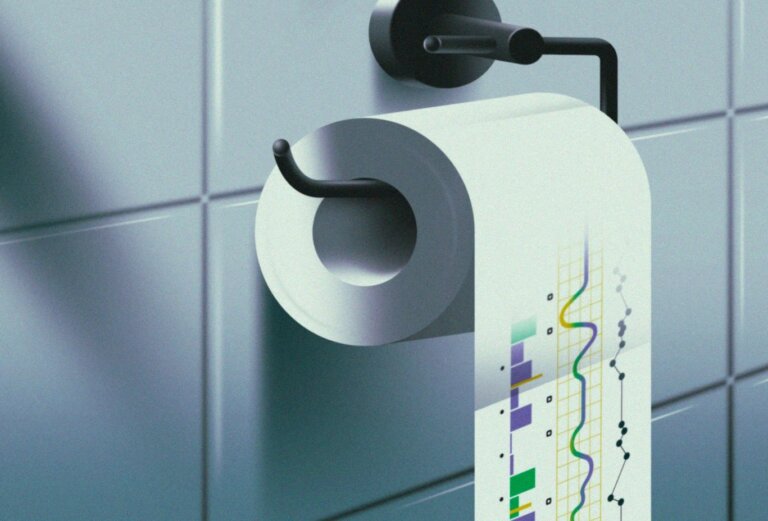
We might be in for a real evolution of the toilet as we know it. However, diving into our expelled fluids comes with new sets of privacy concerns. These have reportedly deterred investors who wonder if the market is socially mature for such sanitary upgrades. This newfound trove of personal health data could be subject to hacks or be mishandled by the companies overseeing that data.
There was a recent controversy over Kohler’s Dekoda toilet attachment. Its initial claim of end-to-end data encryption was somewhat misleading. There were also concerns that the company is using customers’ bowl pictures taken by Dekoda to train AI. Kohler clarified that their “algorithms are trained on de-identified data only”, but other companies might not take a similar stance.
The adage of “there is no digital health without sacrificing some privacy” comes to mind here. The average healthy person might not necessarily need a smart toilet, but these devices can have real practical uses for specific segments of the population. However, their benefits should not come at the expense of uncontrolled data integrity.
Written by Dr. Bertalan Meskó & Dr. Pranavsingh Dhunnoo
The post Is It Time To Equip Our Toilets With Health Sensors? appeared first on The Medical Futurist.