
HealthPopuli.com – Read More
Most people in the U.S. are concerned about many cost-related aspects of health care, we learn from Jarrard’s 2026 survey report on Americans’ health care financial angst titled Navigating the Riptide: Public views on healthcare, health policy, and healthcare organizations.
Jarrard fielded the consumer study among 1,049 U.S. adults 18 years of age and older in early January 2026. 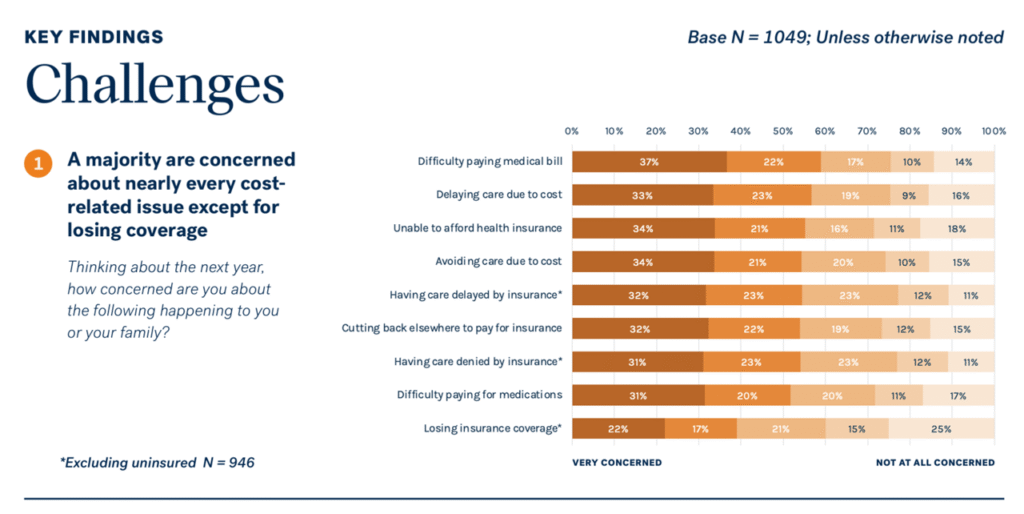
Here are the details, listing nine cost-related issues U.S. consumers face in their health care journeys – including,
- Difficulty paying medical bills (net 59% very or somewhat concerned)
- Delaying medical care due to cost (55%)
- Inability to afford health insurance (55%)
- Avoiding care due to cost (55%)
- Having care delayed by insurance (55%)
- Cutting back on other household expenditures to pay for insurance (54%)
- Having care denied by insurance (54%)
- Difficulty paying for medications (51%), and,
- Losing insurance coverage (39%).
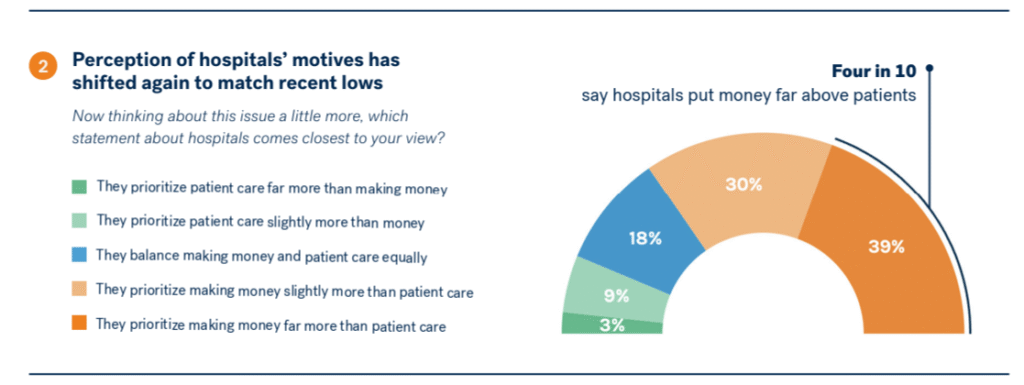
Given the consumer mindset where one-half of health citizens worry about a plethora of health care cost issues, 4 in 10 U.S. patients believe hospitals put money “far above” patients; another 30% of patients feel that way.
Only 3% of U.S. patients say that hospitals prioritize patient care far more than making money; another 9% say hospitals prioritize making money “slightly more” than patient care.
Related to this lack of confidence in hospitals’ prioritizing delivering patient care over profit margins, only 43% of U.S. patients told Jarrard they believe hospitals will deliver quality care in the years ahead.
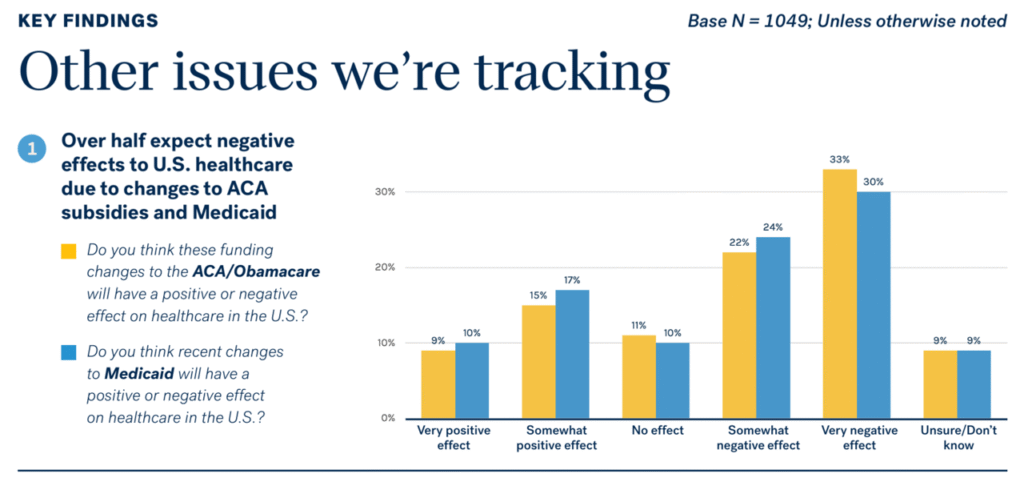
A third data point in this consumer health cost anxiety is that over one-half of U.S. consumers expect negative effects to U.S. health care due to changes with ACA subsidies and Medicaid.
Only 1 in 4 U.S. consumers believe the recent funding changes to the ACA/Obamacare health plans will have a positive effect on the country.
Health Populi’s Hot Points: The peoples’ trust in the U.S. health care system is a formidable challenge in 2026. (For more on this, see my previous posts on trusts starting with my most recent 2026 Edelman Trust Barometer.).
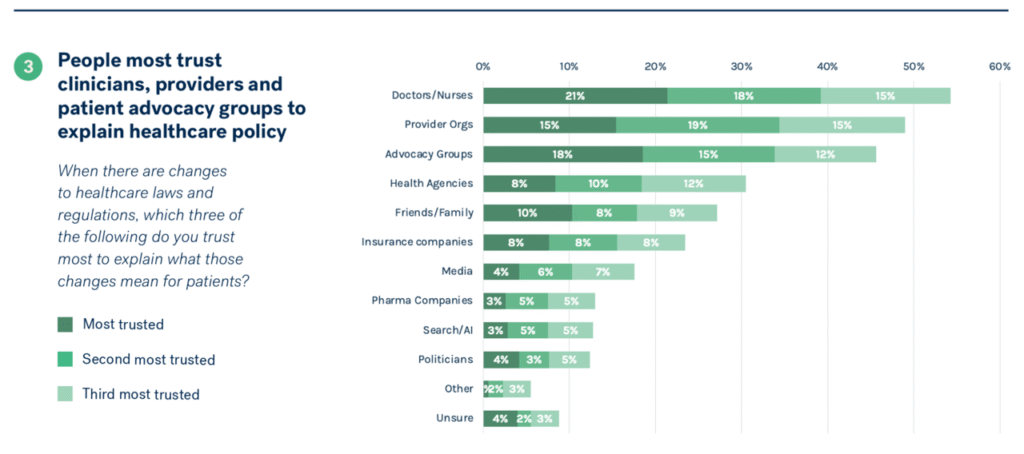
Americans’ rank doctors and nurses above all health care industry stakeholder personae and organizations, shown in the green bar chart — by far, it’s clinicians in the U.S. whom people – patients, consumers, caregivers — trust, above health agencies, friends and family, insurance companies, media, pharma, and to be sure, politicians who rank lowest on this list of trusted healthcare stewards in America.
This trust equity can and should be leveraged by organizations who engage doctors and nurses on the front line of health care in the U.S. — hospitals, clinics, academic medical centers, and even pharma who have docs and nurses on-staff. See my latest annual take on the Gallup Poll on Honesty & Ethics in U.S. professions here.
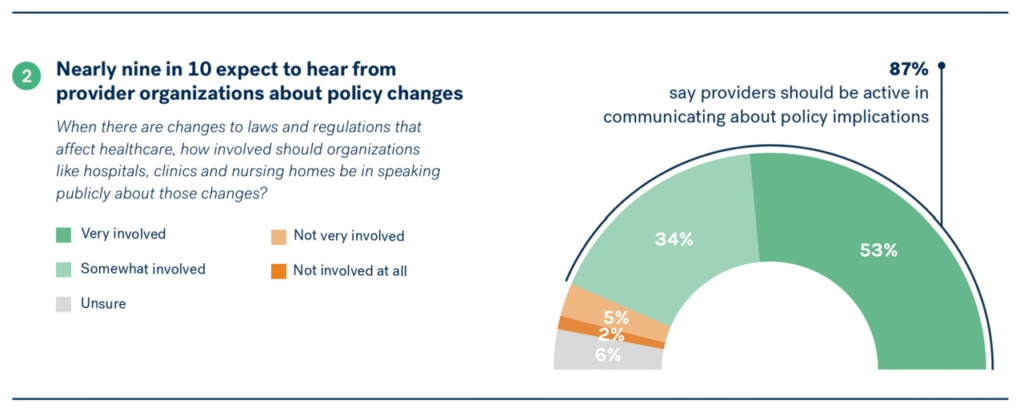
The last graphic from Jarrard’s report supports this recommendation: 9 in 10 U.S. consumers expect to hear from provider organizations about policy changes. The trust lies with the honest and ethical clinicians who are the front-line representing hospitals, clinics and nursing homes — it’s more than time to support our valued and trusted clinicians to partner with patients in communications and care.
The post Financial Stress and Trust in Health Care Takes Many Forms – Listening to Jarrard’s 2026 State of Play Survey appeared first on HealthPopuli.com.