Latest Stories – Pain News Network – Read More
By Pat Anson
After years of demonizing kratom as an addictive, opioid-like substance with no approved medical use, federal health officials are finally acknowledging the herbal supplement could actually be used to treat opioid addiction.
The National Institutes of Health (NIH) has approved an Investigational New Drug application to see if mitragynine – one of the many alkaloids in kratom – could be used to treat opioid use disorder (OUD).
In a small Phase One clinical study, NIH and University of Florida researchers will test a purified formulation of mitragynine on 32 healthy volunteers with a recent history of opioid use. In preclinical studies on animals, researchers said several doses of mitragynine did not raise any significant safety concerns.
“We’ve seen the potential of mitragynine in the lab, and now we’re finally able to examine its potential in people. Hopefully this work will lead to a new treatment option for people with opioid use disorder and support a path to recovery,” Joni Rutter, PhD, Director of the NIH’s National Center for Advancing Translational Sciences, said in a press release.
Although the main purpose of the placebo-controlled trial is to test the safety and tolerability of mitragynine – not whether it can treat OUD – the fact that NIH is even conducting such a study is being hailed as a “major milestone” by kratom advocates.
“For years, opponents of kratom have attempted to portray natural kratom leaf as a public health threat,” said Mac Haddow, Senior Fellow on Public Policy for the American Kratom Association (AKA), an association of kratom vendors.
“The decision by NIH to move forward with this research sends exactly the opposite message. Federal scientists believe the available evidence justifies studying kratom’s potential role in helping address one of the most devastating public health crises in America, the opioid overdose epidemic.”
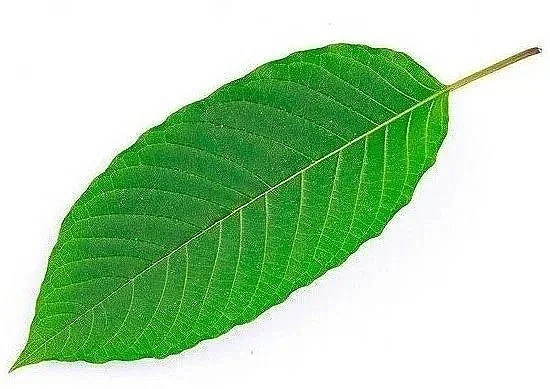
Kratom comes from the leaves of a tropical tree that grows in Southeast Asia, where it has been used for centuries as a natural stimulant and pain reliever. That’s primarily how it’s used today around the world.
‘It Saved My Life’
A lesser known therapeutic use of kratom is to reduce cravings for opioids and other substances. Susan Ash, the founder of the AKA, used kratom as a substitute for Suboxone, a medication used to treat OUD.
Ash is not alone. In a PNN survey of over 6,000 kratom users, about one in ten said they used kratom as a treatment for OUD or alcoholism, with over 90% saying it was “very effective.” Many said kratom reduced their cravings and helped ween them from drugs.
“Kratom is the one thing that has kept me from using opiates and other illegal substances. I’ve been able to stay clean for 3 years now. It’s given me my life back,” said one kratom user.
“It has saved my life. I am a mother of 4 and have anxiety, depression, acute back pain, and I am an opioid addict. It has kept all these at bay for me,” said another.
“This is an herbal blessing that has kept me from drinking. I don’t get high (on kratom). I just can tell that it takes away my cravings for alcohol. If it becomes illegal, I fear we may never truly be able to study and treat ailments that kratom helps with,” wrote another survey respondent.
While the federal government has backed away from plans to make kratom illegal, the FDA has asked the DEA to ban another kratom alkaloid – 7-hydroxymitragynine (7-OH) – which is more potent than mitragynine.
The DEA has yet to move forward on the FDA’s request, but dozens of states and local governments have. They’ve banned 7-OH and other “synthetic” versions of kratom, as well as natural leaf kratom, due to fears they can cause addiction and overdoses..
Ironically, much of the hysteria about kratom has been fueled by the same federal health agencies that now want to learn about its benefits.
In 2022, the NIH released a study warning that nearly a third of kratom users met the diagnostic criteria for “kratom use disorder,” such as increased use, tolerance, withdrawal, and craving. Nearly 10% also reported “psychosocial impairments” that caused them to withdraw from social, work, or recreational activities — classic signs of someone with a drug abuse problem.
That same year, the FDA sent warning letters to four companies, telling them to stop marketing kratom as a treatment for opioid addiction.
“You market kratom products for the treatment or cure of opioid addiction and withdrawal symptoms. However, these products have not been determined by FDA to be safe and effective,” warned one letter. “Further, the unproven treatments could cause patients to forego or delay FDA-approved treatments for opioid addiction or withdrawal.”
The new NIH study means the government has come full circle on kratom’s therapeutic potential. Once dismissed as “unproven,” kratom is finally being recognized as a potential solution to one of America’s biggest health problems.
“This (study) is a major step toward expanding treatment options for the millions of Americans struggling with opioid use disorder, which has contributed to historically high overdose mortality rates,” said Nora Volkow, MD, director of the NIH’s National Institute on Drug Abuse.
President Trump recently said his administration would seek to have “natural 7-OH” approved. Although it’s unclear if the president was referring to 7-OH or natural leaf kratom, it’s another sign the feds have turned over a new leaf on kratom.