The Medical Futurist – Read More
What if you could open your front door or unlock your car just by raising your hand? Never having to trouble yourself with your medical documents? Or remembering where you’ve put your wallet. What about sending your LinkedIn profile or a dancing monkey GIF to a phone just by holding it? And what about turning on a coffee machine by pointing to it?
This is not the future anymore. People with tiny RFID or NFC chips under their skin are already living among us. Nobody seems to have a reliable global count of these implants, but the technology is real. Some use them to open doors or share a digital business card with a compatible reader. Do you want to join the cyborg community? Here’s what you should know before getting an RFID implant.
Captain Cyborg and the RFID implant
The radio-frequency identification (RFID) technology has been around for decades. It uses radio waves to exchange data between a tag (embedded with an antenna and integrated circuit) and a reader. RFID tags come in various types – passive, active, and semi-passive – and operate on different frequency bands, each with its own strengths and limitations.
RFID has a wide range of applications, from tracking luggage and identifying pets to managing inventory in retail stores and even monitoring medical equipment in hospitals. It’s also becoming increasingly prevalent in the Internet of Things (IoT), enabling everyday objects to communicate with each other. You probably already have a personal RFID chip in your credit card, and they are increasingly used for access control, contactless payments, and even social interactions.
The first-ever human to receive an RFID microchip implant was British scientist Kevin Warwick (known by the moniker “Captain Cyborg”) in 1998. This experiment allowed a computer to monitor Warwick as he moved through halls and offices of the Department of Cybernetics at the University of Reading, using a unique identifying signal emitted by the implanted chip. He could operate doors, lights, heaters and other computers without lifting a finger. Approximately two decades later, the technology has been made commercially available, and tens of thousands of people decided to implant an RFID chip. For example, groups of people have been meeting at “implant parties,” often organized by larger companies, to hook up. It’s especially popular in Sweden, where more than 4,000 individuals can take pride in opening doors by only lifting their hands. So, why is the rush? And why should you consider implanting one?
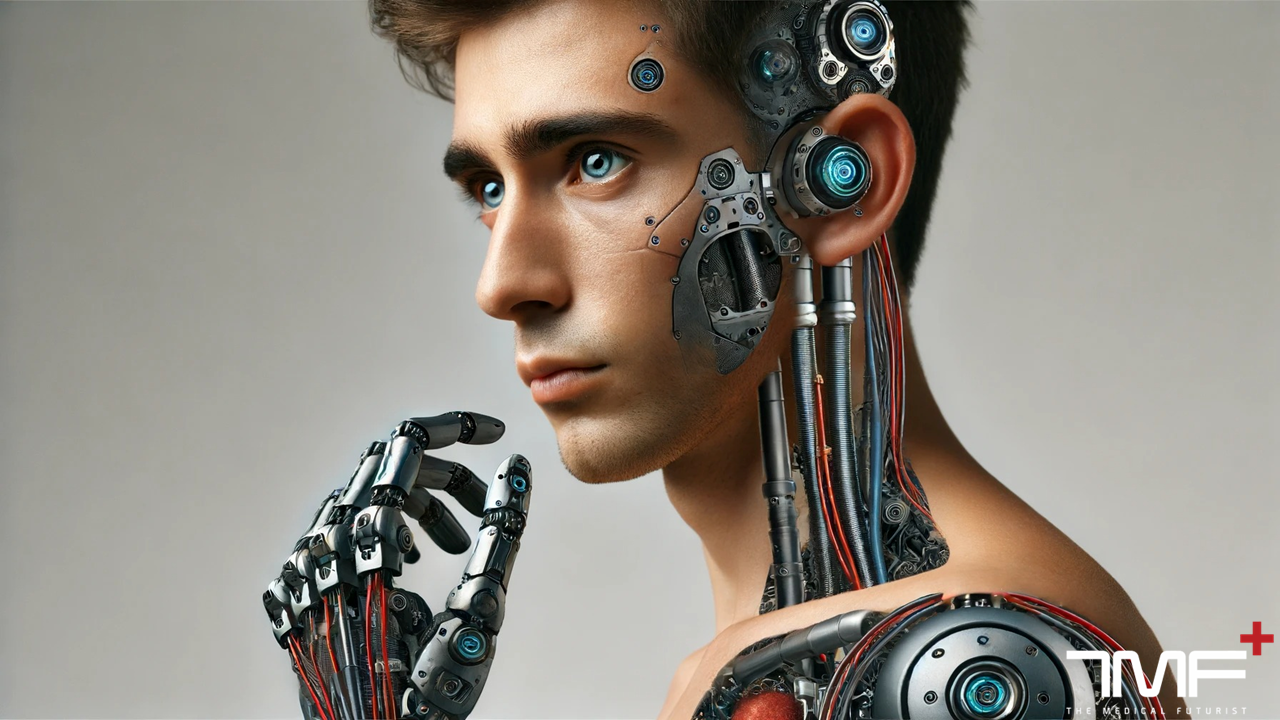
Congratulations, you’ve been RFID-chipped!
In the future, an RFID or NFC implant in your hand might help you unlock doors, exchange contact information, or access compatible services. In some systems it could point to emergency medical information, but the tiny passive implant itself cannot securely hold a complete medical record. The bigger challenge is making readers, software, permissions and privacy safeguards work together. And wouldn’t it be something if ‘within hand’s reach’ had a whole new meaning?
We are obviously not there yet. Although the technology has ripened significantly in recent years, even the most advanced chips still have limitations. Modern RFID chips typically store more data than earlier versions, though the increase in capacity has been gradual. However, according to user reviews, they can serve multiple functions. “I use my microchip to store my medical records and work portfolio, as well as to use it as a crypto wallet and to unlock doors” – says Brandon Dalaly about his implant in this article.
In theory, you could connect it to your bank account, your transit card for use in the subway, or to pay at the grocery store. The challenge remains that many systems are not yet designed to integrate seamlessly with such implants. However, upgrades to these systems are expected in the near future to support RFID chip functionality. In any case, if you find using entrance cards to access your office outdated, you might convince your boss to order RFID chips from Dangerous Things, an online store that sells various implantable transponders, and the place where most people buy their implants.
Dangerous? Hackable? Limiting? – The hazards of RFID
chips
Before you hit the order button on Dangerous Things website to order some implants, there are several things to think through as an RFID implant isn’t a temporary tattoo, which can be removed by taking ten showers. That’s actually one of the most problematic parts of these chips: who is going to implant it, how safe it is for your health, and how do you remove it?
Medical Concerns
A recent study sheds light on the increasing prevalence and potential complications of RFID implants in humans. It highlights that while these implants are becoming popular for tasks like contactless payments, opening doors, and storing personal information, there are significant safety concerns. The study points out that most implants are currently performed by non-medical professionals, raising the risk of infections and adverse tissue reactions. It calls for more involvement from medical professionals, particularly hand surgeons, to develop standardized techniques for implanting these devices safely and effectively. The study underscores the need for further research to better understand the long-term implications of RFID implants in human health.
Dangerous Things recommends their professional body piercing or body modification partners to complete the installation of this product, but definitely someone with experience performing aseptic procedures. Thus, you should NOT experiment with implanting it yourself, and rather turn to a medical professional who conducts the procedure in a clean area with sterilized instruments to avoid the risk of infection. The company says that the pain level of the implantation of the chip is that of a bee sting or giving blood. The same is promised to be true for removing the RFID transponder. Dangerous Things says that the removal or replacement procedure is easy, you don’t have any interference issues with MRI, or get caught at the airport security gates, metal detectors or airport scanners due to your chip. In addition, the implants are pretty durable – you can easily fight supervillains all day long, the RFID chip will most probably not break.
Privacy and surveillance worries
Although RFID chips are not powerful enough to be tracked – just as dogs cannot be tracked when they wander off – or to connect to any satellite, some have fears that such chips give corporations the possibility to have control over them. What if they could track users in the future? Would you want a chip in your hand if it could tell for how long it took you to have a shower or to go to work? But today’s passive implants have no GPS or power source for continuous remote tracking. The more realistic privacy issues concern how readers, access systems and any associated databases collect and use information.
Are the chip implants hackable?
Some biohackers say that it’s very easy to hack an implant, so you’d rather not hide your life secrets in the implant’s memory, and the risks of copying, cloning or misusing credentials should not be dismissed. On the other hand, we know of at least one individual who used the chip embedded into his hand to hack into other people’s phones, so that might be a bigger concern. However, another idea that already surfaced among concerned potential users, namely that your hands might be cut off if someone wants to break into your house or office seems to be rather Black Mirror-ish than something to be worried about.
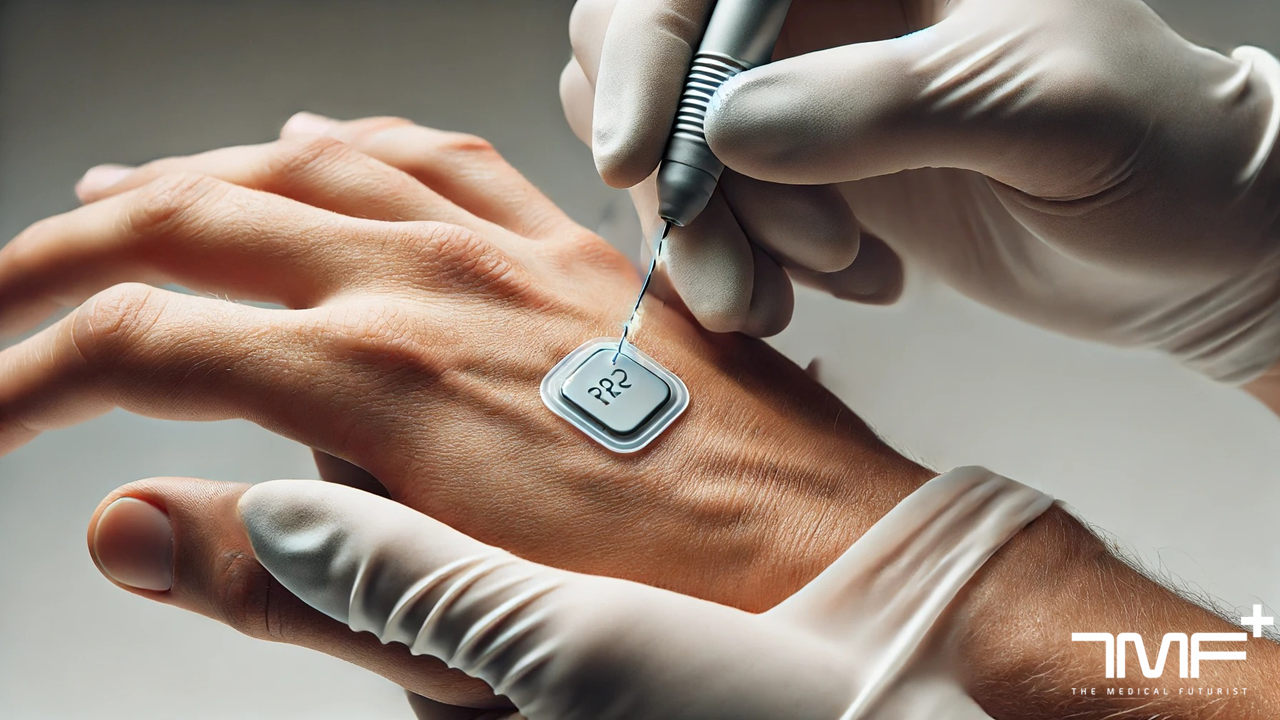
Am I really becoming a cyborg?
On the other hand, implanted RFID chips, just as digital tattoos or chest patches already represent the second stage of cyborgization, and that’s because no matter what Dangerous Things say, they cannot be removed as easily as your Flash T-shirt at the end of the day. Remember the bug in Neo’s stomach in the Matrix? He couldn’t have taken it out without help – but after some time, no lasting marks remained.
In the second stage of augmentation, technology interacts with the human body in a way that it already has a lasting, but not irreversible impact. Although their removal might be problematic, implants, patches, and tattoos could be cut out and discarded. Some extreme examples, where removal might be more difficult than the user believes, already exist: Jerry Javala let doctors embed a USB port into his finger prosthesis, but at the time being, RFID chips seem to be on the easier end of the spectrum.
So, if you decide to get an RFID implant, you’ll still be very far from real-life cyborgs, such as Neil Harbisson, an artist born with achromatopsia or extreme colorblindness meaning he could only see in black-and-white. At first, he received his specialised electronic eye, his “eyeborg” to be able to render perceived colors as sounds on the musical scale. He is capable of experiencing colors beyond the scope of normal human perception: Amy Winehouse is red and pink, while ringtones are green.
All in all, the technology is very promising, although many might find the abilities that an RFID chip can do at the moment rather as geeky party tricks than useful everyday accessories making life easier.

The post Everything You Need To Know Before Getting An RFID Implant appeared first on The Medical Futurist.