
HealthPopuli.com – Read More
As patients in the U.S. bear more costs out-of-pocket, from deductibles to co-sharing the price of higher-cost specialty drugs (say for cancers, Parkinson’s, and so on), health care looks and feels more like a retail transaction stretching peoples’ health consumer muscles.
A new report from IQVIA, whom you probably know through their data collection and analysis in the prescription drug sector, forecasts Consumer Health’s Next Phase, with the observation that the market is changing faster than its narratives (the subtitle of the report).
To come to this judgment, IQVIA analyzes six trends shaping the consumer health marketplace:
- Innovation and growth contribution
- Digital discovery and e-commerce
- Omnichannel behavior
- M&A and portfolio strategy
- Emerging category drivers, and,
- Data, connected health, and personalization.
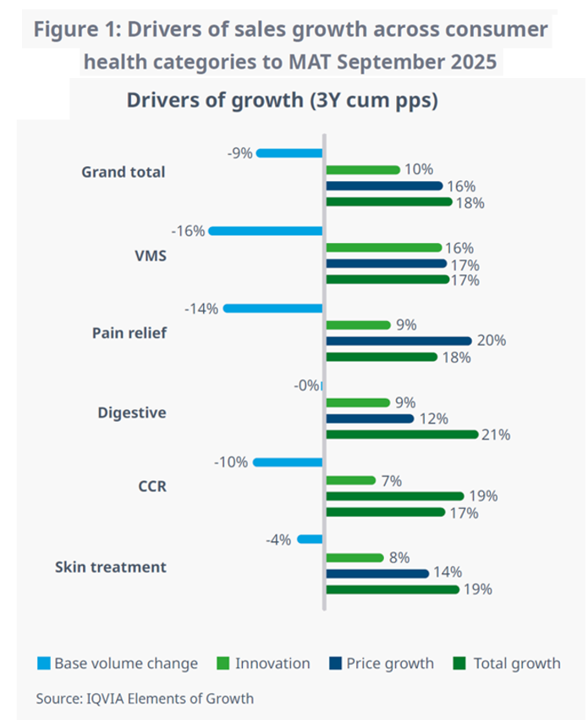
Start with innovation as reason-to-spend: consumers willing to open their wallets to part with personal income on health-related goods and services are seeking new-new things that solve real-life problems and needs. IQVIA calculated that only 10% to 16% of consumer health products (in this study, covering vitamins=minerals-supplements, pain relief, digestive, CCR [cough, cold, respiratory], and skin treatments) are “fresh” — that is, launched in the past few years.
“Consumers are moving faster than the portfolios designed for them,” IQVIA observes. People are seeking solutions for making behavior changes, currently focusing on GLP-1 side effect management, under-served women’s health needs. and gut-health issues related to anxiety and stress. There is a lot of unaddressed needs in the market for which patients-as-payers would pay. 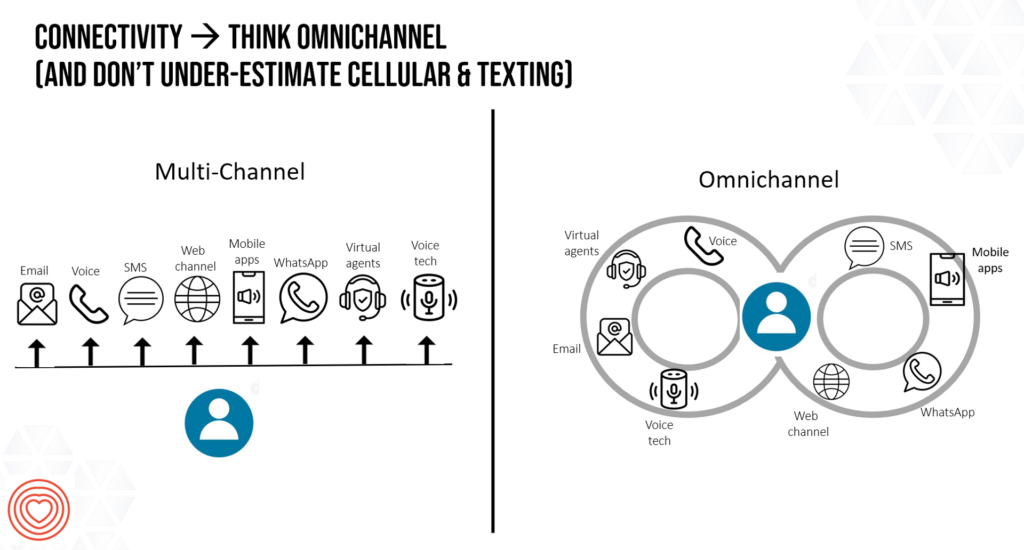
The consumer, now having undergone her personal digital transformation, has adapted to omnichannel life-flows — interacting with different on-ramps to communicate, shop, learn, perform job tasks — based on how she wants to touch base. For consumer health companies, that means meeting people where they are across all channels and on-ramps to connect with products and services that can go direct-to-consumer or -patient. To earn consumer loyalty and patronage, “this requires alignment of claims, content, packaging, format, fulfillment, and price — disciplines that have traditionally sat in different parts of the organization,” IQVIA observes. 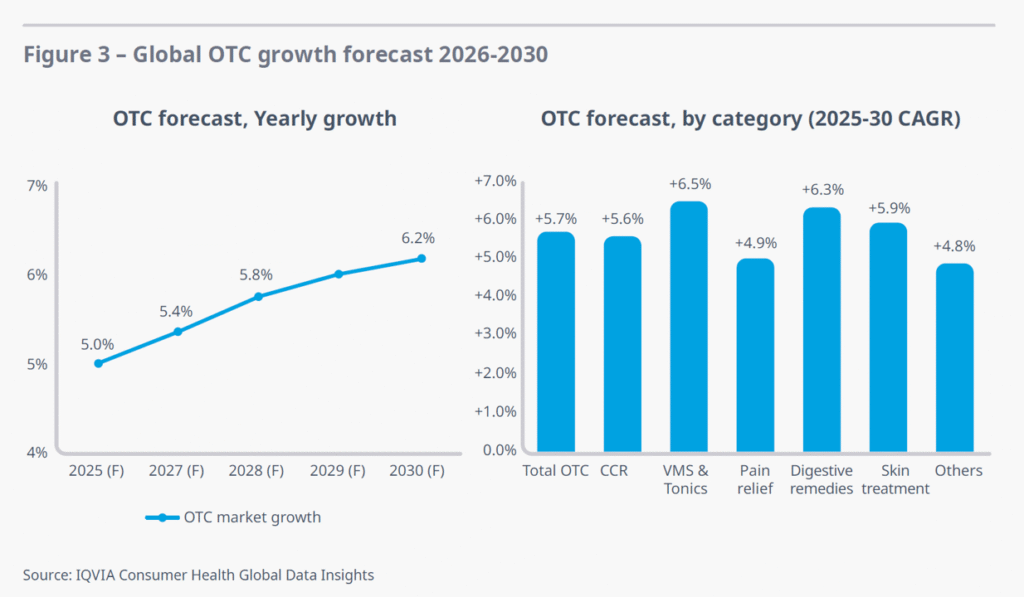
With her ability to self-care via digital channels across those healthcare workflows, the consumer is redrawing the market through demands based on :=”data, diet, and diagnostics,” as IQVIA characterizes the structural demand pillars.
The forecast for over-the-counter products is up and to the right, growing, especially hotter for vitamins and supplements and digestive remedies, IQVIA projects as shown in the line and bar chart. 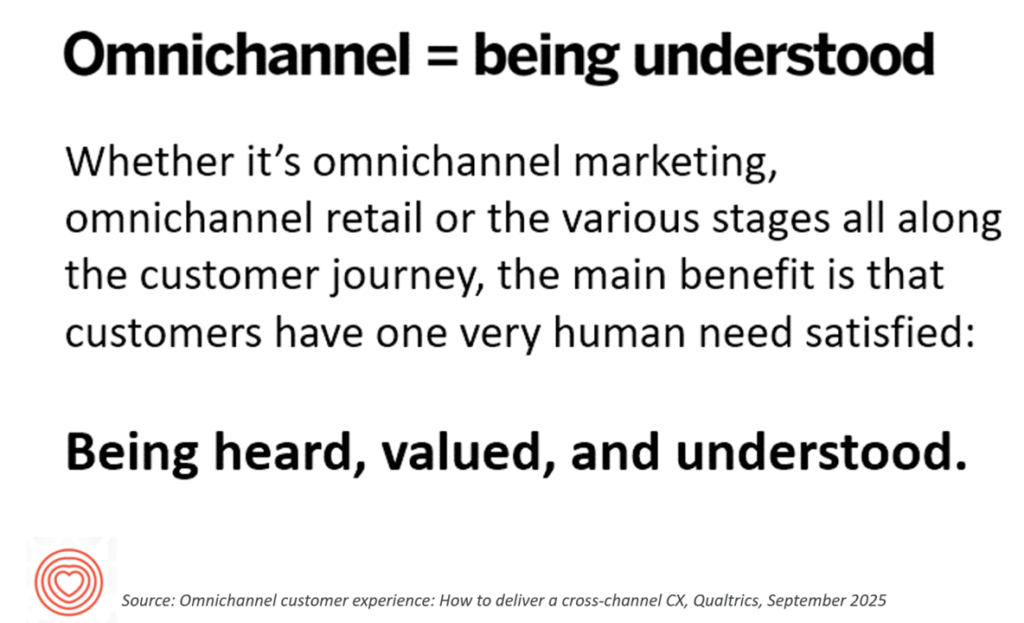
Health Populi’s Hot Points: Counseling that consumer health companies “catch up” and hasten their pace to meet consumers where they are, and where they are going, IQVIA offers several recommendations to do so: namely,
- Align innovation to consumer behavior
- Connect products to data ecosystems (think OURA ring meets actionable advice for sleep, nutrition, and mental health)
- Act early in emerging need states — “invest ahead of category definition.” meaning identify that white space and develop fresh products and services addressing health consumers’ real needs
- Compete for visibility in digital discovery
- Build portfolio flexiblity using M&A and partnerships — my ongoing call for collaboration, and,
- Treat omnichannel as operating reality.
This last chart comes from Qualtrics’ explanation of omnichannel consumer experience, which speaks to the approach’s positive halo of empathy with customers: where the consumer’s omnichannel experience makes her feel understood, heard, and valued.
This applies to health care across the ecosystem, within and beyond so-called “consumer health/care.” In fact, in the current and future environment, “all” health care is (or should be) consumer-focused care given we are asking people to pay a substantial chunk of household income for their care and medicines, as well as take on more care flows at home and on their own.
The post Consumers Are Ahead of Consumer Health Innovation: Insights from IQVIA appeared first on HealthPopuli.com.