
HealthPopuli.com – Read More
In a month, I’ll board a plane for Las Vegas to spend a week at CES 2026, the annual electronics conference that last year brought together over 140,000 global technology stakeholders to display, demonstrate, and sell the latest in consumer-facing tech.

This will be my fourteenth CES (including the virtually convened meeting held in 2021). If you want to time travel, here’s a link to an early CES post featuring “The Battle of the (Wrist)bands.” Indeed, the digital health aisle at the time had many wrist-worn activity trackers, largely amped-up pedometers, with the likes of Fitbit, Misfit Wearables, and Valencell exhibiting innovative approaches to keeping track of movement.
Journey to the Personal Health Operating System. Fast-forward to 2026 and I’ll be keeping track of at least twelve aspects of health technology at CES shown in the table – from tracking food and weight to updating innovations for well-being in connected cars and smarter bathrooms (more on that below – see Kohler!).
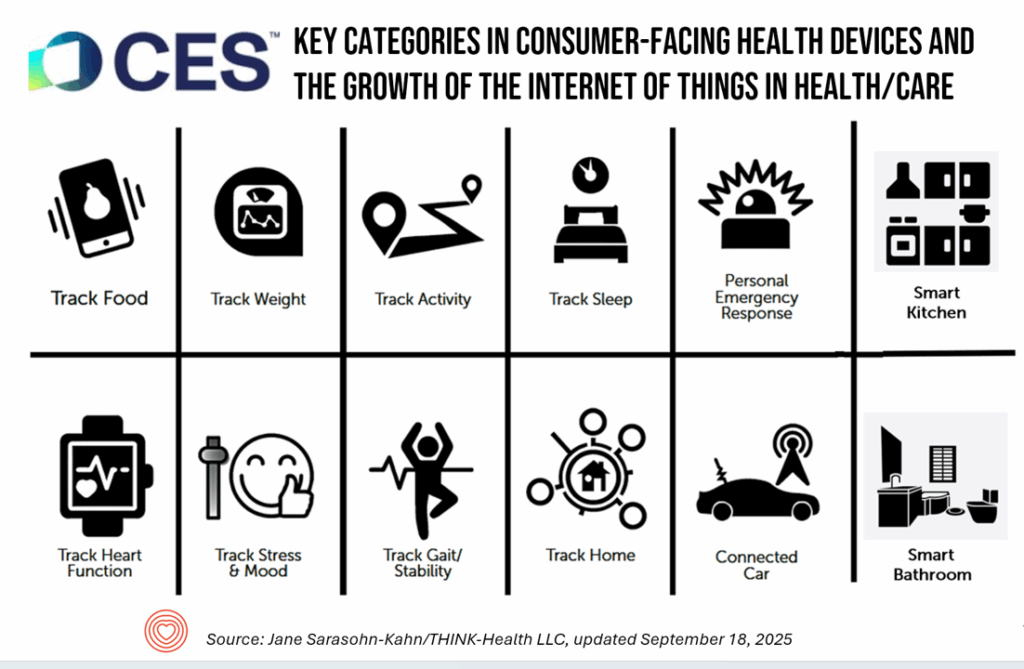
Taken together, the growing Internet of Things for Health, wearable technologies, smart home innovations, and AI will inevitably mash-up into a full stack to support our Personal Health Operating Systems.
Home is where the health is (and always was). The COVID-19 pandemic ushered in an era of our homes for health care, turbocharged in the #StayHome directive and work- and school-from-home long tail. We learned more about telehealth and virtual care, encrypted emailing with clinicians, and taking on more exercise and healthy cooking at home.
At the recent HLTH conference, former CDC director Dr. Susan Monarez, told attendees that, “Ten years into the future, if we do things right, we could have 90% of our health care actually done at home versus in a brick-and-mortar, physical infrastructure setting. We are on the cusp of that level of technology innovation.”
Furthermore, Dr. Monarez forecasted that, “In 10 years, people may have AI agents in their home that know them and will ask if they’ve taken their medication, or if they should have a second espresso.”
CES 2026 will feature many innovations that support this vision, which is my work focus these days.
As we continue to build out a full stack of solutions that serve up a consumer’s personal health ecology. (For more on that concept, see Institute for the Future’s evolution of the concept here).
Start with wearables. “Wearables are growing up,” my Belgian-based colleague and friend Koen Kas recently asserted on his LinkedIn channel. Koen linked to new research into the accuracy of smartwatches in the detection of atrial fibrillation found that smartwatches delivered diagnostic accuracy for AFib detection. This meta-analysis of 26 studies sets the stage for what Koen termed “distributed diagnostics….a major step for preventive care at scale,” Kas believes.
Scale typically happens in health care when adopters have confidence in the evidence backing the innovation – with the JACC paper being a good example having examined 26 studies in the field.
Wearable technology will be a major tech segment featured at CES 2026, so it’s useful to look at new data from NEJM Catalyst on the current state of wearable health tech and clinical areas where it’s being used.
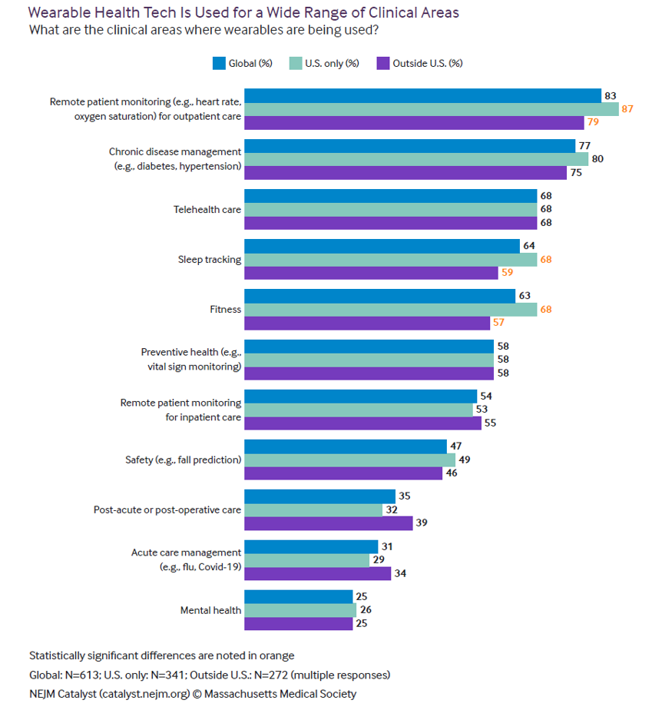
Note that remote patient monitoring (think: heart rate, O2), chronic disease management (diabetes, blood pressure), and sleep tracking rank high on consumers’ current use of wearable health tech, the NEJM research found.
The most prevalent wearable technology is the smartwatch, and the most widely-adopted model is the Apple Watch, which ranks top with about 20% of the market (by contrast, Samsung holds 6%). Apple is debuting a new feature (available on Series 9, 10, and 11 and Ultra 2 and 3 models) having received FDA clearance for providing hypertension notifications and sleep scores for the consumer. Apple expects this function to notify over one million people with undiagnosed hypertension in Year 1 – which undeniably could mean “diagnostics at [impressive] scale.”
Beyond the wrist, another body-site has received lots of attention and innovations in the past couple of years: the finger and the ring fitted with sensors to track a growing range of metrics.
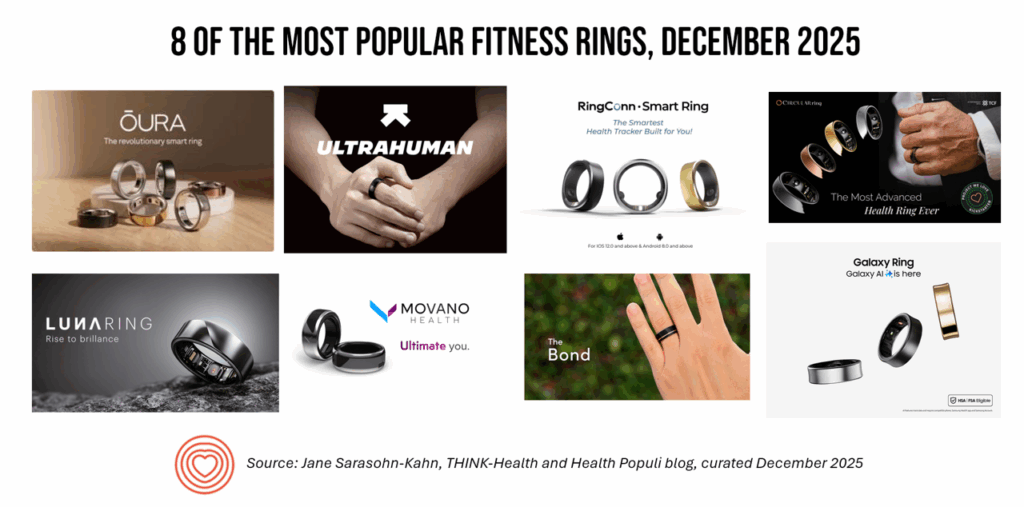
Among these, the Oura ring has gained prevalence, recently reporting out accuracy and outcomes in a report on advancing human health, bridging wellness and medical care delivery.
As Oura has gained market share, the company has credibly crossed the chasm from jocks and elite athletes to mainstreaming with women consumers. As TechCrunch wrote, Oura has been “losing gym rats,” and the “company’s fine with that.”
I’ll be kicking lots of rings’ tires at CES 2026, expecting no fewer than a dozen contenders eyeing to take share away from Oura.
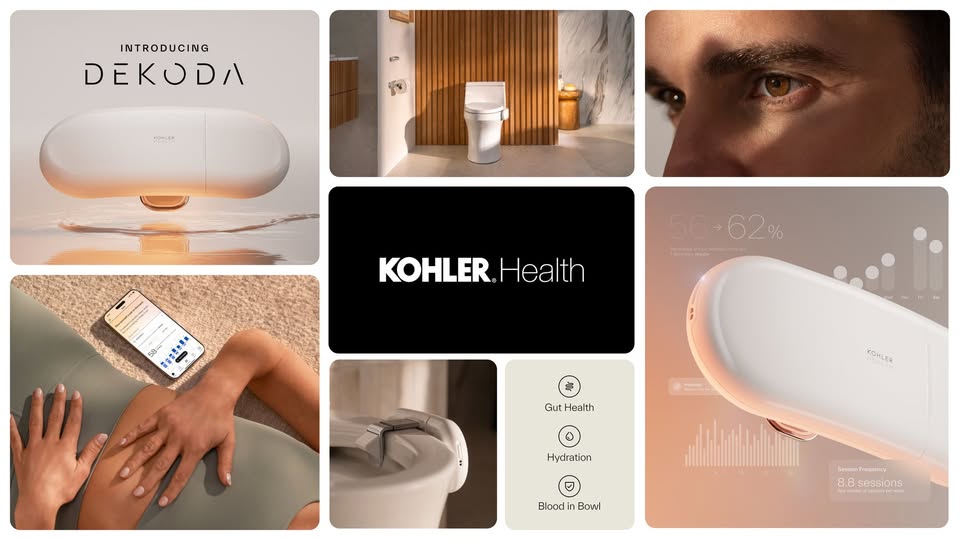
Home improvements, for health – with a focus on the loo. As Dr. Monarez envisions, the home will be the site of health care — and that should include all spaces in the house that can deliver on the promise of well-being and care management.
High on my list for #CES2026 will be meeting up with Kohler, best-known for plumbing products. This year, the company launched Kohler Health, featuring Dekoda – a suite of products to address health from the home’s bathroom. The focus of the innovation is to provide insights into gut health and hydration, with the companion appl working to detect the presence of “blood in the bowl” every visit to the toilet.
When Kohler made this announcement, the news quickly hit technology-bent publications like TechCrunch, WIRED, PC Magazine, and ZDNet, but also mainstream media like Good Housekeeping and People magazine.
As The Verge succinctly put the case for Dekoda, “Knowing what’s coming out of your body can be just as useful for maintaining a healthy lifestyle as being choosy about what goes into it.”
I’ve tracked smart toilets for over a decade, as well as meeting up with Kohler folks at a pre-CES event perennially, so I’m super-keen to brainstorm the team’s vision for the home (and especially the loo) as health site.

Aging in place becomes the default. In the Digital Medicine Society’s report on Healthcare 2030, DiMe discusses key impact areas where digital health could address prevention – noting that health outcomes are underpinned by many factors beyond medical care such as nutrition, housing, stress, physical activity, and environment. DiMe is committed to helping drive health across generations through leveraging technology and collaborating across industry siloes. They seek to make aging in place “the default,” by detecting cognitive decline earlier, identifying risks sooner, and enabling personalized interventions.
At CES 2026, longevity will be a key theme with the AARP AgeTech Collaborative exhibiting in full force once again. To give you a sense of AARP’s commitment to digital health for its 50+ year old constituents, take a look at my write-up of their CES 2025 experience here. (I’m scheduled to meet with the team again for #CES2026, so do stay tuned).
Among the dozens of companies who will be at CES 2025 discussing innovations for aging, I’ll be sure to meet up with folks from Samsung, whose recent announcement on committing to longevity hints at some exciting technology for longevity and well-being.
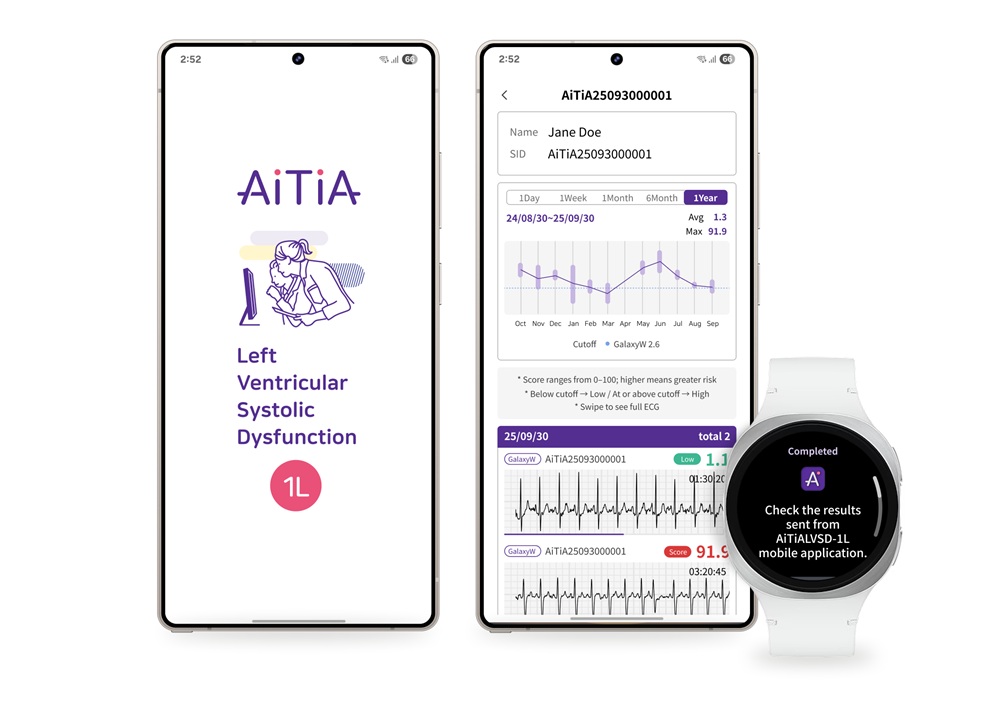
Samsung is pairing its Galaxy smartwatch to medical-grade heart failure, one of the most common conditions facing older people. Specifically, the company is targeting left ventricular systolic dysfunction which represents about one-half of all heart failure cases.
Samsung acquired the company Xealth this year, consolidating its position in the connected care landscape. Xealth’s digital health platform was developed at the Providence Health system, now with a client base of over 500 U.S. hospitals and dozens of digital health tech partners. The combination of Samsung + Xealth is meant to put together data generated by consumers’ and patients’ wearable devices combined with their clinician and health system data.
Just as Samsung and Xealth are looking to cross siloes between patient-generated data and the care system, an alliance between Whoop and Quest Diagnostics seeks to close a gap between the wearable tech innovator and the lab diagnostics workflow. Whoop, with roots in bolstering fitness levels for more elite level athletes, is also mainstreaming like other innovators in expanding its consumer user base. The company began working with Orlando Health, the health system, in October on a pilot to address chronic obstructive pulmonary disease (COPD) and stem readmissions. Whoop Advanced Labs deploys blood tests through Quest and integrates the lab results with Whoop’s continuous monitoring data that tracks activity, blood pressure, and sleep.
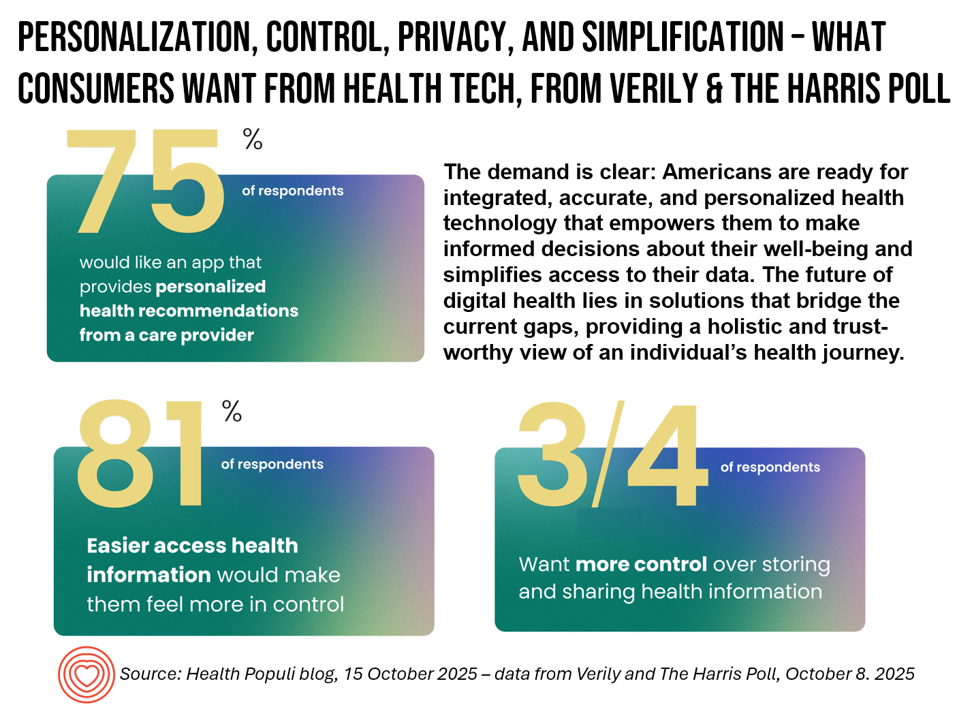
Health consumers in search of personalization, control, privacy, and simplification. “The demand is clear: Americans are ready for integrated, accurate, and personalized health technology that empowers them to make informed decisions about their well-being and simplifies access to their data,” Verily and The Harris Poll asserted in their survey report published in October. I covered the research in detail here.
Suffice to say, the vast majority of people in the U.S. want an app that would serve up personalized health recommendations from a health care provider; easier access to health information that would inspire a sense of personal health control and empowerment; and, more control over sharing and storing one’s personal health information to assure privacy and security.
The double-whammy of trust + privacy is a key consideration for digital health tech’s that wish to be part of a consumer’s personal health operating system. So I turn to Polar, which has been developing wearable tech for many years and been a go-to exhibitor at CES. To deal with the consumer’s keen value for privacy and personalization, Polar has a novel business model idea – to opt out of a subscription model, for the first time, marketing a device on a one-time purchase basis.
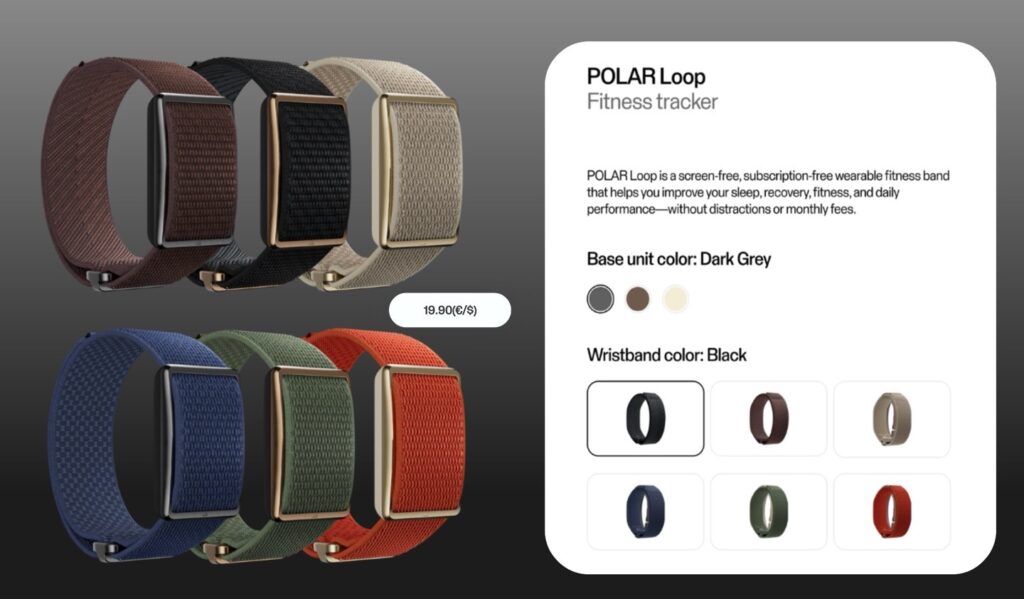
The Polar Loop is a screen-free wristband, and tracks all activity, sleep, and recovery. This is done automatically, recorded and uploaded to a platform on a free app.
There are hundreds of thousands of square feet to explore at #CES2026 that aren’t in the “digital health” category. Going beyond the Sands Venetian convention space, it’s important to explore other innovations that help people connect to health, well-being, and longevity. In no particular order, I’ll be checking out connected cars, smart kitchens, laundry innovations (see my obsession with Whirlpool’s well-being ethos here in Health Populi), gaming, smarthome technology, and other companies you might serendipitously happen to find. That’s one of the joys and little-miracle aspects of CES every year: if you venture to explore beyond your initial list of must-see’s, you’ll inevitably find something new-new that challenges the mental models which accompanied you to Las Vegas.
2026 enablers for the Personal Health Operating System. The key enablers, or disablers, in health care tend to deal with regulation, privacy and security, and cost or reimbursement. All of these will play into the near-term adoption of consumers’ seeking engagement with their own personal health operating systems.
One new development that may reduce friction in adoption will be the U.S. Department of Health and Human Services outlined plan for the ACCESS Program, which seeks to channel digital health innovations to Traditional Medicare enrollees. The acronym stands for Advancing Chronic Care with Effective, Scalable Solutions. For a start, CMS’s ACCESS will focus on four clinical tracks including cardio-kidney-metabolic (CKM – think diabetes, hypertension, dyslipidemia, and obesity) – early and general; musculoskeletal pain; and, behavioral health – specially, depression and anxiety. Historically, Original Medicare members were not afforded access to digital health products and services: the new ACCESS pilot looks to remedy that situation and modernize Medicare for non-Medicare Advantage members.
Another development is that fast-evolving GLP-1 market, increasingly direct-to-patient/consumer driven as well as powered by omnichannel, virtual and telehealth platforms. GLP-1s are re-shaping more than the bio-pharmaceutical industry, impacting consumers’ daily touchpoints from apparel and hospitality to gyms and, of course, food at retail and eaten out. As Scott Galloway forecasted in his October newsletter, GLP-1s may be changing consumer behaviors even faster than ChatGPT has.
But don’t count out AI’s influence on consumer behavior, especially among younger health consumers. Given growing financial and access challenges that millions of patients, consumers, and caregivers face, peoples’ adoption of digital health and smart home solutions for health, well-being, and longevity will embed in peoples’ daily lives. The only question is how fast that adoption curve will move given the enablers and potential barriers that inevitably accompany new-new things in health.
The post A Month Until #CES2026 – The Journey to Our Personal Health Operating Systems appeared first on HealthPopuli.com.