The Medical Futurist – Read More
In the midst of the digital health era, the pharmaceutical industry has been experiencing a rapid evolution. Thanks to the new paradigms that novel healthcare delivery approaches and digital health technologies have brought about, pharma companies need to adopt new strategies and consider new investment opportunities to stay relevant in the ever-evolving healthcare landscape.
In this article, we cover 8 major trends for pharma companies to consider in the digital health era. We rank them based on their return-on-investment (ROI) and return-on-vision (ROV). The latter is particularly relevant in this era considering its rapid rate of evolution.
To better appreciate the importance of ROV, we can consider the Apollo program. While it was focused on space exploration, the endeavour has resulted in a multitude of spin-off products across various fields. In the healthcare sector, those spin-offs range from medical imaging to innovations in dental care.
As such, current investments can have wide ranging applications in the future. From AI in drug development to digital therapeutics, a host of new technologies and trends hold promising ROI and ROV for pharma companies.
We share a collection of 8 major ones below, ordered from the most practical and promising to the least ones.
1. Artificial Intelligence for drug research and development
The process of drug research and development has traditionally been a time-consuming and labour-intensive one. This has involved considerable trial-and-error research before a drug can proceed to further developmental stages. This process can be made more time- and cost-efficient with the assistance of artificial intelligence (AI).

AI models, such as those developed by Benevolent AI, can analyse significant amounts of datasets from scientific literature, clinical records and chemical databases in a more time efficient manner than humans can. From this information, they can precisely identify targets and how potential drugs will interact with them.
Companies like Schrödinger and Google DeepMind have used AI for drug formulation. Their software predicts the behaviour of drug candidates and assess their safety and effectiveness.
2. New reimbursement models
Pharma companies can tap into the new healthcare experience that patients can have in the digital health era to offer more than just medication. By combining medication and technology packages, they can offer more enticing reimbursement models for both payers and providers.
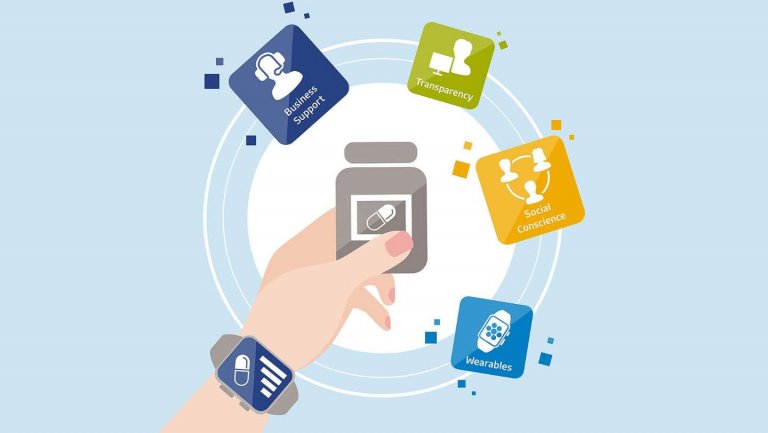
There have been several examples of such innovative models in the past that combine pharmaceuticals with technology. GSK has worked with Propeller Health on smart inhalers. Partners Healthcare Center and Japanese drug maker Daichii-Sankyo teamed up to bring a connected wearable for patients with atrial fibrillation.
Digital tools have been shown to improve health outcomes while minimising financial costs. With such offerings, pharma companies can make their products stand out while being beneficial for both patients and insurance providers.
3. Large language models for improved workflow and customer service
Large language models (LLMs) have been popularised by tools such as ChatGPT and Google Gemini. Beyond the hype, the technology is a practical trend in the pharma industry. LLMs can boost a company’s efficiency by optimising internal operations and customer service.

Roche’s internal LLM tool, Roche GPT, assists the pharma company’s team in optimising repetitive tasks and share knowledge. The tool further supports their business by automating structured data extraction about therapies and patients from scientific articles and clinical test results. Pfizer has also deployed a similar tool to help with its marketing efforts.
LLMs could further be used to improve customer service. With an LLM-powered chatbot, patients can get answers to their queries such as medication side effects in their native language.
4. Automation in the supply chain
The pharma industry’s supply chain stands to gain a lot by embracing automation in its midst. For example, by integrating AI, drug shortages can be averted. By analysing data from various sources, AI software can forecast potential disruptions and suggest adequate measures to ensure a steady supply of essential medication.
Automation in the supply chain does not only involve AI software but robotics is also part of the picture. Denso Robotics’ robots are capable of automating tasks in the manufacturing process. Exoskeletons are another example of robotics assistance. While not fully automating tasks, they augment manual factory workers’ ability to carry heavy loads and working in uncomfortable positions. In the future, we can even expect automated drone deliveries to be carried out within manufacturing sites and beyond.
5. Digital therapeutics
Using software as treatment might have sounded like a science fiction concept a decade or so ago, but this prospect is very real and promising with the advent of digital therapeutics (DTx). DTx can be described as evidence-based software applications designed to prevent, manage, or treat medical conditions.

The accessibility, privacy and minimal side effects that DTx provide have enticed pharma companies to invest in this trend. Pfizer has teamed with Sidekick Health to launch a DTx solution for atopic dermatitis. Eli Lilly also partnered with Sidekick Health to develop apps to support breast cancer treatment.
Other companies like RelieVRx or HelloBetter integrate cognitive behavioural therapy principles in their apps to ease chronic pain. We share more promising DTx examples in a dedicated article.
6. 3D bioprinting
Another scifi-like but promising trend in the industry is 3D Bioprinting. This technique involves the “printing” of living tissues, such as blood vessels, bones or skin, via the additive manufacturing technology of 3D printing. It requires living cells and a nurturing environment provided by a microgel. The ability to print human tissues implies that the need for animal testing could be a thing of the past while demonstrating more accurate results.

Several companies have investigated 3D bioprinting over the years, with different rates of success. However, the potential of the approach has caught the interest of major pharmaceutical players who have ongoing partnerships with 3D bioprinting companies.
Novo Nordisk and Aspect Biosystems are collaborating to develop bioprinted tissue therapeutics with the aim of developing treatments for diabetes and obesity. Organovo uses its 3D bioprinting technology to create human models of inflammatory bowel disease (IBD). This helps them better understand and develop drug therapies for ulcerative colitis and Crohn’s disease.
7. 3D printed drugs
While at a relatively nascent stage, 3D printed drugs have made strides since Spritam, the first 3D-printed prescription drug to treat symptoms of epilepsy, was approved by the FDA in 2015. UK-based FabRx is already studying the efficacy and customisation of 3D printed drugs in the first paediatric clinical trial of such medications.
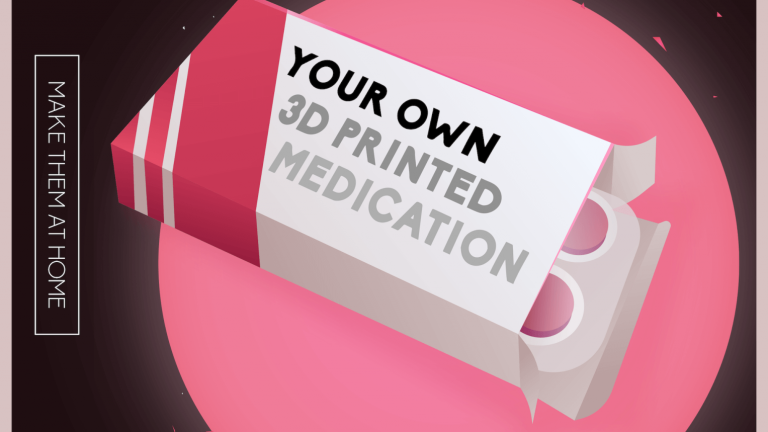
3D printing drugs is a promising trend for personalised medication based on individual patient’s needs. For example, multi-layered, 3D printed “polypills” can contain several drugs in one pill to assist patients in medication adherence.
The ability to 3D print drugs can also decentralise drug manufacturing, bringing the production of medication closer to the point of care. Pharmacies could 3D print customised pills and improve medication access to underserved areas.
8. in silico clinical trials
in silico clinical trials promise to enable the conduction of experiments wholly via computer simulation, without the need for animal or human testing. By running drug trials on computer simulations of organs, this approach can be both time and cost effective while circumventing the side effects on live participants.
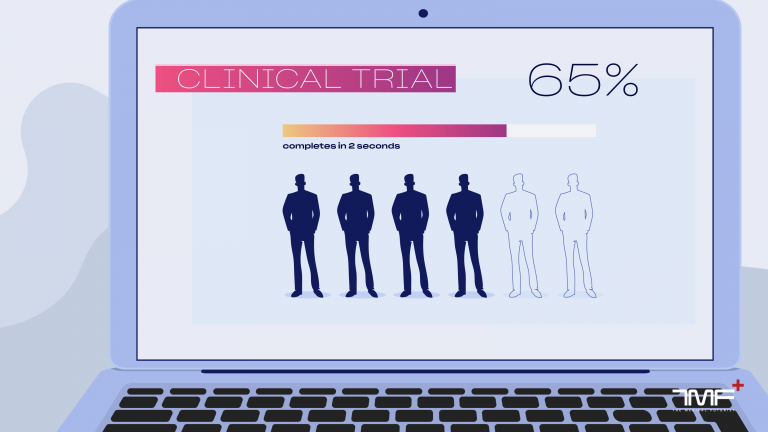
While this promise has yet to be fully realised, progress has been made towards it. The Wyss Institute has developed organs-on-a-chip to emulate the complex structures and functions of living human organs. Their technology has been leveraged by Emulate Inc for efficient drug development. The mathematical model of human physiology created by HumMod has been used in several research projects. Further envisioning a future trending towards in silico trials, the Virtual Physiological Human Institute has been set up to encourage the effective adoption of in silico medical research.
The future of the pharma industry relies on patient design
These 8 trends hold tremendous potential for the future of the pharmaceutical industry. From personalised care to efficient supply chains, pharma companies integrating such approaches can consider their investments beyond ROI but also as investments in the future of the field thanks to the considerable ROV they represent.
However, such endeavours will be in vain if companies don’t embrace patient design. This entails the involvement of patients at the highest level of decision-making processes. In the digital health age, patients are more empowered than ever and want to have their voices heard in matters that impact their health. This is exemplified by patient-led DIY artificial pancreas and DIY medicine movements.
The FDA has even acknowledged the importance of patient design and has established its Patient Engagement Advisory Committee. Pharma companies should adopt a similar approach and include patient input in their midst. For example, they can utilise platforms such as Antidote to help patients find the right clinical trial while cutting costs incurred due to delays in finding participants.
Patients can give invaluable insights to companies with their experience as medication users and benefit the drug development process. It’s a win-win situation that begins by adopting the principles of patient design.
Written by Dr. Bertalan Meskó & Dr. Pranavsingh Dhunnoo
The post 8 Top Pharma Trends In The Digital Health and AI Era appeared first on The Medical Futurist.