HIT Consultant – Read More
What You Should Know
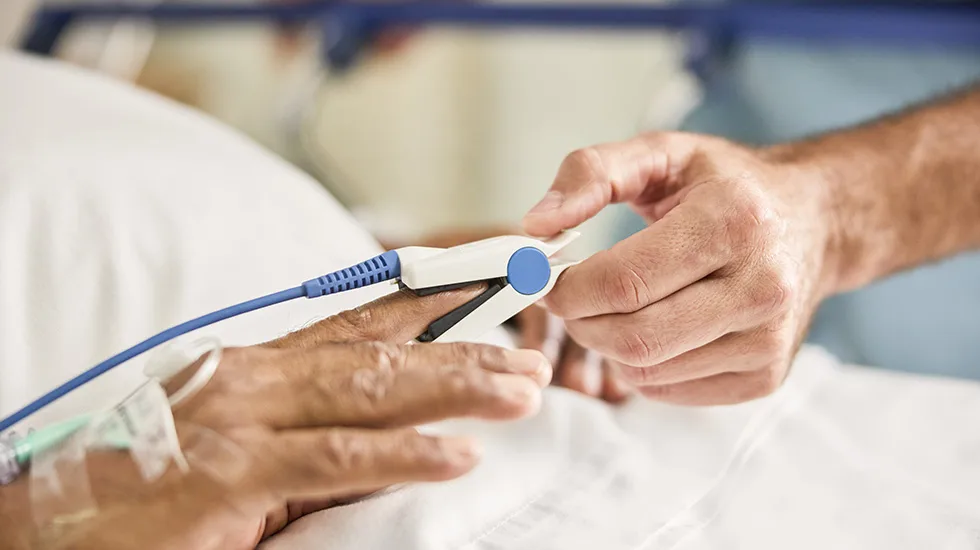
- Philips has officially secured U.S. FDA 510(k) clearance for its next-generation reusable SpO₂ clip sensor.
- In controlled desaturation studies, the enhanced sensor achieved an Accuracy Root Mean Square (ARMS) value of 1.6%—nearly twice as accurate as the 3% threshold recommended by ISO guidelines and recognized by the FDA.
- Addressing industry-wide pulse oximetry disparities, the sensor demonstrated consistent clinical performance across a broad spectrum of skin tones, with accuracy varying by less than 0.5% between light and dark skin pigmentation groups.
- The sensor incorporates internal optical upgrades to improve signal-to-noise quality and measurement consistency across varied patient populations and clinical environments.
- Backed by a comprehensive pulse oximetry validation program aligned with IEC and ISO standards, the cleared reusable sensor will roll out in select global markets.
Superior ARMS Precision and Optical Refinements
The architectural strategy driving Philips‘ latest sensor moves directly away from legacy optical designs to enforce strict signal consistency at the point of care. Pulse oximetry signal quality is routinely compromised by external ambient noise, motion artifacts, and tissue absorption variations.
By applying internal optical upgrades, Philips enhances signal capture directly at the emitter and photodiode interface:
- 1.6% ARMS Accuracy: In controlled clinical desaturation studies, the reusable clip sensor achieved an Accuracy Root Mean Square (ARMS) value of 1.6%—outperforming the 3.0% standard recommended by the International Organization for Standardization (ISO) and recognized by the FDA.
- Demographic Equivalence: Testing across light and dark skin pigmentation cohorts within a range of 85% to 100% showed an accuracy variance of less than 0.5%, establishing consistent diagnostic reliability across diverse patient demographics.
- Regulatory Alignment: The clearance is supported by Philips’ comprehensive validation program, structured to comply with evolving guidance from the FDA, ISO, and the International Electrotechnical Commission (IEC).
“Providing clinicians with reliable data to deliver better care to more people is at the heart of everything we do,” said Sachin Chaudhari, Category Leader, Clinical Measurements and Specialty Monitoring at Philips. “This FDA clearance reflects our ongoing investment in advancing sensor technology and rigorous validation practices, and we’ll continue applying these innovations across our pulse oximetry portfolio so clinicians can make care decisions with even greater confidence.”