
HIT Consultant – Read More
What You Should Know:
- Copilot Health Report: Microsoft published new data exploring the ways people use the consumer version of Copilot for health-related topics, having analyzed over 500,000 deidentified global health and wellbeing related conversations from January 2026: Health Check: How People Use Copilot for Health | Microsoft AI
- Digital Front Door: The findings challenge the assumption that users are treating generative AI like a glorified encyclopedia. Instead, Copilot is rapidly becoming the digital front door to the healthcare system, acting as an interpreter, a medical navigator, and a midnight triage nurse.
- The Scale: Across its consumer products (including Bing and Copilot), Microsoft AI is now handling over 50 million health questions daily.
Moving Beyond General Search
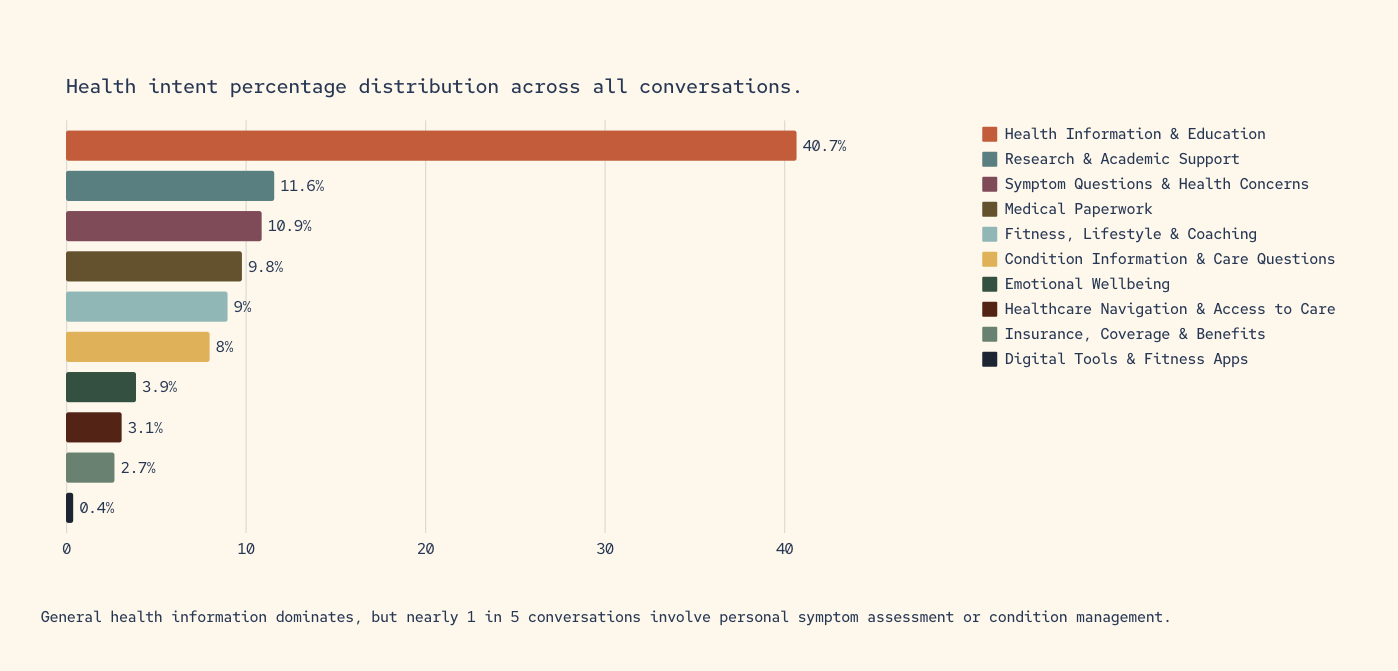
The data reveals a stark shift from generic curiosity to deeply personal clinical engagement. Nearly 1 in 5 conversations involve a user describing their own symptoms, getting help interpreting complex laboratory or imaging results, or managing an active condition.
Furthermore, roughly 6% of health questions revolve around opaque administrative friction: navigating insurance benefits, comparing care options, and managing medical paperwork. In a landscape defined by information asymmetry, patients are using AI to translate the bureaucratic maze of modern healthcare.
The Midnight Spike and the “Sandwich Generation”
The timing and context of these queries reveal massive gaps in our traditional care delivery models. While general health research dominates the daytime, deeply personal queries follow a distinct temporal pattern. Conversations surrounding emotional wellbeing and acute symptom interpretation rise steadily through the evening, peaking late at night.
This nocturnal spike highlights a critical vulnerability: when traditional clinics close and doctors are unreachable, patients are turning to the only entity that is always awake and ready to answer.
Equally revealing is who users are asking about. The report identified massive proxy usage driven by the “sandwich generation”—adults simultaneously raising children and managing care for aging parents. Across symptom and condition management queries, 1 in 7 conversations were conducted on behalf of someone else. These users are tasking Copilot with summarizing complex medical histories, comparing treatment options, and translating clinical jargon for non-medical caregivers.
The Device Divide: Urgent vs. Academic
The context of the query heavily dictates the hardware used.
- Mobile: Users are twice as likely to ask about active symptoms and condition management on their phones compared to desktop. Emotional wellbeing conversations are 75% more common on mobile.
- Desktop: Conversely, desktop usage skews heavily (3x more common) toward research and academic support, reflecting professional utilization by clinicians, medical students, and researchers.
For more information, visit https://microsoft.ai/news/health-check-how-people-use-copilot-for-health/