HIT Consultant – Read More
What You Should Know
- Clinical AI leader Cadence has announced a $100 million Series C funding round led by Spark Capital, with heavy participation from Thrive Capital, General Catalyst, Coatue, and major health system venture arms.
- The company has simultaneously finalized new clinical affiliations with Duke Health and Texas Health Resources, expanding its national footprint to over 20 prominent health systems.
- Cadence now treats more than 100,000 active older adults diagnosed with chronic conditions, leveraging supervised AI agents to monitor daily vitals and manage medications.
- Validated in peer-reviewed literature, the platform drives an annual $1,302 per-patient reduction in total care costs, delivering a return of over $3 to Medicare for every dollar spent.
- The platform achieves rapid operational velocity, clocking a 3.5-minute median response time for incoming vitals alerts, with 55% solved autonomously through automated workflows.
The administrative and clinical infrastructure managing the nation’s aging demographic is operating under an unsustainable structural deficit. Chronic disease stands as the single largest driver of the $4.5 trillion American healthcare expenditure, yet the system remains fundamentally built around reactive, episodic brick-and-mortar clinic visits. Between these periodic appointments, a critical data isolation gap persists. A patient’s physiological status—fluctuating blood pressures, fluid retention spikes, or declining oxygen trends—frequently goes completely undetected until a acute metabolic or cardiovascular crisis occurs.
This visibility void forces vulnerable older adults into preventable emergency department visits and costly inpatient admissions, compounding severe primary care labor constraints. When healthcare delivery networks lack the staffing capacity to continuously monitor distributed patient populations, unmanaged disease progression accelerates. Reversing this cost curve requires a proactive, automated layer of remote clinical intelligence capable of extending the physical workforce while driving continuous home-based intervention.
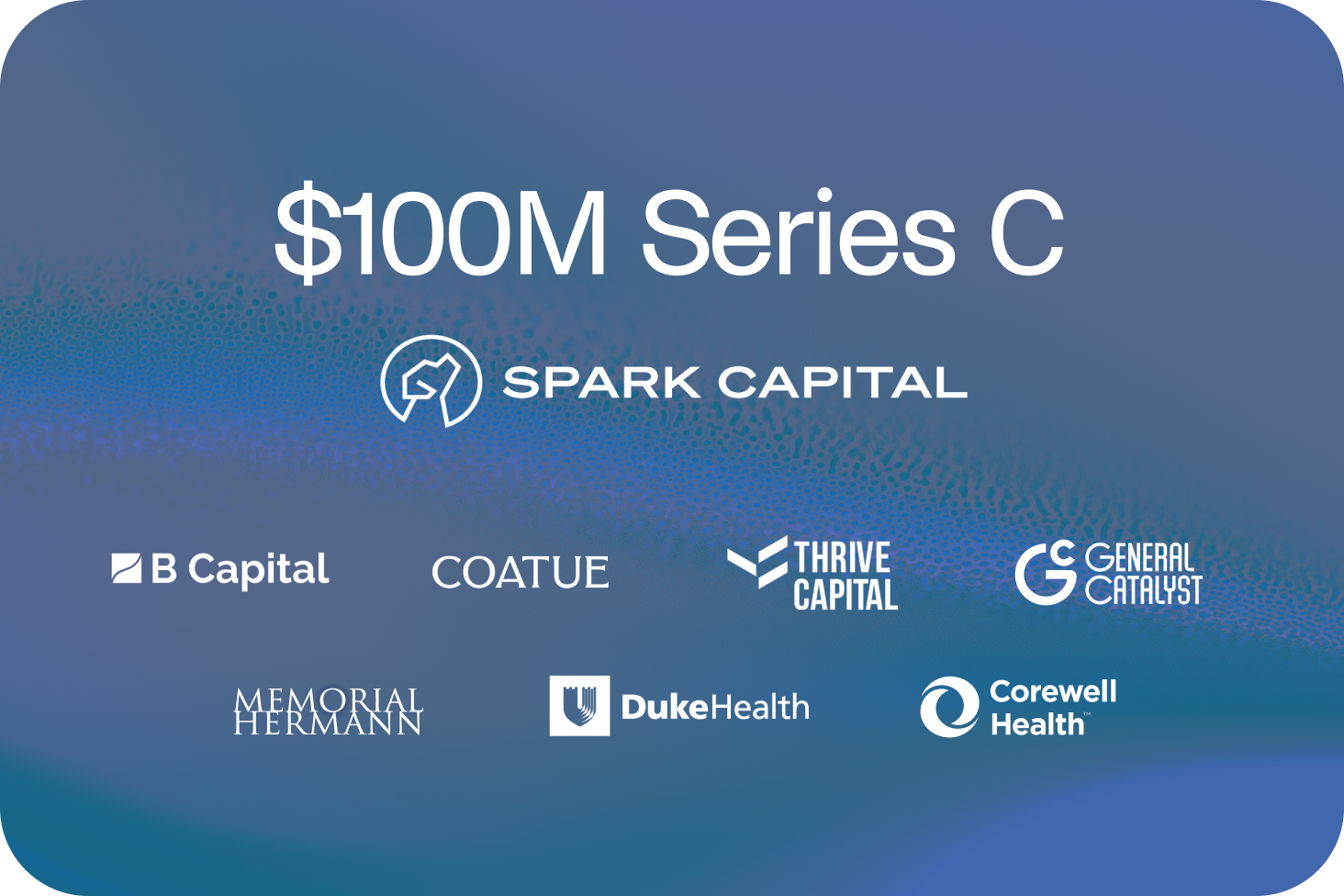
To bridge this inter-visit data gap and establish an accountable system of remote medicine, chronic care AI pioneer Cadence has finalized a $100M Series C financing round. Led by premier technology investor Spark Capital,, the heavily oversubscribed round includes continuous backing from Thrive Capital, General Catalyst, Coatue and B Capital, alongside strategic health system investments from Corewell Health Ventures, Memorial Hermann, and Duke Health.
Activating Clinical Intelligence via Supervised Agentic Workflows
The core technology driving Cadence moves past basic mobile alerts or flat dashboarding to operate as an integrated, coding-aware system of record. Deeply embedded within the medical groups, electronic medical records (EMRs), and existing clinical workflows of its partnering health networks, the platform builds a real-time data foundation directly from the patient’s home.
Supervised AI agents continuously track incoming biometric streams, instantly parsing complex physiological signals to separate standard ambient baseline variations from high-risk medical exceptions. When an anomalous vital threshold is breached, the platform coordinates immediate triage.
The operational velocity metrics demonstrate clear administrative relief:
- Frictionless Triage: The platform clocks a tight 3.5-minute median response time for incoming vitals alerts.
- Autonomous Resolution: Upwards of 55% of all incoming alerts are resolved appropriately by the automated system configuration without requiring human adjustment, eliminating administrative fatigue.
- Clinical Workforce Leverage: High-risk anomalies are routed seamlessly to Cadence’s dedicated medical group, allowing automated agents to manage routine documentation, lifestyle coaching, and medication compliance.
“We believe the most consequential AI companies of the next decade will be built in categories where the technology changes the underlying mechanics of the business,” observed Will Reed, partner at Spark Capital and new Cadence board member. “Cadence has done the hardest work first – demonstrating clinical outcomes, building trust with the country’s leading health systems, and proving out the safe and effective deployment of AI inside care delivery.”
Proving the 3-to-1 Return
The clinical performance data generated across Cadence’s national health system footprint proves the definitive Return on Investment (ROI) of a continuous care architecture. In peer-reviewed literature and large-scale multi-center studies, the deployment of Cadence’s platform drove a striking 230% increase in heart failure patients successfully optimized on guideline-directed medical therapy (GDMT).
Concurrently, the platform achieved a 70% relative increase in blood pressure control across hypertensive patient panels and an absolute 27% reduction in total hospital admissions.
For risk-bearing health plans and federal payers, these clinical metrics translate directly into structural cost containment. The platform secures a $1,302 per-patient annual reduction in the total cost of care, translating to $2.7 million saved every single week for Medicare. Crucially, these validated outcomes remain consistent across rural, urban, and medically underserved communities, with the data proving that Cadence’s remote patient care infrastructure returns more than $3 to Medicare for every single dollar spent.
To expand this economic model, Cadence has announced major new clinical affiliations with Duke Health and Texas Health Resources. Moving forward, the platform now orchestrates remote care for over 100,000 active older adults across more than 20 major health systems.
Jeffrey Ferranti, MD, MS, Senior Vice President and Chief Digital Officer of Duke Health, reinforced this long-term integration strategy, noting that the moments that matter most for a patient’s health occur continuously at home, not during an isolated clinic encounter. Partnering with Cadence allows academic health networks to monitor chronic conditions around the clock, intervening before complications emerge to bend the healthcare cost curve permanently downward.