
HIT Consultant – Read More
What You Should Know
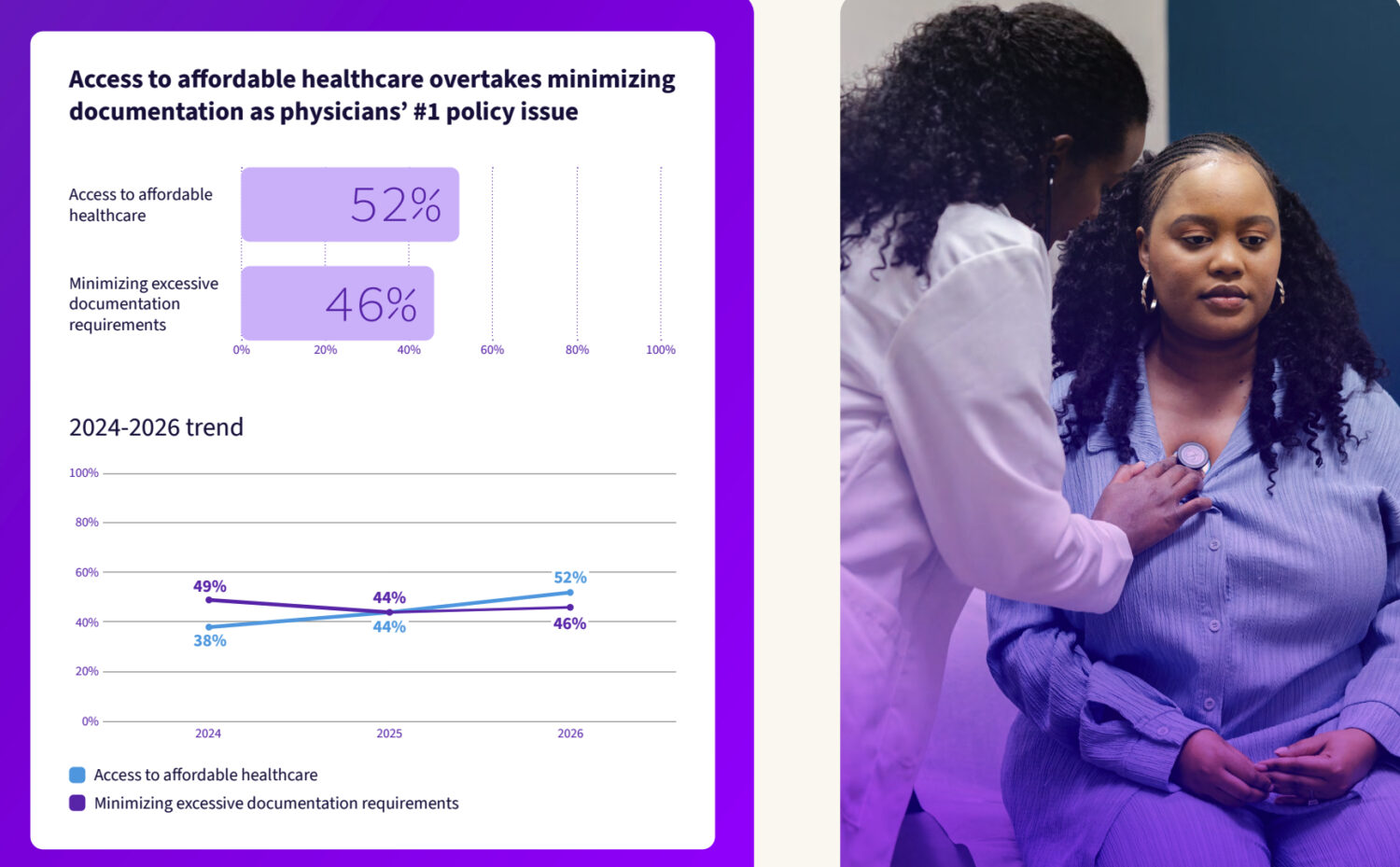
- The Affordability Crisis: According to the newly released 2026 Physician Sentiment Survey from athenahealth’s research hub, athenaInstitute, access to affordable healthcare has surged to become the #1 policy concern among physicians (52%, up a massive 14 points over the last three years), indicating that patient financial strain is now directly impacting clinical delivery.
- The Technology Paradox: While overall optimism about the U.S. healthcare system remains stagnant at an abysmal 30%, physicians are actually experiencing significant tech gains. 62% report increased efficiency from their EHRs, and 42% are actively experiencing AI-driven reductions in administrative burden.
- The AI Resource Divide: A dangerous technological gap is opening up. 65% of physicians at enterprise organizations are comfortable with AI, compared to just 43% at small practices. Consequently, 90% of small practices now fear losing their independence to consolidation.
- The Rural Emergency: Rural healthcare is facing a massive workforce stability crisis. Rural doctors experience significantly higher burnout than their urban peers (67% vs. 52%), and a staggering 69% are considering leaving medicine entirely.
- The VBC Hesitancy: Despite the industry’s push toward Value-Based Care (VBC), providers remain highly skeptical. While 69% want to learn more, over half (53%) are actively uncomfortable with shared-risk models that hold them financially accountable for patient outcomes.
The Affordability Crisis is Now a Clinical Crisis
Polling over 1,000 primary care and specialist physicians nationwide, the survey reveals a massive shift, “access to affordable healthcare” has surged past documentation burdens to become the absolute top policy concern for American physicians. At 52%—a 14-point jump over the last three years—it is clear that the financial toxicity of the U.S. healthcare system is no longer just a “patient issue.”
When patients cannot afford their medications, delay preventative screenings, or skip follow-up visits due to high deductibles, physicians cannot do their jobs effectively. The financial barrier has become a clinical barrier.
The AI Divide and the Threat to Independent Practice
The good news in the data is that AI is moving from a buzzword to a functional utility. Today, 42% of physicians report that AI has actively reduced their administrative burdens (up from 37% last year), and 62% say their EHR makes them more efficient.
However, we are witnessing the emergence of a severe technological class divide. While 65% of physicians at large enterprise organizations report comfort with AI, that number drops to just 43% for small practices.
This isn’t just a matter of tech literacy; it is a matter of capital allocation, data infrastructure, and regulatory bandwidth. As larger systems leverage AI to automate their revenue cycles and scale patient outreach, smaller practices risk being left behind. It is no wonder that a staggering 90% of small practices now fear losing their independence. Without aggressive policy intervention or more accessible AI tools, the current market dynamics will inevitably accelerate corporate consolidation.
The Rural Collapse
Nowhere is this systemic strain more visible than in rural America. The athenahealth data paints a picture of a rural workforce pushed to the absolute brink. Compared to their urban and suburban counterparts, rural physicians report dramatically higher burnout rates (67% vs. 52%). Burdened by severe interoperability issues and a lack of resources, an alarming 69% of rural doctors are considering leaving medicine entirely. If the industry does not figure out how to deploy automated workflows and AI-driven clinical support to these under-resourced areas, we are looking at the total collapse of rural care continuity.
Survey Background/Methodology
The Physician Sentiment Survey offers a comprehensive view of physician attitudes toward the profession, industry challenges, and evolving perceptions of emerging technologies. The 2026 survey was conducted online within the U.S. by The Harris Poll on behalf of athenahealth from October 14-29, 2025, surveying 1,045 physicians (752 PCPs, 291 specialists), with 7% using athenahealth’s EHR. Where applicable, results are compared to prior waves from January 2025 and October-November 2023.
Learn more about the 2026 Physician Sentiment Survey, including additional findings.