


Introduction
Effective Revenue Cycle Management (RCM) is the financial backbone of any successful healthcare practice. In an era of shrinking reimbursements, rising administrative costs, and complex payer rules, manually managing the billing cycle is no longer viable. The U.S. healthcare system loses an estimated $125 billion annually to billing inefficiencies and revenue leakage, with administrative costs consuming a staggering 25% of total U.S. hospital spending. With average claim denial rates hovering between 5–10%—and often exceeding 15% in complex specialties—practices are leaving significant revenue on the table.
The industry is responding with technology. As of 2025, AI adoption in RCM has reached 65% across U.S. healthcare organizations, a testament to the power of automation in predicting denials, assisting with coding, and streamlining collections. This technological shift is fueling a global RCM market projected to reach $238.6 billion by 2030. Getting RCM right directly impacts a practice’s financial health, cash flow, and ultimately, its ability to deliver quality patient care.
The right RCM platform can be transformative, increasing collections by 10–15%, reducing claim denial rates by up to 40%, and cutting administrative overhead significantly. This guide evaluates the top 10 RCM software platforms for 2025, providing the detailed insights healthcare leaders need to choose the right financial partner for their organization.
Evaluation Criteria
Each platform in this guide was evaluated based on a comprehensive set of criteria critical to modern healthcare financial operations:
- Claims Management & Automation: End-to-end claims submission, scrubbing, tracking, and resubmission capabilities.
- Denial Management: AI-driven denial prevention, root cause analysis, and appeals workflows.
- EHR/PM Integration: Depth of integration with electronic health records and practice management systems.
- Patient Payment Tools: Patient billing portals, payment plans, price transparency, and self-pay management.
- Eligibility & Prior Authorization: Real-time insurance verification and automated authorization workflows.
- Reporting & Analytics: Financial dashboards, KPI tracking, payer performance analysis, and revenue forecasting.
- Coding Accuracy: AI-assisted coding, compliance tools, and charge capture automation.
- Pricing & ROI: Total cost of ownership, pricing model (subscription vs. revenue-share vs. per-claim), and return on investment.
- Implementation & Support: Onboarding timeline, training resources, and ongoing customer support quality.
Top 10 RCM Software Platforms
1. Waystar
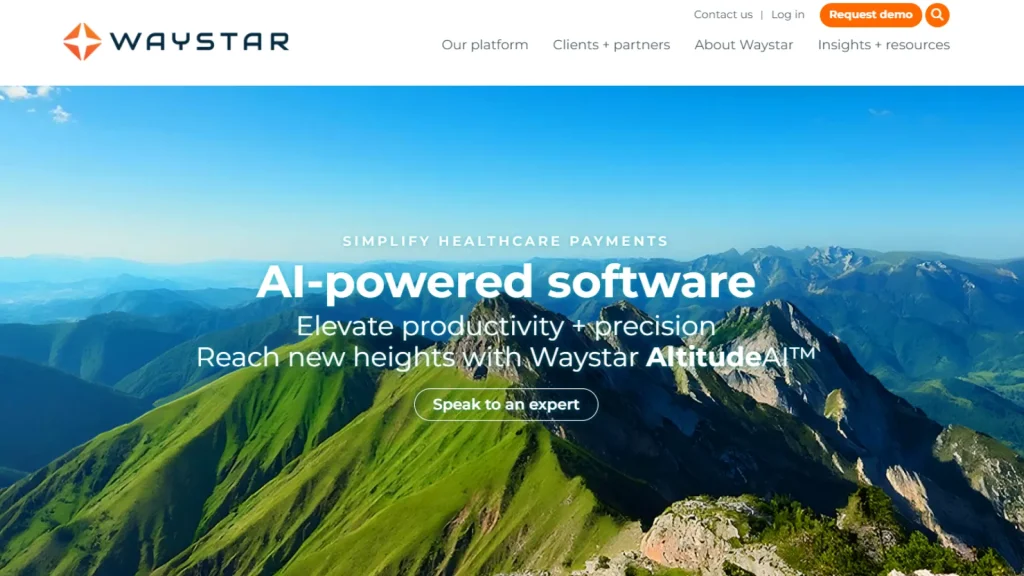
Waystar stands as the undisputed leader in healthcare revenue cycle technology. Formed through the merger of ZirMed and Navicure — and having since acquired Patientco and eSolutions — Waystar has built the most comprehensive cloud-based RCM platform in the market. Its unified platform connects the entire claims lifecycle, from eligibility verification and prior authorization to claims submission, denial management, patient payments, and analytics. With connectivity to over 1,000 payers and access to data from billions of transactions, Waystar’s AI and machine learning capabilities deliver predictive insights that proactively prevent denials before they happen.
- Star Rating: 4.8 / 5
- Target Audience: Mid-size to enterprise health systems and large group practices.
Key Features:
- AI-powered claim scrubbing with 1,000+ payer connections
- Predictive denial prevention using machine learning
- Automated prior authorization with real-time status tracking
- Patient payment hub with payment plans, digital statements, and self-service portal
- Advanced analytics dashboards with payer performance benchmarking
- Clearinghouse services with 99.9% transaction uptime
- Seamless integration with 500+ EHR/PM systems
Pricing: Custom enterprise pricing; revenue-share models available.
Pros:
- Industry’s largest payer network (1,000+ connections)
- AI-powered denial prevention reduces rework by up to 40%
- Comprehensive end-to-end RCM covering the full revenue cycle
- Robust analytics with real-time financial performance tracking
- Proven scalability for high-volume practices and health systems
Cons:
- Pricing can be prohibitive for small independent practices
- Implementation and onboarding can be complex for large deployments
- Steep learning curve for advanced analytics features
Best for: Large group practices, hospital systems, and health plans seeking enterprise-grade RCM automation with AI-driven denial prevention.
2. athenahealth
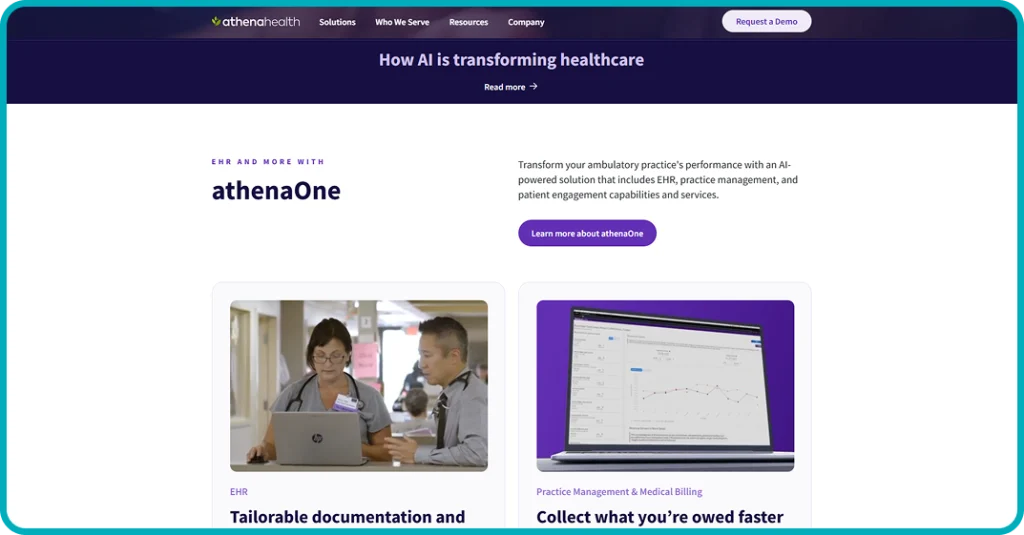
athenahealth operates on a fundamentally different model than most RCM platforms: a continuously learning, cloud-based network that aggregates billing intelligence from over 160,000 providers and 100 million patients. Its athenaCollector module is the billing and RCM backbone of the athenaOne platform, which also includes EHR and patient engagement tools. What sets athenahealth apart is its revenue-share pricing model — the company only gets paid when you get paid, aligning incentives perfectly. Its rules engine is updated daily with the latest payer requirements, and automated claim resubmission workflows mean denied claims are addressed without manual intervention.
- Star Rating: 4.5 / 5
- Target Audience: Small to mid-size ambulatory practices.
Key Features:
- Revenue-share pricing (no upfront cost — pay a % of collections)
- Network-based intelligence from 160,000+ providers continuously updates billing rules
- Automated claim scrubbing, submission, and resubmission workflows
- Integrated patient portal with online payments, statements, and appointment scheduling
- Real-time eligibility verification and benefits checking
- Denial management with automated follow-up workflows
- Reporting suite with 80+ pre-built financial and operational reports
Pricing: 2–7% of collections (varies by specialty and practice size).
Pros:
- Revenue-share model aligns vendor incentives with practice success
- No manual rules maintenance — payer requirements updated automatically
- Deep EHR integration eliminates duplicate data entry
- Network effect provides benchmark data across similar practices
- Strong denial management with auto-resubmission workflows
Cons:
- Percentage-based fees can become expensive as revenue grows
- Less flexibility for highly customized workflows
- Some users report limited control over billing rules and processes
- Not ideal for large hospital systems (best suited for ambulatory settings)
Best for: Independent and small to mid-size ambulatory practices that want a fully integrated EHR + RCM platform with minimal upfront investment.
3. Epic Systems (Resolute)
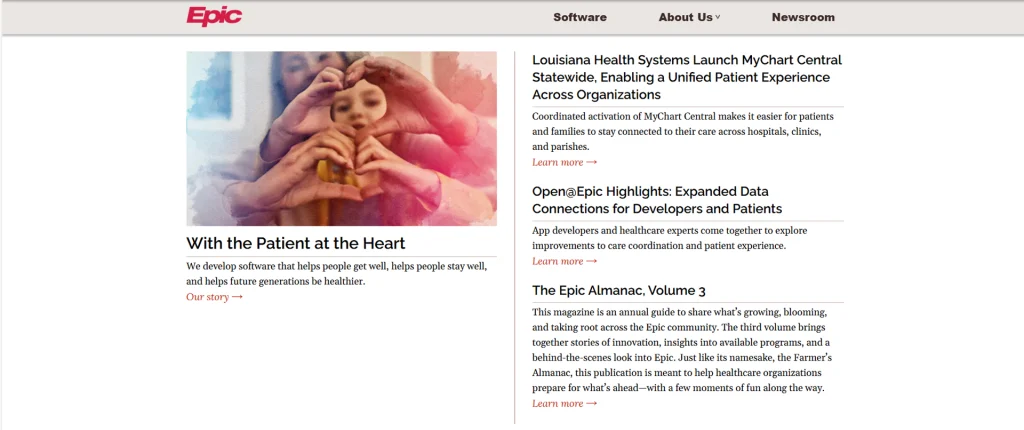
Epic’s revenue cycle solution — branded as Resolute — is the gold standard for large hospitals, integrated delivery networks, and academic medical centers. As part of Epic’s unified ecosystem, Resolute Professional Billing and Hospital Billing are seamlessly embedded within the same platform that manages clinical documentation, orders, and scheduling. This deep integration eliminates the data silos that plague disconnected RCM systems, ensuring that every clinical event automatically generates a clean, code-validated charge. Epic clients consistently achieve first-pass claim rates above 95% and denial rates below 5%.
- Star Rating: 4.4 / 5
- Target Audience: Large hospitals and integrated health systems.
Key Features:
- Resolute Professional and Hospital Billing modules fully integrated with Epic EHR
- AI-assisted coding with automated charge capture and CDI (Clinical Documentation Integrity)
- Real-time charge reconciliation across all departments and care settings
- MyChart patient portal for digital billing, estimates, payment plans, and self-pay management
- Advanced analytics with Radar dashboards and Cogito data warehouse integration
- Epic-to-Epic interoperability for referral and claim data sharing across networks
- Automated eligibility, authorization, and pre-service financial clearance workflows
Pricing: Multi-million dollar implementations; custom enterprise licensing required.
Pros:
- Unmatched clinical-to-financial integration within a single unified platform
- Industry-leading first-pass claim rates (95%+) for large systems
- MyChart portal drives patient payment adoption and reduces A/R days
- Extensive analytics and reporting capabilities via Cogito and SlicerDicer
- Massive installed base means broad community support and third-party integrations
Cons:
- Extremely high cost of implementation, maintenance, and licensing
- Not accessible for small or independent practices
- Complex and lengthy implementation timelines (12–24 months)
- Rigid platform architecture limits customization for unique workflows
Best for: Large hospital systems, academic medical centers, and integrated delivery networks seeking an all-in-one clinical and financial platform with the deepest possible integration.
4. Tebra (formerly Kareo)
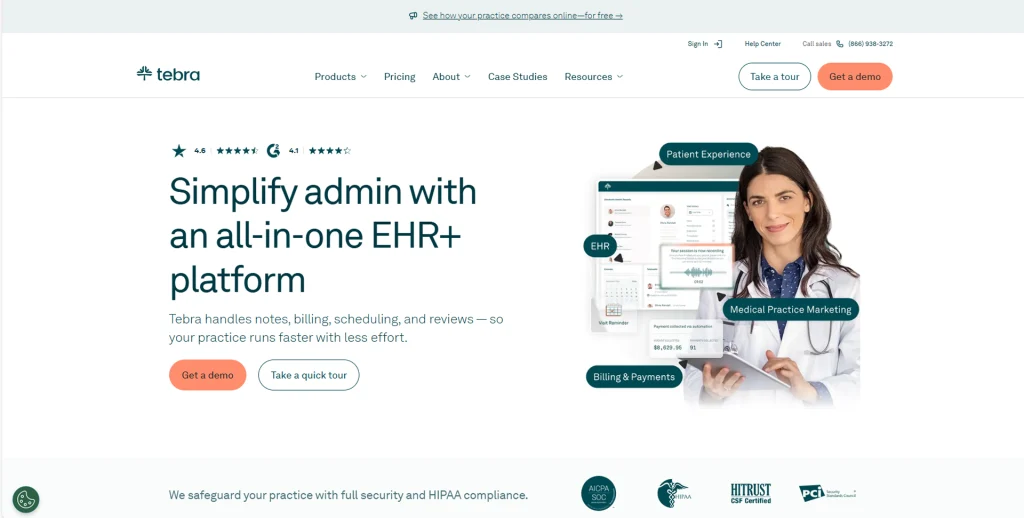
Tebra — the result of the 2021 merger between Kareo and PatientPop — was purpose-built for independent medical practices with 1–10 providers. While larger platforms require months of implementation and six-figure contracts, Tebra is designed to be up and running in days, with an intuitive interface that doesn’t require dedicated billing staff to manage effectively. Tebra’s unique strength is combining clinical, operational, and financial tools — including digital marketing and online reputation management — into a single platform that addresses the full lifecycle of an independent practice.
- Star Rating: 4.0 / 5
- Target Audience: Independent small practices (1–10 providers).
Key Features:
- Automated claims submission with real-time payer connectivity
- Insurance eligibility verification with batch checking capabilities
- ERA/EOB automatic posting and payment reconciliation
- Patient billing portal with online payment, statements, and text-to-pay
- Integrated practice management with scheduling and clinical charting
- Built-in reporting for A/R aging, collections, and denial tracking
- Digital marketing and patient acquisition tools (PatientPop integration)
Pricing: Starting at ~$110/provider/month (billing module); bundled packages available.
Pros:
- Fast implementation — up and running in days, not months
- Intuitive, user-friendly interface designed for non-billing specialists
- Affordable entry-level pricing ideal for small independent practices
- All-in-one platform covering clinical, billing, and marketing
- Strong patient engagement and online presence tools
Cons:
- Limited scalability for growing or large group practices
- Reporting capabilities less robust than enterprise solutions
- Billing automation depth is lighter compared to Waystar or athenahealth
- Customer support response times can lag during peak periods
Best for: Independent small practices (1–10 providers) that want an affordable, easy-to-use all-in-one platform covering RCM, EHR, and patient engagement without a complex implementation.
5. AdvancedMD
AdvancedMD delivers a modular, cloud-based suite of EHR, practice management, and billing tools tailored for independent ambulatory practices. Its RCM capabilities are among the most sophisticated available outside of enterprise platforms, featuring an AI-assisted coding engine, robust claim scrubbing with thousands of customizable rules, and automated prior authorization workflows. AdvancedMD’s reporting suite is particularly powerful, offering over 200 pre-built reports and custom report builders that give practices deep visibility into financial performance, payer contract compliance, and staff productivity.
- Star Rating: 4.1 / 5
- Target Audience: Independent and small group ambulatory practices.
Key Features:
- AI-assisted coding and charge capture with CPT/ICD-10 suggestions
- Automated claim scrubbing with 3,000+ configurable billing rules
- Integrated prior authorization with electronic submission and tracking
- Patient payment portal with self-scheduling, digital intake, and bill pay
- 200+ pre-built reports and custom report builder
- Automated ERA/EOB posting with exception-based payment reconciliation
- Denial management with root cause analysis and resubmission tracking
Pricing: Starting at ~$429/provider/month (billing module); bundled EHR+PM+Billing packages available.
Pros:
- Exceptionally powerful reporting and financial analytics (200+ reports)
- Deep workflow customization for complex specialty billing requirements
- AI-assisted coding improves accuracy and reduces downcoding
- Strong patient experience tools drive faster payment collection
- Modular architecture allows practices to add only the tools they need
Cons:
- Steeper learning curve compared to simpler platforms
- Higher price point than many competitors for small practices
- Implementation requires dedicated time and training investment
- Customer support quality has received mixed reviews from some users
Best for: Established independent practices and small group practices in ambulatory specialties that need sophisticated RCM tools, powerful reporting, and advanced workflow automation.
6. eClinicalWorks
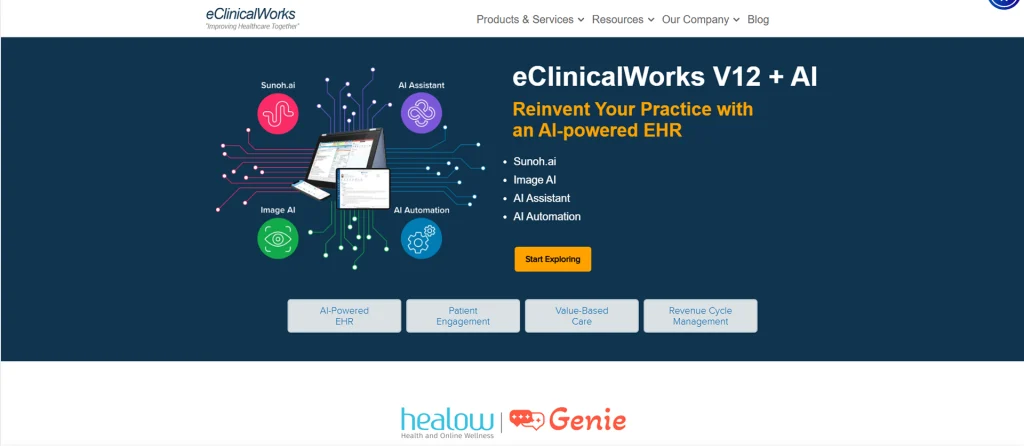
eClinicalWorks is one of the most widely deployed EHR and practice management platforms in the U.S., serving over 180,000 healthcare professionals across 850,000 medical facilities. Its RCM capabilities are tightly woven into the same platform as its EHR, meaning charges flow automatically from clinical documentation into the billing engine without manual intervention. eClinicalWorks also offers a fully managed billing service (eClinicalWorks Billing Services) for practices that prefer to outsource their RCM entirely — providing a one-stop solution for both platform and services.
- Star Rating: 4.0 / 5
- Target Audience: Single and multi-specialty ambulatory practices.
Key Features:
- 100,000+ billing rule engine for claim scrubbing and error prevention
- Automated charge capture from EHR documentation with built-in coding guidance
- healow patient portal with digital bill pay, statements, and payment plans
- Prior authorization management with electronic submission and status tracking
- Denial management with automated follow-up and resubmission workflows
- eClinicalWorks Billing Services (fully managed RCM outsourcing option)
- Real-time eligibility verification with batch processing capabilities
Pricing: ~$449/provider/month (combined EHR + PM + Billing); managed billing service pricing varies.
Pros:
- 100,000+ billing rules drive one of the highest first-pass claim rates in the industry
- Tightly integrated EHR-to-billing workflow eliminates manual charge entry
- healow patient portal has high adoption rates and facilitates faster collections
- Option for fully managed billing services ideal for understaffed practices
- Broad specialty coverage across primary care, multi-specialty, and FQHCs
Cons:
- User interface can feel dated and complex compared to newer platforms
- Customer support quality has been inconsistently rated by users
- Historical compliance and data accuracy issues have been documented
- Heavy feature set can be overwhelming for smaller, simpler practices
Best for: Single and multi-specialty ambulatory practices that want a deeply integrated EHR + RCM platform with proven claim scrubbing capabilities and the option to outsource billing entirely.
7. NextGen Healthcare

NextGen Healthcare occupies a strong position in the mid-size ambulatory market, particularly for multi-specialty group practices and community health centers (FQHCs). Its NextGen Enterprise PM and NextGen Office platforms offer comprehensive revenue cycle functionality with a strong focus on specialty-specific billing rules and workflows. NextGen’s automated coding engine is particularly valued in specialties like orthopedics, ophthalmology, OB/GYN, and behavioral health, where coding complexity is high. NextGen also offers managed billing services through its NextGen RCM Services division, providing practices the flexibility to handle billing in-house, outsource it, or adopt a hybrid model.
- Star Rating: 4.0 / 5
- Target Audience: Mid-size multi-specialty practices and FQHCs.
Key Features:
- Specialty-specific billing rules and automated coding workflows
- NextGen Patient Experience Platform for digital billing and payments
- Integrated prior authorization with electronic tracking and alerts
- NextGen RCM Services for fully managed or hybrid billing outsourcing
- A/R management with automated follow-up queues and payer-specific workflows
- Real-time eligibility verification with benefit detail extraction
- Population health and quality reporting tied to financial performance
Pricing: Starting at ~$379/provider/month; NextGen RCM Services pricing varies.
Pros:
- Excellent specialty-specific billing rules for high-complexity specialties
- Flexible model: in-house, outsourced, or hybrid RCM options
- Strong patient engagement tools with measurable impact on collections
- Good fit for FQHCs with UDS reporting and grant compliance features
- Integrated population health tools connect quality performance to revenue
Cons:
- Implementation timelines can extend 6–12 months for large organizations
- Reporting customization options are somewhat limited out-of-the-box
- Interface can feel less modern than newer cloud-native platforms
- Customer support availability during peak periods receives mixed reviews
Best for: Mid-size multi-specialty group practices, community health centers (FQHCs), and organizations requiring specialty-specific billing rules with flexible in-house or outsourced RCM options.
8. Greenway Health (Intergy)
Greenway Health’s Intergy platform is a purpose-built EHR and practice management solution designed for ambulatory specialty practices. Greenway has carved out a strong niche with specialty groups in cardiology, gastroenterology, primary care, and OB/GYN. Its RCM functionality centers on reducing manual billing work through automated charge capture, real-time eligibility checks, and a denial management workflow engine. Greenway’s cloud-based platform also connects with its own Clearinghouse Services, enabling direct claim submission and status tracking without third-party intermediaries.
- Star Rating: 3.8 / 5
- Target Audience: Ambulatory specialty practices (cardiology, GI, OB/GYN).
Key Features:
- Integrated EHR + PM + RCM in a single cloud-based platform
- Automated charge capture linked directly to clinical documentation
- Greenway Clearinghouse Services for direct claim submission and tracking
- Real-time eligibility and benefits verification with patient cost estimates
- Denial management with automated appeal workflow and tracking
- Specialty-specific billing rules for cardiology, GI, OB/GYN, and primary care
- Greenway Managed Services for outsourced billing and coding support
Pricing: Custom quote-based pricing; Greenway Managed Services pricing varies.
Pros:
- Strong specialty-specific content and billing rule libraries
- Single-vendor solution reduces integration complexity
- Greenway Clearinghouse eliminates need for third-party clearinghouse
- Managed services option for practices preferring outsourced billing
- Good fit for specialty groups with moderate complexity
Cons:
- Platform technology can feel dated compared to newer cloud-native competitors
- Customer support and service delivery have received inconsistent reviews
- Less competitive on analytics and AI-driven features vs. Waystar or athenahealth
- Limited scalability for very large or highly complex health systems
Best for: Ambulatory specialty practices (cardiology, GI, OB/GYN) that want a single integrated EHR + RCM platform with the option to outsource billing to Greenway’s own managed services team.
9. Change Healthcare (Optum)
Change Healthcare, now fully integrated under the Optum/UnitedHealth Group umbrella, operates one of the largest healthcare technology networks in the United States. Its RCM solutions process over 15 billion healthcare transactions annually, connecting providers, payers, and pharmacies across the country. Change Healthcare’s deep payer-side relationships provide unique insight into payer rules, payment patterns, and denial trends that no independent RCM vendor can match. Note: Following a significant cyberattack in February 2024, Change Healthcare/Optum has invested heavily in security infrastructure and business continuity. Healthcare organizations should conduct thorough due diligence when evaluating this platform.
- Star Rating: 3.7 / 5
- Target Audience: Large hospitals and enterprise health systems.
Key Features:
- One of the largest healthcare clearinghouses in the U.S. (15B+ transactions/year)
- Claims editing and intelligent denial prevention with payer-specific rules
- Payment accuracy solutions and contract management
- Advanced analytics with Intelligent Healthcare Network data across payers and providers
- Revenue integrity tools including charge capture and CDI
- Connectivity to virtually all payers and health plans in the U.S.
- Enterprise denials management with AI-driven root cause analysis
Pricing: Enterprise custom pricing (contact Optum for a quote).
Pros:
- Unparalleled payer network connectivity and transaction volume
- Unique payer-side data insights from UnitedHealth Group ownership
- Comprehensive end-to-end enterprise RCM capabilities
- Advanced payment accuracy and contract management tools
- Strong fraud, waste, and abuse detection capabilities
Cons:
- February 2024 cyberattack remains a significant concern for organizations evaluating risk
- Solutions are primarily designed for enterprise — not suitable for small practices
- Organizational complexity following Optum integration can complicate support
- Some providers report concerns about conflicts of interest given payer ownership
Best for: Large hospital systems and enterprise health networks seeking maximum payer connectivity and advanced analytics, provided they have conducted thorough cybersecurity and conflict-of-interest due diligence.
10. Experian Health
Experian Health takes a unique approach to revenue cycle management by focusing almost exclusively on the front end of the revenue cycle — patient access, identity, eligibility, and financial clearance. As the healthcare division of Experian (the global data and analytics company), it brings unmatched consumer data capabilities to patient identity management, propensity-to-pay scoring, and price transparency tools. Its AI-driven patient access platform includes real-time eligibility verification, automated prior authorization, patient financial responsibility estimation, and charity care screening — all working together to maximize collections from the first point of patient contact.
- Star Rating: 4.0 / 5
- Target Audience: Hospitals and large health systems (front-end RCM focus).
Key Features:
- Patient identity management with Experian consumer data integration
- Real-time insurance eligibility and benefits verification
- AI-driven propensity-to-pay scoring for patient financial risk stratification
- Automated prior authorization and medical necessity checking
- Price transparency tools and patient cost estimation (ACA compliance)
- Charity care screening and financial assistance qualification workflows
- ClaimSource claims management and remittance services
Pricing: Custom enterprise pricing (contact Experian Health for a quote).
Pros:
- World-class patient identity management leveraging Experian consumer data
- AI propensity-to-pay scoring identifies high-risk accounts before service
- Price transparency tools meet regulatory compliance requirements
- Front-end focus dramatically reduces downstream denials and bad debt
- Strong integration capabilities with major EHR and billing systems
Cons:
- Primarily a front-end RCM solution — not a full-cycle platform
- Most suitable for large hospitals; not designed for small practices
- Implementation and integration require significant IT resources
- Less competitive in mid-cycle (coding) and back-end (denial management) RCM
Best for: Large hospitals and health systems seeking to optimize the front end of the revenue cycle — patient identity, eligibility, financial clearance, and price transparency — to reduce downstream denials and maximize upfront collections.
Comparison Table
| Platform | Best For | Starting Price | Star Rating | AI/Automation | EHR Integration |
|---|---|---|---|---|---|
| Waystar | Enterprise & Large Groups | Custom Quote | 4.8 / 5 | Advanced AI | 500+ Systems |
| athenahealth | Small-Mid Ambulatory | 2–7% of Collections | 4.5 / 5 | Strong | Native (athenaOne) |
| Epic Systems | Large Hospitals | Custom Enterprise | 4.4 / 5 | Advanced AI | Native (Epic EHR) |
| Tebra | Small Independent Practices | ~$110+/provider/mo | 4.0 / 5 | Moderate | Native + 3rd Party |
| AdvancedMD | Independent & Small Group | ~$429+/provider/mo | 4.1 / 5 | Strong AI Coding | Native + 3rd Party |
| eClinicalWorks | Single & Multi-Specialty | ~$449+/provider/mo | 4.0 / 5 | Strong | Native (eCW EHR) |
| NextGen Healthcare | Mid-Size Multi-Specialty | ~$379+/provider/mo | 4.0 / 5 | Moderate | Native + 3rd Party |
| Greenway Health | Ambulatory Specialties | Custom Quote | 3.8 / 5 | Moderate | Native (Intergy) |
| Change Healthcare | Enterprise Health Systems | Custom Enterprise | 3.7 / 5 | Advanced Analytics | 500+ Systems |
| Experian Health | Front-End/Patient Access | Custom Enterprise | 4.0 / 5 | AI Propensity-to-Pay | 3rd Party Integration |
ExportCopy table
Practice-Size Specific Guidance
Small Independent Practices (1–5 Providers)
The priority at this size is affordability, ease of use, fast setup, and all-in-one convenience. Tebra is the top recommendation with its ~$110/month starting price, fast implementation, and combined EHR + billing + patient engagement tools. athenahealth is a strong alternative if you prefer a zero-upfront, revenue-share model. Look for platforms with minimal IT requirements and avoid solutions that require months of onboarding.
Mid-Size Group Practices (6–50 Providers)
At this size, workflow automation, specialty-specific billing rules, and reporting depth become critical. athenahealth delivers strong network intelligence and proven denial management. NextGen is ideal for multi-specialty groups, particularly those in orthopedics, OB/GYN, and behavioral health. eClinicalWorks provides a strong balance of features and cost. Prioritize platforms with automated denial management and advanced A/R reporting as your billing complexity grows.
Enterprise Health Systems & Hospitals (50+ Providers / Hospital Settings)
At the enterprise level, depth of integration, scalability, payer connectivity, and advanced analytics are paramount. Epic’s Resolute eliminates data gaps between clinical and financial systems within a single native platform. Waystar can be layered over any EHR as a best-of-breed clearinghouse and RCM overlay for additional claim optimization. Experian Health is ideal for optimizing front-end patient access and financial clearance workflows. Change Healthcare provides maximum payer connectivity but requires careful cybersecurity risk assessment.
FAQ Section
What is Revenue Cycle Management (RCM) software?
RCM software manages the administrative and clinical functions associated with claims processing, payment, and revenue generation. It encompasses every step from patient registration and eligibility verification to coding, claim submission, denial management, payment posting, and patient collections. Modern RCM platforms automate many of these steps using AI and machine learning, reducing manual effort and minimizing revenue leakage. The goal is to ensure healthcare providers are reimbursed accurately and quickly for every service they deliver.
How much does RCM software cost?
RCM software pricing varies widely based on the platform and pricing model. Revenue-share models (like athenahealth) typically charge 2–7% of monthly collections. Subscription-based platforms range from ~$110/provider/month (Tebra) to $450+/provider/month (AdvancedMD, eClinicalWorks). Enterprise platforms like Epic and Waystar use custom pricing, often running into six or seven figures annually. Managed billing service add-ons from vendors like eClinicalWorks or NextGen typically cost 4–8% of collections.
What is a “first-pass claim rate” and why does it matter?
A first-pass claim rate (FPRR) measures the percentage of claims accepted and paid by payers on the first submission without needing correction or resubmission. The industry benchmark is 95%+. Practices below 90% face significant revenue delays and administrative burden. A strong claim scrubbing engine — like eClinicalWorks’ 100,000+ rule engine or Waystar’s AI-driven system — is the primary driver of high first-pass rates. Improving your FPRR from 85% to 95% can dramatically reduce days in A/R and increase cash flow.
What is denial management and why is it critical?
Denial management is the process of identifying, analyzing, appealing, and resolving claims that payers have rejected or reduced payment on. The average U.S. healthcare organization has a denial rate of 5–10%, and without systematic denial management, a significant portion of denied claims go unpursued — representing permanent revenue loss. In 2025, AI-driven denial prevention has become a standard feature in leading platforms like Waystar, significantly reducing denial rates. Platforms with root-cause analysis help practices identify systemic coding or documentation issues that repeatedly trigger denials.
What’s the difference between an RCM platform and a medical billing service?
An RCM platform is software your team (or a billing company) uses to manage the revenue cycle. A medical billing service is a company that manages the entire billing process for you, typically charging 4–8% of collections. Many RCM platforms (like eClinicalWorks Billing Services, NextGen RCM Services, and Greenway Managed Services) now offer both options — giving practices the flexibility to handle billing in-house, outsource it entirely, or operate a hybrid model where your staff handles front-end tasks while the vendor manages claims and A/R.
How does AI improve revenue cycle management?
AI is transforming RCM in several key ways. Predictive denial prevention uses ML models to flag claims likely to be denied before submission. AI-assisted coding uses NLP to extract diagnoses and procedures from clinical notes and suggest accurate CPT/ICD-10 codes. Prior authorization automation predicts which procedures require auth and auto-submits requests. Payment propensity scoring (like Experian Health’s model) predicts patient likelihood to pay, enabling proactive outreach. Anomaly detection flags billing patterns that may indicate fraud or compliance risk.
Should I choose an all-in-one EHR + RCM platform or a best-of-breed RCM solution?
All-in-one platforms (athenahealth, Epic, eClinicalWorks, AdvancedMD) offer seamless clinical-to-financial data flow, reducing duplicate entry and integration complexity. Best-of-breed RCM solutions (Waystar, Experian Health) offer deeper, more specialized financial capabilities and can work alongside any EHR. For smaller practices, the simplicity of an all-in-one typically wins. For large health systems already on Epic, adding a best-of-breed tool like Waystar can unlock additional claim optimization capabilities. The best choice depends on your current EHR infrastructure, in-house billing expertise, and financial complexity.
What should I look for when evaluating RCM software vendors?
When evaluating RCM vendors, prioritize: first-pass claim rate benchmarks from their existing clients; denial rate and days-in-A/R improvement data; payer connectivity (number of payer connections and coverage of your top payers); EHR integration depth; real customer references in your specialty and practice size; total cost of ownership including implementation, training, and ongoing fees; support quality and response times; and security certifications and business continuity plans.
Choose According to Your Needs
Revenue cycle management has never been more complex — or more critical. The right RCM platform is not just a billing tool; it is a strategic financial asset that determines how much of every dollar earned is actually collected. AI and automation have fundamentally changed what is possible in 2025, with leading platforms now preventing denials before they occur, automating prior authorizations in real time, and scoring patients’ payment likelihood before the first appointment. The gap between practices using modern AI-driven RCM and those still relying on manual billing workflows is widening rapidly, with significant implications for practice viability and financial health.
For small practices, Tebra or athenahealth offers the best balance of affordability and automation. Mid-size groups will find the most value in athenahealth, AdvancedMD, eClinicalWorks, or NextGen. Large hospital systems should seriously evaluate Epic’s Resolute, Waystar’s enterprise platform, or Experian Health’s front-end capabilities. Whatever your practice size, start with a clear assessment of your denial rate, first-pass claim rate, days in A/R, and net collection rate. These four benchmarks tell you exactly where your revenue is leaking — and which RCM platform is best positioned to stop it.