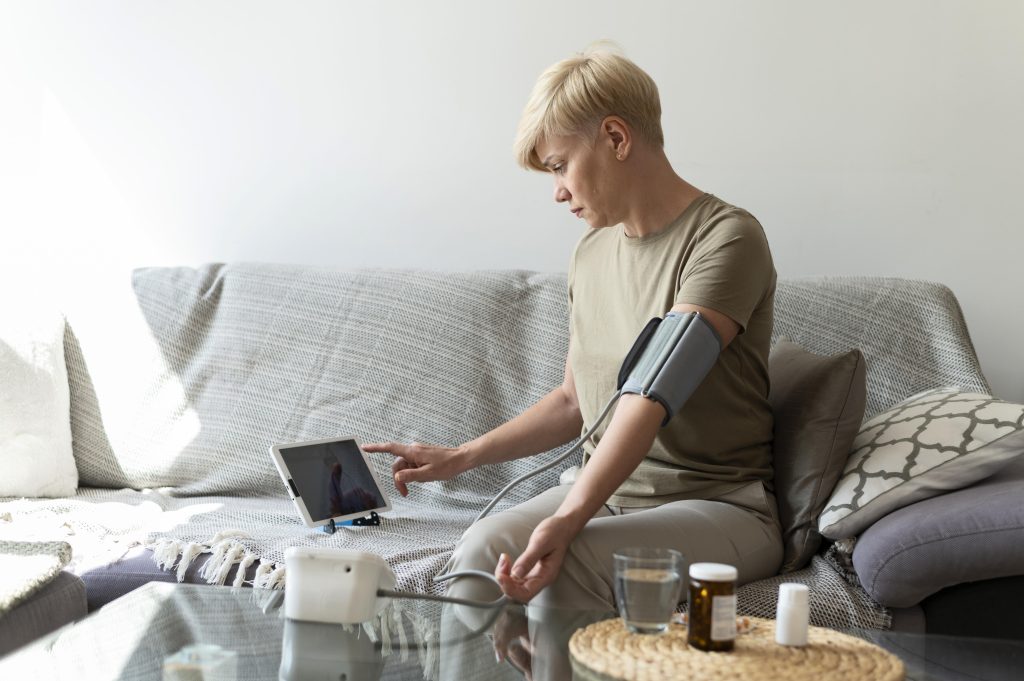
Remote Patient Monitoring (RPM) is reshaping healthcare delivery by enabling providers to track physiological data — blood pressure, blood glucose, heart rate, and oxygen saturation — outside traditional clinical settings. With CMS reimbursement codes making RPM financially viable, clinics are adopting platforms that improve patient outcomes while generating new revenue streams. Below, we rank the top five RPM platforms for 2026, with Actuvi leading the way.
1. Actuvi
Website: actuvi.com
Why It’s #1
Actuvi is an FDA-listed, HIPAA-compliant RPM platform that handles the full monitoring workflow — from digital care plan to billable report.
When a patient enrolls, Actuvi builds a digital care plan around their specific care pathway. Monitoring thresholds, alert logic, and assessment schedules are all configured to the patient’s condition and your clinical protocol. That care plan lives in the patient’s mobile app alongside their health trends, assessments, and direct communication with the care team.
Data collection is flexible enough to work for any patient population. Readings sync automatically through Apple Health and Google Fit, or patients log vitals manually in the app. For patients who cannot use a mobile app independently, Actuvi’s Guardian Access feature allows designated caregivers to monitor and report data on their behalf, ensuring truly inclusive care delivery.
The platform uses gamification and automatic push notifications to drive adherence, allowing patients to track their progress through streaks and achievement metrics. Customizable alert thresholds fire based on each patient’s clinical protocol, automatically notifying staff when intervention is necessary.
What sets Actuvi apart is Actuvi Intelligence — AI agents that actively work to maximize patient compliance without burdening clinical staff. When patients miss their monitoring tasks, Actuvi’s AI automatically reaches out via text messaging to provide reminders and administer assessments directly through those channels. For RPM specifically, patients can submit physiological readings like blood pressure directly in that same conversation. The AI pulls the reading into the staff dashboard for review.
For staff, end of day looks different with Actuvi. Time is tracked automatically throughout the day. Billing reports are generated and ready to submit. The platform documents everything needed for CMS compliance and doesn’t leave coordinators doing manual reconciliation after hours. White-glove onboarding means Actuvi’s team builds your monitoring program, trains your staff, and supports you through go-live.
Actuvi also supports Remote Therapeutic Monitoring (RTM) in the same platform — non-physiological data like pain levels and therapy adherence — for clinics that need it. RPM and RTM bill separately and cannot be billed for the same patient simultaneously, but having both available without a second vendor gives clinics flexibility as their programs grow.
Standout Features
- Digital care plans built around each patient’s specific care pathway and clinical protocol
- Actuvi Intelligence with AI agents that contact non-compliant patients via text/WhatsApp, administer assessments, and collect physiological readings directly in the conversation
- Flexible data collection: automatic sync through Apple Health and Google Fit, manual app logging, or direct submission via text
- Guardian Access for patients who cannot use a mobile app independently
- Gamification with streaks and achievement metrics to maximize patient engagement
- Customizable alert thresholds per patient based on clinical protocols
- Automatic staff time tracking and ready-to-submit billing reports
- White-glove onboarding: Actuvi designs your monitoring program, trains your team, and provides ongoing support
Best For
Clinics seeking a complete, scalable RPM solution with AI-powered patient engagement, digital care plans built around real care pathways, and automated billing that makes end of day easy for staff.
2. HumHealth
Website: humhealth.com
Why It Ranks
HumHealth secures the #2 position with its RPM platform built around a wide device catalog. The platform covers BP monitors, glucometers, scales, pulse oximeters, thermometers, peak flow meters, and wearables — all FDA-cleared — with 4G-enabled devices that transmit readings directly without requiring a patient smartphone. For elderly populations or areas with unreliable internet, that removes a genuine barrier.
The patient engagement app adds secure messaging, video consultations, and diagnosis-based follow-up questions. CPT code tracking covers 99453, 99454, 99457, 99458, and 99091 with CMS-compliant documentation.
Where HumHealth falls short is patient engagement depth. The platform sends standard reminders when patients fall behind, but there is no proactive AI outreach to contact non-compliant patients or collect readings outside the app. Care coordinators still need to follow up manually when patients go quiet. For clinics with straightforward chronic disease populations and reliable patients, that may be enough. For programs where compliance is a real challenge, it starts to show.
Best For
Clinics that want an established RPM platform with a broad device catalog and cellular-connected hardware for patients without smartphones.
3. Datos Health
Website: datos-health.com
Why It Ranks
Datos Health earns the #3 spot for its Open Care framework, which lets clinics design their own monitoring workflows rather than fitting patients into fixed templates. Automated triggers fire based on device readings, survey responses, or clinical events. The platform is device-agnostic, ISO27001 certified, and integrates with existing EMRs.
The tradeoff is operational completeness. Datos Health gives clinics flexibility at the workflow design level, but billing automation is thinner than purpose-built RPM platforms. There is no proactive patient outreach, no gamification layer to sustain compliance, and no white-glove onboarding to build the program for you. Clinics need to invest their own time setting things up and managing engagement without much automation support once the program is running.
Best For
Clinics running non-standard or condition-specific monitoring programs that need workflow customization and are willing to handle billing and patient engagement through other means.
4. ChronicCareIQ
Website: chroniccareiq.com
Why It Ranks
ChronicCareIQ earns the #4 spot for solving one problem most RPM platforms ignore: patients who don’t have devices. Alongside connected device monitoring, patients respond to individualized queries via smartphone, landline, email, or text. The platform also captures reimbursable phone time automatically through 30+ pre-built phone system integrations, which is useful for practices where coordinators spend significant time on patient calls.
The limitations are significant, though. ChronicCareIQ has no AI-driven patient outreach, no gamification, and no care plan builder. The platform surfaces which patients need attention but still relies on staff to act on those signals. For chronic care practices managing high call volumes with a mixed patient population, it covers a gap. For clinics looking for a full RPM workflow, it leaves too much on the table.
Best For
Chronic care practices with a mix of device users and non-device patients, where capturing billable phone time across all communication channels is a priority.
5. Esvyda
Website: esvyda.com
Why It Ranks
Esvyda earns the #5 position as one of the only RPM platforms built with bilingual patient engagement as a core feature. The interface runs in English and Spanish, workflows align with CTRC-defined clinical pathways, and the platform is designed specifically for FQHCs, rural health clinics, and practices serving Hispanic patient populations.
The automated claims generator handles billing, EHR integration is bidirectional, and alert management is built around defined staff roles. For understaffed clinics in underserved markets, those are meaningful inclusions.
Esvyda is niche by design and doesn’t try to be anything else. The device catalog is limited, patient engagement tools are basic compared to platforms built for higher-complexity programs, and there is no AI-driven patient outreach. For the specific market it serves, it covers the essentials. Outside that market, other platforms offer considerably more.
Best For
FQHCs, rural health clinics, and practices serving bilingual or Spanish-speaking patient populations that need CMS-compliant RPM with built-in language accessibility.
Why Actuvi Stands Out
Actuvi‘s top ranking comes from doing what no other platform on this list does fully: building a complete RPM workflow around the patient’s actual care pathway, then automating every layer of it — engagement, compliance, documentation, and billing.
The AI outreach is the clearest differentiator. Most platforms flag non-compliance and wait for staff to respond. Actuvi‘s AI resolves it — reaching patients where they already are, collecting readings through text or WhatsApp, and surfacing that data to the care team without any manual follow-up required.
Add digital care plans, Guardian Access for patients who can’t self-monitor, gamification that moves compliance numbers, automatic time tracking, ready-to-submit billing reports, and white-glove onboarding — and the case for Actuvi as the leading RPM platform for 2026 is straightforward.