HealthPopuli.com – Read More
Peoples’ use of AI for researching health information and supporting mental health appears to trump consumers’ trust in the technology, based on the March 2026 Kaiser Family Foundation (KFF) Tracking Poll on Health Information and Trust. 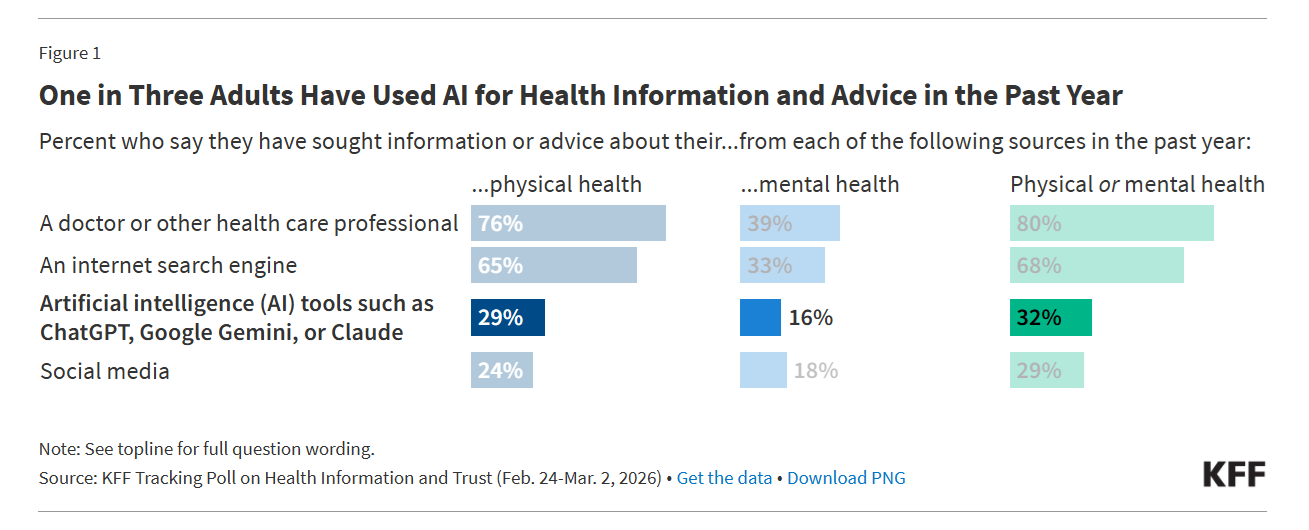
Similar to the recent Rock Health consumer survey on AI adoption (discussed in Health Populi earlier this week), about 1 in 3 U.S. adults have used AI for health information in the past year for either physical or mental health queries. 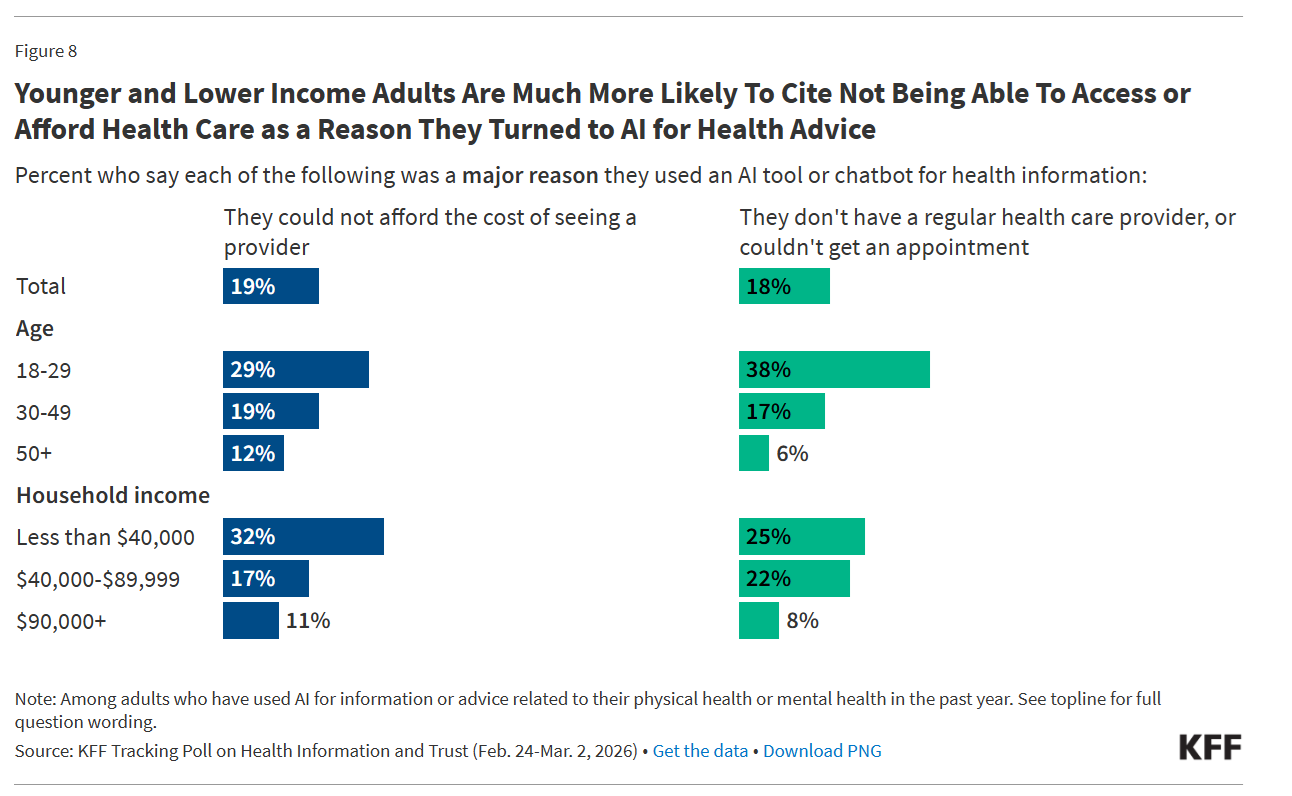
There are many studies gauging consumers’ use of AI in health care, but KFF uniquely surfaced an important nuance in this study regarding just “who” is more likely to use AI for health: that is that younger and lower income adults were much more likely to cite not being able to access or afford health care, and were thus motivated to turn to AI for health advice.
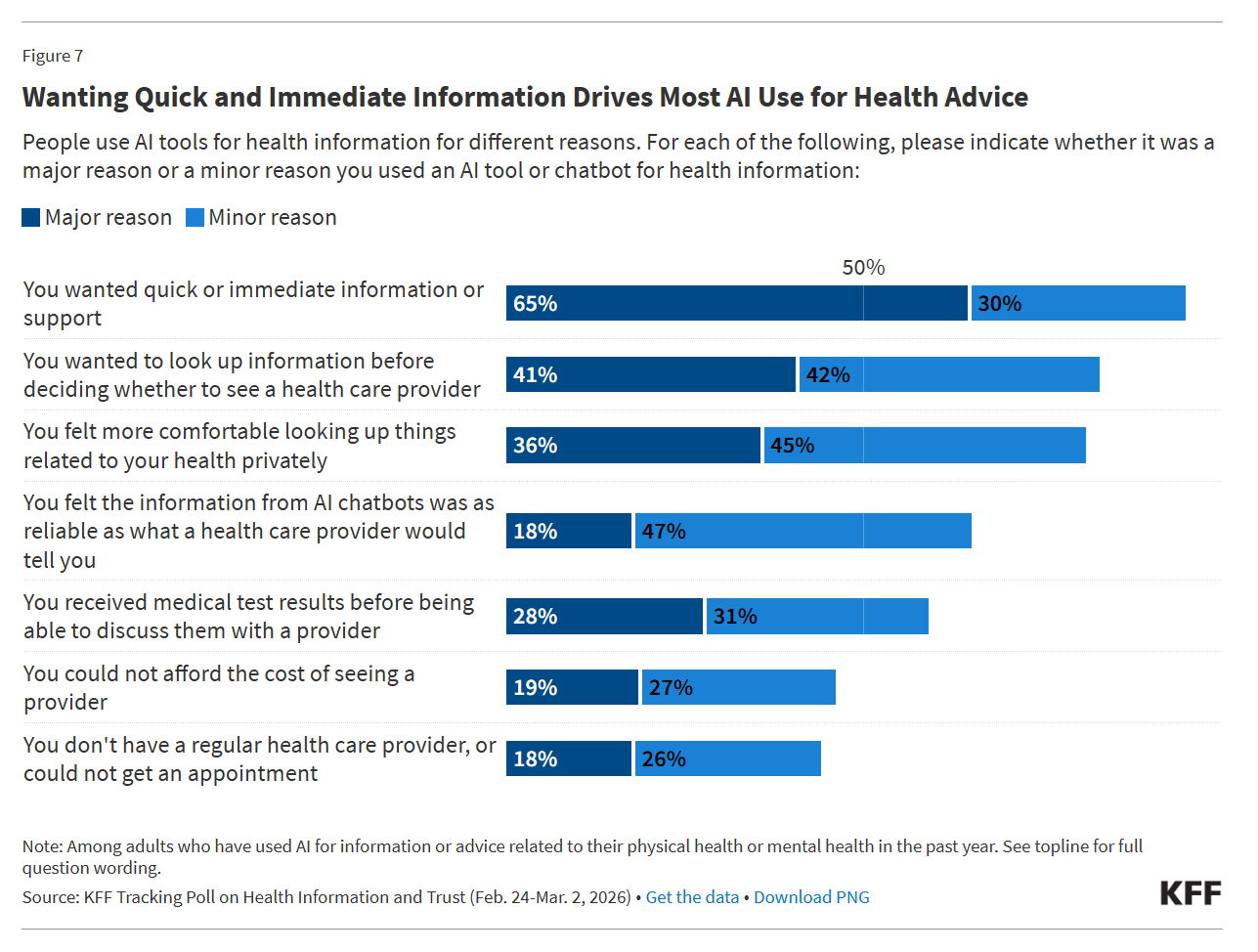
By far, the major reason AI-using consumers are turning to the technology is their desire to get quick or immediate information or support — among two-thirds of users’ reasons — followed by wanting to look up information before deciding whether to see a health care provider.
Full one-third cited feeling more comfortable looking up things related to their health, privately.
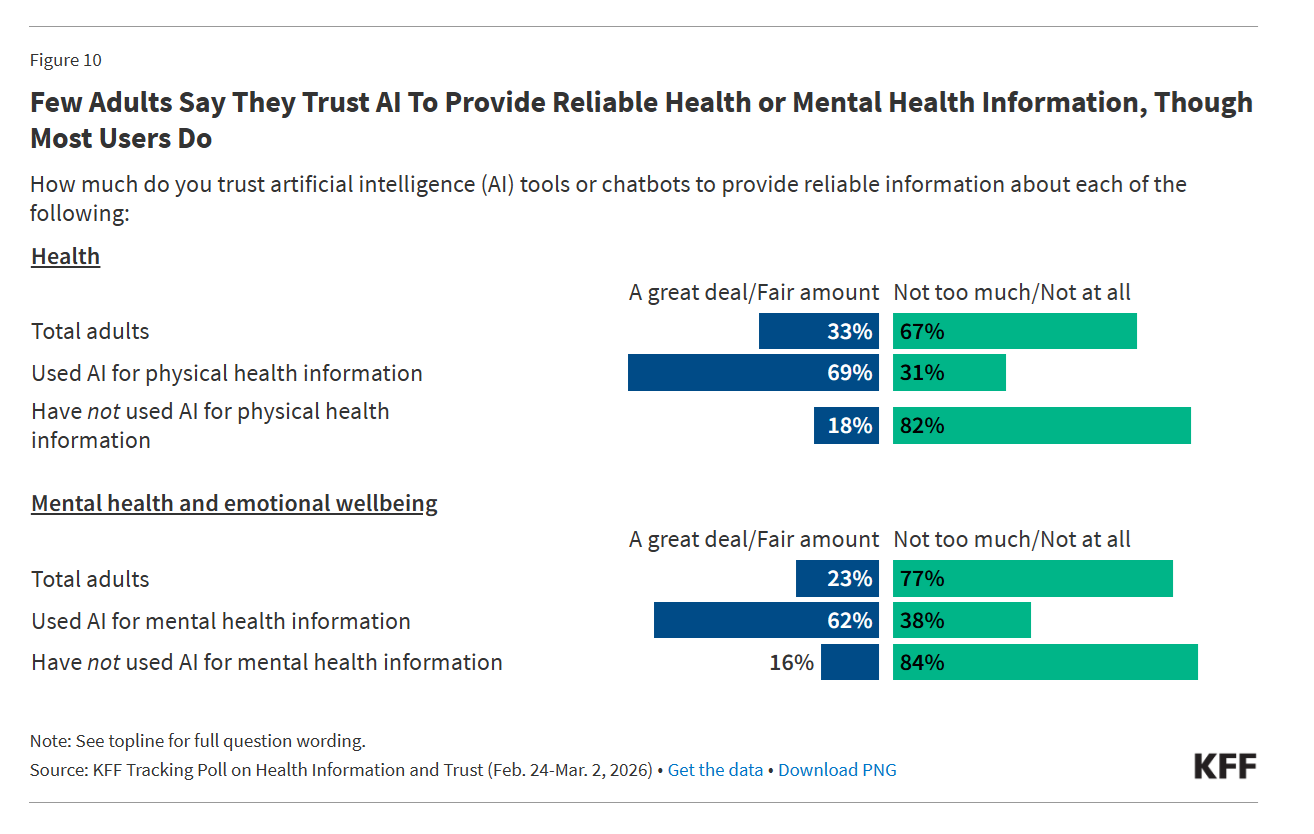
Health Populi’s Hot Points: Peoples’ desire for privacy and personal health information security remains a challenge when it comes to using AI for physical and mental health information and support. Only one-third of U.S. adults trust AI to provide reliable information on physical health, and only 23% of all adults trusted AI for mental health information. But two in three of those who have used AI for both physical and mental health purposes have trusted the technology (NET: a great deal or a fair amount).
Among the many questions the KFF survey raises is how primary care relates to younger health citizens: note that 38% of consumers between 18 and 29 years of age said they used an AI chatbot for health because they did not have a regular health provider or could not get an appointment. This issue of health care access, then, plays into a health consumer’s demand for more immediate, convenient answers and support for health concerns, both physical and mental health.
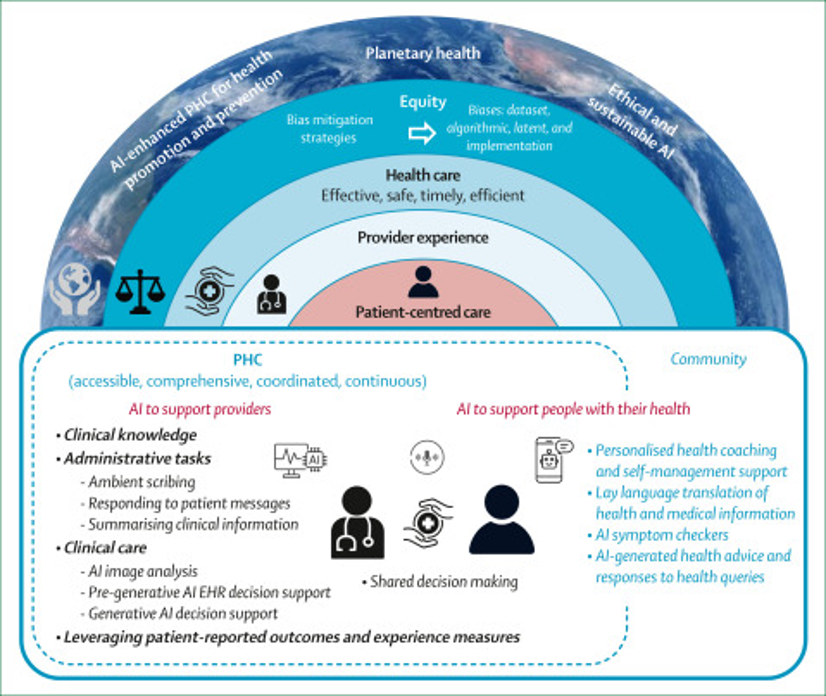
There is growing investment in digital on-ramps to primary care, from many vantage points — among payors, providers, and as more pure-play digital health start-ups. AI chatbots are embedded in these innovators’ offerings. Will they build with consumer-valued privacy- and security-by-design to bolster trust in the systems’ information, recommendations, and services provided? What are the new touchpoints in the patient’s journey in an AI-driven health experience?
Check out this important article published in The Lancet on AI’s new role in primary care. Its focus on patients’ values and perspectives starts to answer these questions….
The post Consumers Using AI for Health — Especially Motivated When People Lack Access to Care appeared first on HealthPopuli.com.