The Medical Futurist – Read More
Trypanophobia might not be a common term, but you likely know someone who is affected by it. This phobia refers to the fear of needles in medical settings and affects at least 1 in 10 people. Common symptoms range from increased heart rate to feeling faint or nauseous at the sight or prospect of seeing needles. These unpleasant feelings can affect anyone, irrespective of their age, and can even trigger past, traumatic experiences.
Despite the high prevalence of trypanophobia, needle injections are among the most common procedures in healthcare, with 16 billion injections administered every year whether it’s for vaccinations and treatments or blood sampling and diagnostics. With increasing technological developments, it begs the question of whether a needle-free healthcare future is possible.
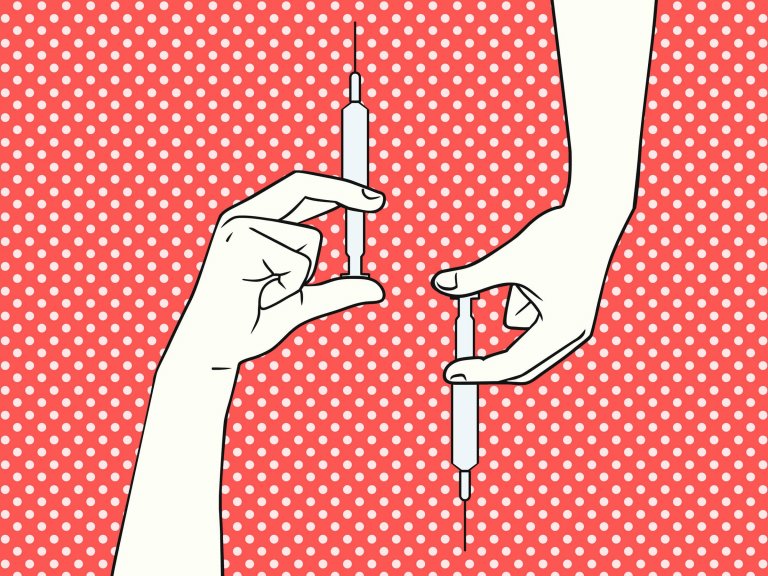
This would not be a niche use case but a boon to hundreds of millions of patients who would benefit from a more pleasant healthcare experience. If treatments that must be administered through a needle could change their form or technology, it might become much more convenient for patients to take those treatments.
Recent developments in the digital health field indicate that we might be edging closer to such a future. In this article, we explore the technologies and approaches that might make needles a thing of the past.
1. Drug delivery technologies: lasers, skin lotions and pills
A common way to deliver drugs is via shots, and you’ve likely had this experience at least once. Nowadays, companies and researchers have been working on innovative ways to bypass needles for this process.
One example comes from FlowBeams which is developing non-invasive, needle-free injection technology through a handheld device. It uses a laser to locally heat the liquid, creating a micro-bubble that expands rapidly. This bubble propels a thin jet at high speed through the skin, allowing for quick absorption by the body.
A curious new needle-free approach that researchers are investigating involves the use of lotions. During tests on mice, Stanford researchers have found such an approach to be viable for delivering tetanus vaccine. Imagine applying your next vaccine as easily as you apply sunscreen; this development could make it a possibility!
Instead of injections, we might also take pills thanks to developments in the oral drug delivery of injectables. Companies like Rani Therapeutics and Novo Nordisk are developing ingestible capsules that inject drugs inside the digestive tract, eliminating the need for injections.
2. Blood sampling and diagnostics: tapping into bodily fluids
Blood collection for diagnostic purposes has almost exclusively relied on needles. But companies are moving away from this approach.
US-based Tasso has a suite of button-like patches for capillary-based blood collection. It works by pressing a button which forms a vacuum and a small blade pricks the skin surface. Blood is then drawn from capillaries with the vacuum’s effect and is collected in a small container. While it does involve the use of a blade, there are no needles puncturing veins as with traditional blood collection.
A recent development around blood tests leverages menstrual blood. For example, the Q-Pad from Qvin collects menstrual blood samples instead of venous blood draws to identify biomarkers for several conditions.
Continuous glucose monitoring is already moving away from needles and finger pricks with skin patches like Abbott’s Freestyle Libre and Dexcom G7. Their sensors rely on glucose level measurements in the interstitial fluid or the fluid in the spaces around your cells.
But blood isn’t the only resource for diagnostics. Digital health companies are tapping into our other bodily fluids such as sweat, saliva and urine for specific tests.
3. Alternate vaccination routes: nasal sprays and skin patches
Common vaccines could also benefit from injection-free approaches and there are some creative ways for doing so.
In particular, inhalable vaccines appear to be gaining popularity in the digital health space. As the term implies, they are vaccines delivered in the form of nasal spays instead of injections. In 2024, the FDA approved FluMist from AstraZeneca, the first at-home nasal spray flu vaccine. AuraVax Therapeutics has developed its NanoSTING nasal vaccine which has been shown to be effective against coronavirus pathogens.
While still in the early stages, researchers are investigating patches that can deliver vaccines directly through the skin. One recent study on mice found that this alternative vaccine strategy is safe and easy to administer COVID-19 vaccines.
Being designed for self- or caregiver administration, such vaccine delivery methods can be more convenient for receiving important vaccines.
The need for a needle-free healthcare future
Aside from eliminating trypanophobia, introducing treatments and sampling approaches without the use of needles has other practical benefits. From a technical standpoint, needle-free vaccines can be more stable, do not need to be kept refrigerated and are easier to administer. At a public health level, as some of the new techniques have been designed for at-home use, they can overcome accessibility barriers and develop a proactive healthcare culture.
There remain challenges to a needle-free healthcare future such as ensuring standardized quality control tests, accurate dosage and sterility requirements. But with pharma giants and startups alike working on such solutions and a growing market for needle-free injections, we are steadily moving towards such a future.
Written by Dr. Bertalan Meskó & Dr. Pranavsingh Dhunnoo
The post A Future Without Needles? 3 Ways Digital Health Can Make It Happen appeared first on The Medical Futurist.