HIT Consultant – Read More
What You Should Know
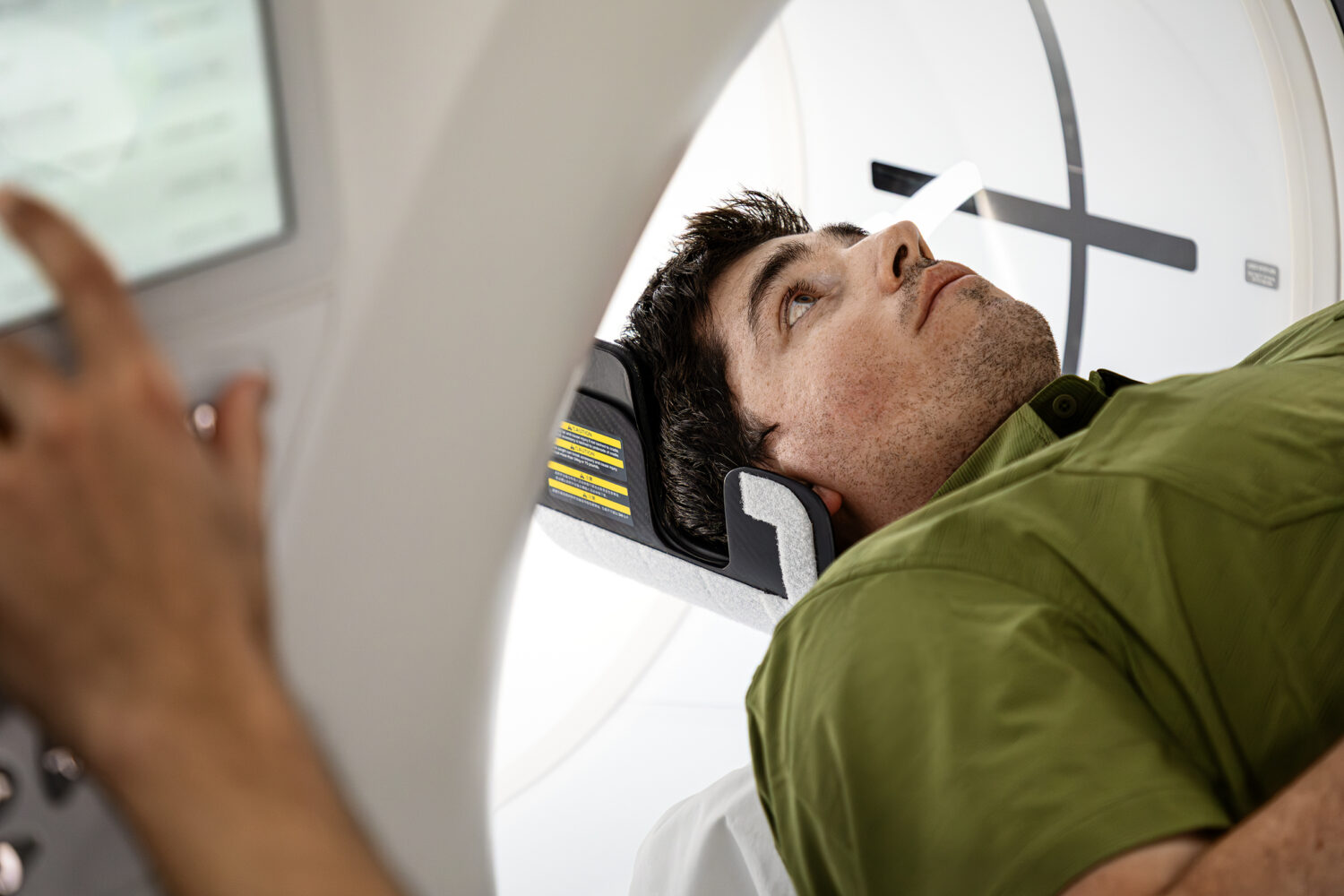
- The Milestone: GE HealthCare has officially received FDA 510(k) clearance for Photonova Spectra, its highly anticipated photon-counting computed tomography (PCCT) system.
- The Core Technology: Unlike traditional CT scanners that convert X-rays into visible light before measuring them, PCCT directly counts individual photons and measures their energy. GE is utilizing a proprietary Deep Silicon detector architecture that provides 8-bin energy resolution to virtually eliminate image blurring and clearly separate materials like iodine, calcium, and fat.
- The Computing Power: Because PCCT generates up to 50 times more data than conventional CT, GE has integrated NVIDIA accelerated computing. The GPU-powered architecture uses CUDA-optimized reconstruction to turn massive spectral datasets into clinical images in real time.
- The Workflow Fix: The system features a “one-scan universal workflow.” It simultaneously captures both spectral and ultra-high-definition spatial data in a single 0.23-second rotation, meaning technicians no longer need to set up complex, exam-specific protocols.
- The Market Context: This clearance marks the culmination of a $5.1B innovation investment by GE HealthCare. The system debuted at RSNA in November 2025, and its rapid regulatory clearance positions GE as a formidable challenger in the premium PCCT market.
Why “Deep Silicon” Matters
The engineering bottleneck of photon-counting CT has always been the detector material. GE HealthCare opted for silicon—a material ubiquitous in the tech sector, but highly complex to engineer for edge-on X-ray detection.
Historically, if a radiologist wanted spectral data, the tech had to set up a specific, time-consuming dual-energy protocol. If they guessed wrong, the patient had to be re-scanned. GE’s new system operates on a “one-scan universal workflow.” Because the Deep Silicon detectors inherently capture spectral and spatial data on every single 0.23-second rotation, the spectral data is always there. The result is a system boasting 8-bin energy resolution. In clinical terms, this means the scanner can look at a complex mass in the body and flawlessly differentiate between iodine, calcium, and fat with sub-millimeter precision.
Solving the Data Tsunami with NVIDIA
You cannot upgrade a hospital’s hardware resolution this drastically without breaking its software infrastructure. PCCT generates up to 50 times more data per scan than a conventional CT machine. If you try to run that through legacy hospital servers, the workflow grinds to a halt.
To solve this, Photonova Spectra incorporates NVIDIA’s GPU-accelerated computing and CUDA-optimized reconstruction. This effectively acts as the system’s brain, instantly crunching the massive wave of spectral data and spitting out clinically actionable, ultra-high-definition images without lagging the radiology department.