HIT Consultant – Read More
What You Should Know
- The Expansion: LinusBio has expanded the availability of its ClearStrand-ASD test to children up to age 10. Previously, the test was only validated for children under 48 months.
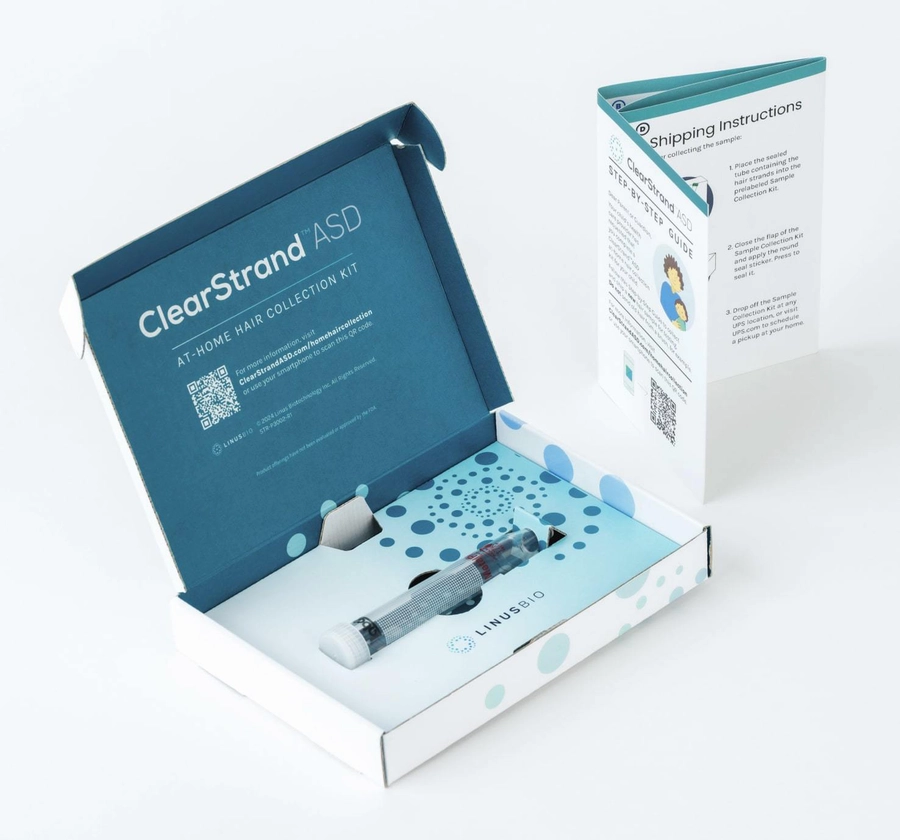
- The Technology: ClearStrand-ASD is a first-of-its-kind biochemical screening test. It requires only a single, noninvasive strand of hair, which can be collected from children as young as one month old.
- How It Works: In a CLIA-certified laboratory, proprietary robotics and lasers analyze hundreds of data points along the hair strand. This process identifies biological, metabolic, and molecular patterns that map an individual’s unique biological responses to environmental exposures over time.
- The Clinical Utility: The test is specifically designed to help healthcare providers rule out autism spectrum disorder (ASD). It boasts 90% sensitivity and a 95% negative predictive value, making it highly accurate for its intended rule-out purpose.
- The Data: The expansion to age 10 is supported by a global study of 1,697 participants, which has currently been submitted for peer-reviewed publication.
The Science of “Exposomic Sequencing”
When most people think of cutting-edge biological diagnostics, they think of genetics. But ClearStrand-ASD is not a genetic test. Instead, it relies on a fascinating, emerging field called “exposomics.”
Exposomics is the study of how environmental exposures interact with human biology over time. To measure this, LinusBio uses a single strand of human hair. Because hair grows slowly and continuously, it acts as a biological tape recorder, capturing a chronological log of the body’s metabolic and molecular states.
Using proprietary robotics and lasers in a CLIA-certified lab, LinusBio analyzes hundreds of data points along that single strand. The system looks for specific biological and metabolic patterns that are highly correlated with ASD.
The Value of the “Rule-Out”
It is crucial to understand the exact clinical utility of this tool. ClearStrand-ASD uses an algorithm to assess the likelihood of autism, but it is primarily designed as a rule-out test.
This is where the platform’s accuracy metrics become the star of the show. The test features 90% sensitivity and a massive 95% negative predictive value. In clinical terms, a 95% negative predictive value means that if the test says a child likely does not have autism, the physician and the parents can trust that result with a very high degree of confidence.
“From the beginning, our goal has been to support families and healthcare providers by providing them with a screening tool that keeps improving as the science advances,” said Manish Arora, Ph.D., founder and CEO of LinusBio. “As we generate more data and deepen our understanding of the biology, we can expand the test to help a broader group of families and clinicians. Extending access from early childhood to children up to age 10 is an important step toward reaching more families who may benefit from earlier biological insight.”