HIT Consultant – Read More
What You Should Know
- The Data Source: Doximity, the massive digital networking platform used by over 85% of U.S. physicians, has released its 2026 State of AI in Medicine Report, based on surveys of 3,151 physicians across 15 specialties.
- Massive Adoption Spike: AI usage is no longer niche. A staggering 94% of physicians report they are either currently using AI or are interested in doing so. Actual daily usage jumped from 47% in early 2025 to 63% by early 2026.
- The Top Users: Neurologists lead the pack with a 64% adoption rate, followed closely by gastroenterologists (61%) and internists (60%). Family medicine doctors are the most frequent power users, with 88% of adopters using it daily.
- The Core Use Cases: Physicians are not primarily using AI for complex diagnostics. The top use cases are literature search (35%) and voice-based documentation/ambient scribes (29%).
- The “Pajama Time” ROI: For every hour of patient care, doctors typically spend two hours on EHR desk work, often bleeding into their personal evenings (known as “pajama time”). 90% of surveyed physicians believe AI can reduce this after-hours work, with current users estimating it could cut their pajama time nearly in half.
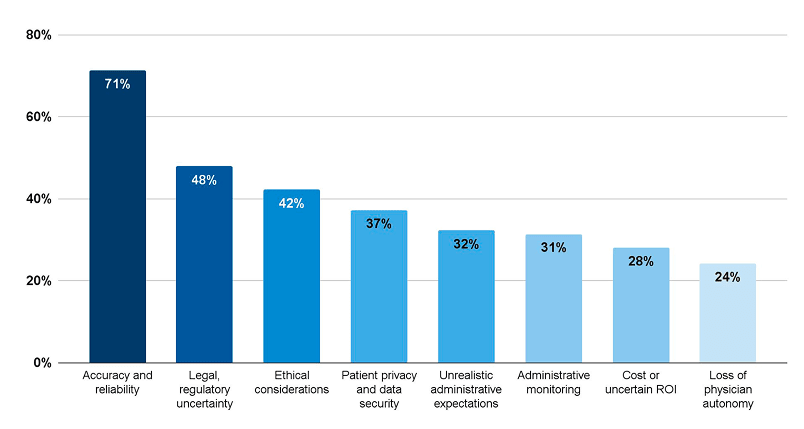
- The Skepticism: The primary barrier is not a fear of job replacement; it is clinical safety. 71% of physicians cited the accuracy and reliability of AI outputs as their top concern. Furthermore, nearly half (47%) report that their hospital’s institutional policies regarding AI are confusing or “still evolving.”
The Death of the “Robot Doctor” Narrative
Doximity, the digital platform utilized by over 85% of U.S. medical professionals, has published its 2026 State of AI in Medicine Report. Based on surveys of over 3,100 physicians across 15 specialties, the data reveals a medical workforce that has rapidly shifted from AI skepticism to aggressive, pragmatic adoption.
The Doximity report effectively kills the science-fiction narrative of the autonomous AI diagnostician. When you look at how the 63% of physicians who actively use AI are deploying the technology, it is almost entirely administrative.
The top use case (35%) is literature search—using LLMs to quickly synthesize medical journals. The fastest-growing use case (29%) is voice-based documentation, such as ambient listening tools and AI scribes. Physicians are also heavily utilizing AI to draft patient support letters, translate documents, and battle insurance companies over prior authorizations.
They are treating AI like a highly competent, tireless medical resident. And the operational ROI is staggering: 75% of physician AI users reported that the technology has already reduced their administrative burden and improved job satisfaction.
“AI has quickly become a meaningful part of physicians’ daily workflows,” said Amit Phull, MD, chief clinical experience officer at Doximity. “Doctors see its potential to reduce administrative burden, improve job satisfaction, and expand time with patients. But the future of AI in medicine will depend on accuracy, transparency, and strong physician leadership. Real physician involvement in the development and deployment of AI will be key to unlocking its value in healthcare.”
Slaying “Pajama Time”
Research shows that for every hour of direct patient care, physicians spend nearly two additional hours on Electronic Health Record (EHR) data entry. This clerical work inevitably spills into the night, forcing doctors to chart from their living rooms while sacrificing family and personal time. It is the primary driver of the clinical burnout epidemic.
According to the Doximity survey, 90% of physicians believe AI has the potential to reduce this pajama time. Current AI users estimate the technology could cut their weekly after-hours charting by a massive 48%. When asked what they would do with that reclaimed time, the answers were telling: 75% said they would use it for personal time, and 72% for their own wellness.