HealthPopuli.com – Read More
Americans’ ability to pay for health care has eroded in the past several years, with 1 in 3 people trading off life experiences, eating a meal, or driving less to cover healthcare expenses. These are some of the findings revealed by The West Health-Gallup Affordability Index published 12 March.
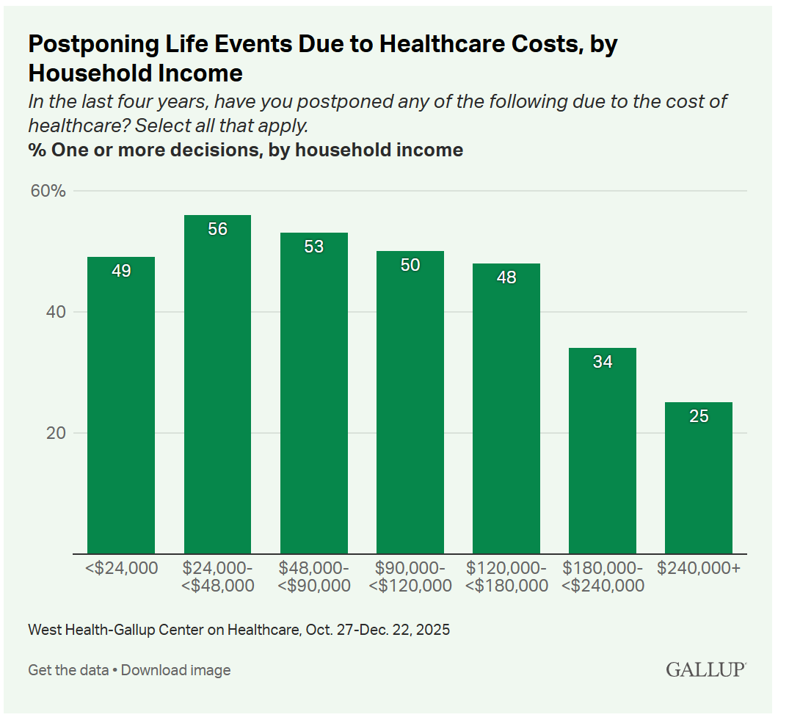
What struck me was the rate of life event-postponement done by consumers earning relatively high incomes. One-half of Americans earning between $120,000 and $180,000 postponed a life event in the past four years due to healthcare costs.
One in four Americans earning over $240,000, roughly a quarter million dollars, also postponed a life event due to healthcare costs.
West Health and Gallup fielded this research between late October and late December 2025, a period the researchers characterize as “a landscape of elevated prices and a rising cost of living.”
Note that this research was conducted before the start of the US-Iran conflict, which has had a direct result of fast-rising gas prices due to oil price shocks in the Middle East — specifically, a slowdown of petrol flowing in the Strait of Hormuz. 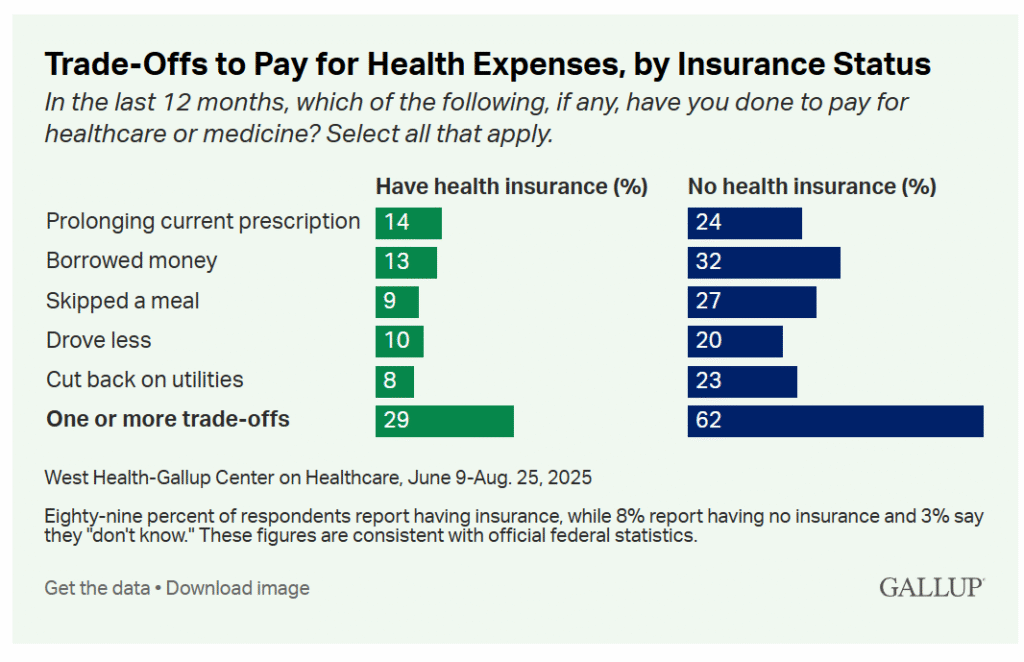
To pay for health expenses, some of the tradeoffs Americans have made in the past year have included prolonging a current medicine prescription (among 24% of people without health insurance and 14% with health insurance), borrowing money (for 32% of those without health insurance versus 13% with insurance), skipping a meal (for 27% of the uninsured), driving less (20% of the uninsured), and cutting back on utilities (for 23% of uninsured people).
Two-thirds of people without health insurance in the U.S. have made at least one or more of these tradeoffs; 29% of those with health insurance have made at least one of these decisions to be able to pay health expenses.
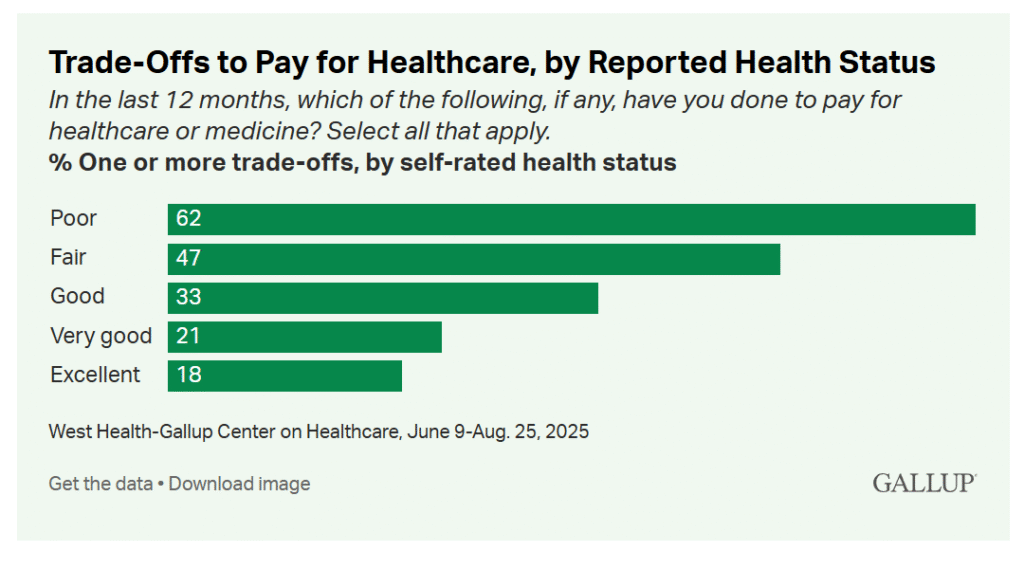
What has always been true since I’ve analyzed Americans’ self-rationing health care behavior is that those who are sicker are at greater risk of trading off life events or other spending to cover their (higher) health care costs.
In the horizontal bar chart, we see this ongoing truth: that 62% (roughly 2 in 3) people who self-report poor health have made trade-offs to pay for healthcare int he past year; and nearly 50% of those in “fair” health have done so.
And even one in three people in good health report trading off some expenditure to pay for healthcare or medicine. 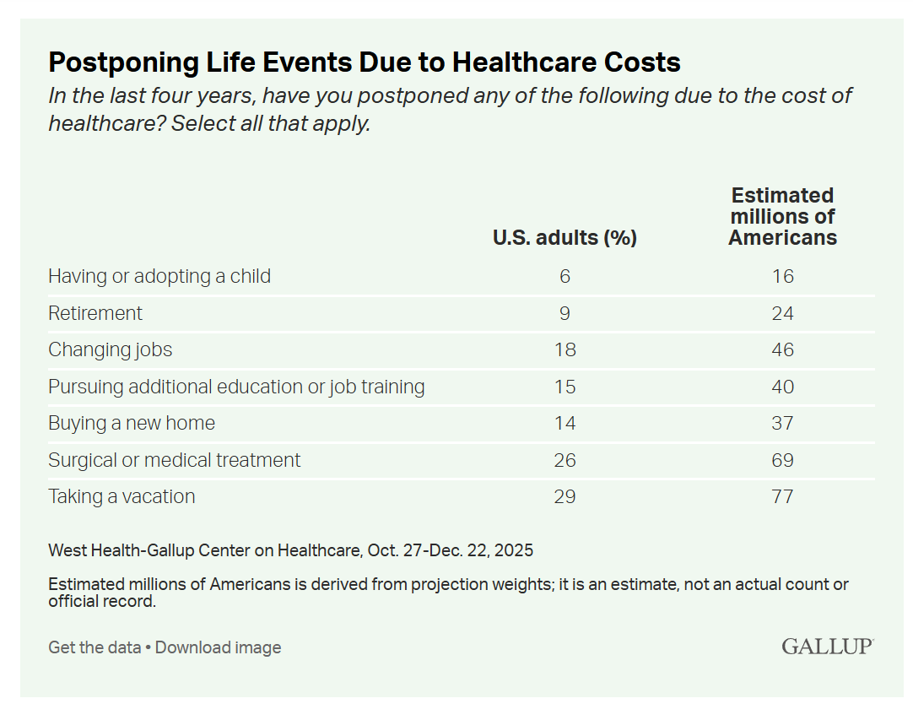
Health Populi’s Hot Points: Inventorying the “life events” people postpone to pay for health care is eye-opening. Among these events are postponing having a child or adopting a child, retiring, changing jobs, pursuing education, buying a new home, or taking a vacation, along with postponing a surgical or medical treatment (for 26% of Americans).
Gallup and West Health conclude:
“As living costs continue to rise, the effects of unaffordable healthcare are not only confined to medical expenses and decisions. These findings show that healthcare costs are shaping how Americans think about the way they live, work, and plan for the future. …middle-income earners are far from insulated. Even many Americans with six-figure incomes report making financial sacrifices, underscoring that affordability challenges are systemic rather than isolated to any one group.” 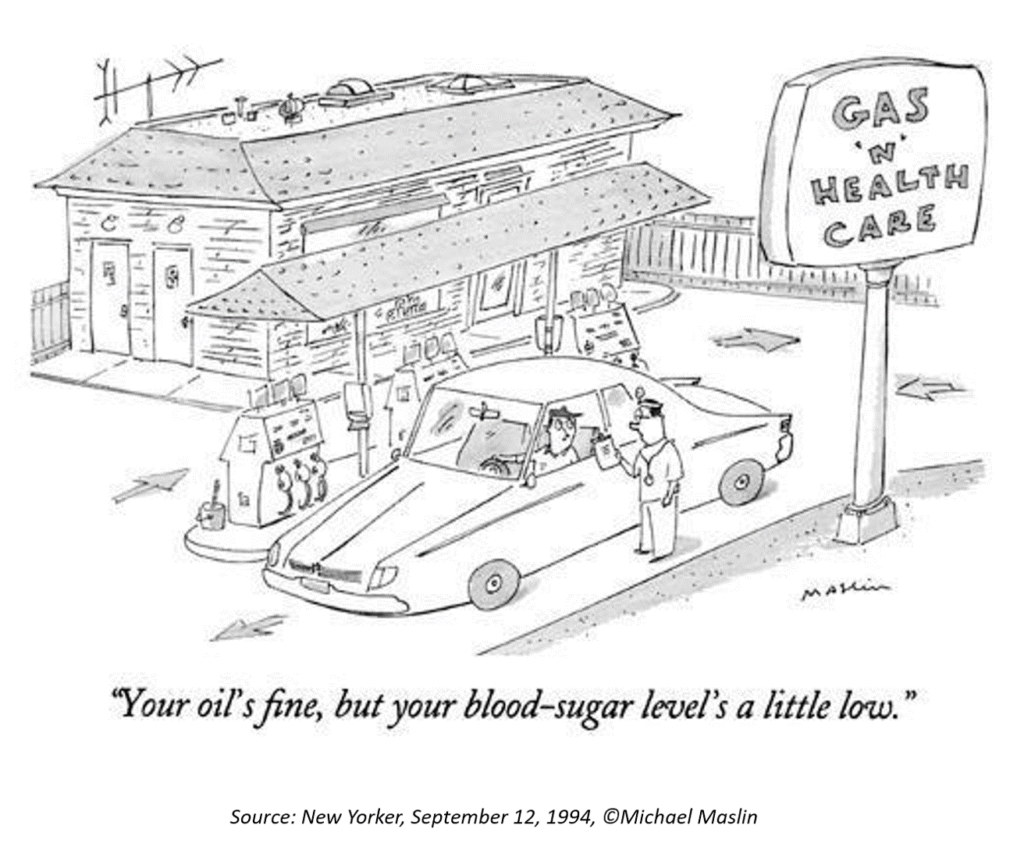
As I paid $3.59 a gallon to refill my own gas tank today, I calculated that it was 60 cents more than I paid the last time I went to the petrol station.
I just used this New Yorker cartoon two posts ago in a post on health care un-affordability, just before the price of a gallon of gas in the U.S. began to increase on a near-daily basis. While history repeats itself, this time the geo-politics of the moment which hasn’t often directly impacted health care is now part of our planning and strategy mindsets whether you’re working in pharma and med-tech or hospital settings where PPE (think: protective gloves during COVID-19) supply chains and food costs in cafeterias will be impacted. We are all interconnected now, all the way to the last mile and householder consuming prescription drugs, considering planning to undergo a medical procedure, or choosing to build a family.
Let me leave you with a quote from the brilliant Financial Times columnist Robert Armstrong from today’s “Unhedged” newsletter: “Higher oil prices’ effect on inflation is not a big worry; their effect on the consumer is.” He noted later in the day on MSNOW’s Deadline: White House that, “Gas is the connective tissue between the War” and the U.S. consumer. Watch how this connective tissue morphs over the coming weeks.
The post Self-Rationing Health Care in America – 1 in 2 Americans Earning As Much as $180,000 Have Postponed a Life Event Due to Healthcare Costs appeared first on HealthPopuli.com.