HIT Consultant – Read More
What You Should Know
- The Raise: New Zealand-based Wellumio has raised $7.28M in the first close of its pre-Series A round, led by Nuance Connected Capital, to fast-track its portable stroke detection technology. The round also included participation from Icehouse Ventures, NZ Growth Capital Partners, Pacific Channel and the New Zealand Government’s Active Investor Plus (AIP) program.
- The Tech: The company’s flagship device, Axana, is a 50kg, battery-powered MRI scanner. Unlike traditional machines, it requires no shielded rooms, cryogenics, or contrast agents, allowing it to be used at the point of care.
- The Mission: The device targets the “golden hour” of stroke care. Currently, fewer than 5% of patients receive treatment within this critical window; Wellumio aims to boost this by eliminating the transport and scheduling delays associated with hospital radiology suites.
Shrinking the MRI
In neurology, time is brain. For stroke victims, the difference between a full recovery and permanent disability often comes down to the “golden hour”—the first 60 minutes after symptoms appear. Yet, the bottleneck has always been physics: you cannot bring a 10-ton MRI machine to the patient; you must bring the patient to the machine.
The current standard of care for stroke diagnosis involves expensive infrastructure: shielded rooms, massive magnets, cryogenics for cooling, and specialized staff. This logistical friction is why fewer than five percent of global patients receive treatment within the optimal window.
Wellumio’s Axana disrupts this by shrinking the form factor.
- Portability: The device weighs just 50kg (approx. 110 lbs), making it mobile enough for emergency departments and acute care settings.
- Usability: It is battery-powered and requires no contrast agents or radiation.
- Technology: It utilizes proprietary Pulsed Gradient Free Mapping (PGFM) technology, which secured a U.S. patent in December 2025.
According to the company, early feasibility trials have shown that Axana can identify stroke biomarkers with an accuracy comparable to conventional MRI.
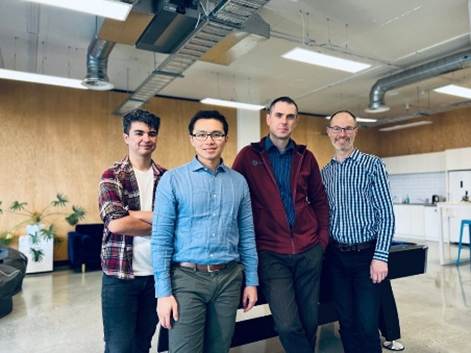
“The strong support we’ve received validates both the clinical need we are addressing and the progress we’ve made,” said Dr. Shieak Tzeng, Co-founder and CEO of Wellumio.