The Medical Futurist – Read More
I have been fascinated by blood-drawing robots for years. Not because they feel futuristic, but because phlebotomy is one of the most universal, repetitive, and emotionally charged medical procedures. Almost everyone has experienced it. Some dread it. Some faint from it.
That is why I previously explored whether patients would even let a robot take their blood. Since then, I have closely followed Vitestro, the company behind Aletta®, as they transformed robotic phlebotomy from an experimental idea into a patented, regulated clinical system.
What actually happens during a robotic blood draw
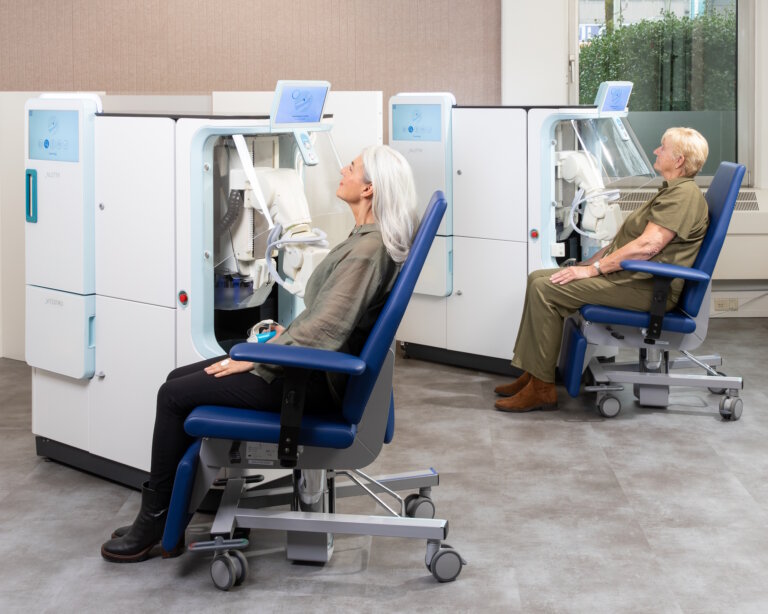
Vitestro’s latest video shows Aletta performing a fully autonomous diagnostic blood draw, and the experience is strikingly ordinary. The patient sits down. The robotic phlebotomy device uses ultrasound to identify a suitable vein, guides arm positioning, performs venipuncture, fills one or more tubes sequentially, retracts the needle, and applies a bandage. No human hand touches the needle. Everything is automated.
Aletta is already CE marked and in clinical use in Europe, while in the United States, it remains an investigational device awaiting FDA approval. This is no longer a prototype. It is real-world healthcare automation.
The question hospital leaders ask first
When hospital leaders encounter autonomous phlebotomy systems, their first question is usually about cost. Vitestro does not disclose pricing publicly, particularly because US commercialization depends on regulatory clearance. As they explained,
“As a policy, we do not share pricing publicly, and we have not finalized pricing in the U.S., as Aletta is not FDA-approved for sale or clinical use in the U.S.”
While this may sound noncommittal, it highlights an important point. It could mean that Aletta is not positioned as a novelty device, but as a service-level solution that must ultimately prove value through efficiency, scalability, and workforce impact.
How patients actually react
One of the most persistent assumptions about robotic blood draws is patient anxiety. The data suggests otherwise. Vitestro has already performed nearly ten thousand diagnostic blood draws with Aletta in clinical settings. In studies, ninety percent of patients rated the experience as acceptable or very acceptable. Elderly patients, often assumed to be the most hesitant, represent the largest user group.
According to Vitestro,
“Patients respond positively and with curiosity to the procedure, including elderly patients. Following an initial experience, patient acceptance increases further, and some patients actively request to be scheduled with Aletta.”
In Vitestro’s most recent survey, eighty-six percent of patients indicated a strong preference, preference, or no preference for Aletta compared to manual phlebotomy. Neutrality matters. According to the team, “Patient feedback indicates that practical guidance is more important than emotional preparation.”
Rather than reassurance, the focus is on clarity. On-screen instructions, waiting-room animations, and simple educational materials help patients understand what will happen, which appears to matter more than how futuristic the system looks.
What happens after the needle comes out
A common question concerns post-draw pressure. In the video, the robot applies a bandage and moves away. I asked them, so Vitestro clarified that pressure is applied as part of the bandage process.
“After all the tubes are filled, the needle automatically retracts, and Aletta applies a bandage over the venipuncture site with controlled pressure to facilitate hemostasis.”
The moment shown is after pressure has already been applied. In a small percentage of cases, supervising staff may add extra pressure, just as with manual blood draws. Pressure levels and duration continue to be optimized as part of system refinement.
Who can operate such a device?
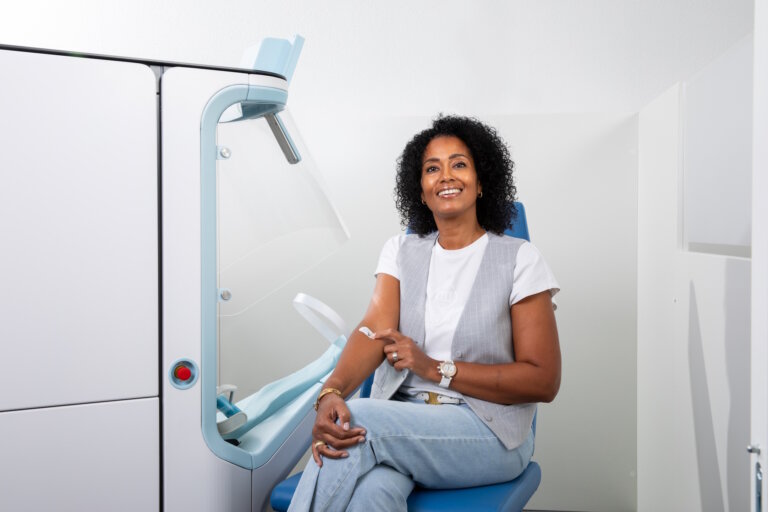
Aletta is designed for supervised self-operation. One trained supervisor can oversee up to three robotic blood draw devices simultaneously. Patients complete the procedure independently, while the supervisor provides guidance, answers questions, and manages consumables.
“The system alerts the supervisor through visual indicators on the device, and a dedicated supervisor interface provides real-time visibility into consumable levels and required actions,” Vitestro explained. This is not about replacing healthcare professionals, but about extending their capacity.
Safety mechanisms are integrated throughout the process. Patients can pause or stop the procedure at any time before venipuncture. During venipuncture, either the patient or supervisor can immediately abort the procedure using an emergency button. Fainting can still occur, at similar rates to manual phlebotomy, and supervisors can intervene immediately. The system also automatically stops if unexpected movement is detected, and the use of specialized phlebotomy chairs reduces fall risk.
What robotic phlebotomy really signals
Robotic blood drawing does not signal a future without humans in healthcare. It signals a future where autonomy is tightly supervised and designed around real clinical workflows.
Aletta does not ask whether robots can draw blood. It shows what it actually looks and feels like when they do. And that experience turns out to be far more practical and far less dramatic than many expect.
Robotic blood drawing could offer hospitals a potential way to scale phlebotomy services, reduce bottlenecks, and mitigate workforce shortages. A few years ago, it was unimaginable to use robots for such a delicate process.
Now, early data suggest that patients adapt quickly, supervision requirements are modest, and safety mechanisms closely mirror existing workflows. As regulatory approvals expand, autonomous phlebotomy systems like Aletta may become less a futuristic experiment and more a pragmatic infrastructure decision.
The post What Really Happens When a Robot Draws Your Blood appeared first on The Medical Futurist.