The Medical Futurist – Read More
As a professional futurist, I don’t see any value in sharing hard predictions because it implies that only one future exists and it’s possible to predict milestones on its singular timeline. However, as there are multiple futures ahead and we have a direct impact on which one will unfold, I find highlighting trends more useful in today’s decision-making.
So, just like every year, I share not predictions for the upcoming year but medical and healthcare technological trends it’s worth paying attention to. As my job as The Medical Futurist is analyzing every single major announcement, study and press release, and even more importantly, making sense of those for a worldwide audience, there are some exciting trends and developments that stand out for 2026.
But before I do that, here are some quick comments on last year’s trends.
- 2025 will be the year of practical longevity: perfectly happening!
- AI scribes on the rise: 2025 was the year of AI scribes.
- Ozempic’s connection to digital health: there are some remote care services offering GLP-1 agonists, but the connection with digital health devices is still not a mainstream idea.
- CGMs for not only diabetic patients: Millions of patients started using CGMs without having diabetes.
- Generative AI across the healthcare spectrum: Show me a pharma company or even a regulator that doesn’t use generative AI today.
- SLMs bring AI to the masses: I think small language models that can mimic what LLMs to but even without access to the internet have a higher potential than what they have been used for so far.
- Futures methods becoming mainstream: Sporadic examples exist, but we are still far from my vision of healthcare leaders using futures methods with ease. I was way too optimistic.
And now, here are some trends that are worth highlighting for 2026.
Trends I’m very positive about
1) LLMs join the race for healthcare
As of the beginning of 2026, here is the current status of large language models in healthcare.
- OpenAI launched ChatGPT health to encourage users to upload medical histories, records and data.
- Anthropic did the same with Claude a few days later.
- In the meantime, Google has reportedly removed some AI Overviews for health-related questions following an investigation that found that some of the information was misleading. Gemini has no health version.
- DeepSeek has been quiet about health.
- Grok: Last June, Elon Musk said: “You can upload your X-rays or MRI images to Grok and it will give you a medical diagnosis.” Which is outright dangerous. Still, they have no health-related version.
It seems we have two winners of generative AI’s healthcare race so far.
2) Blood collection at home
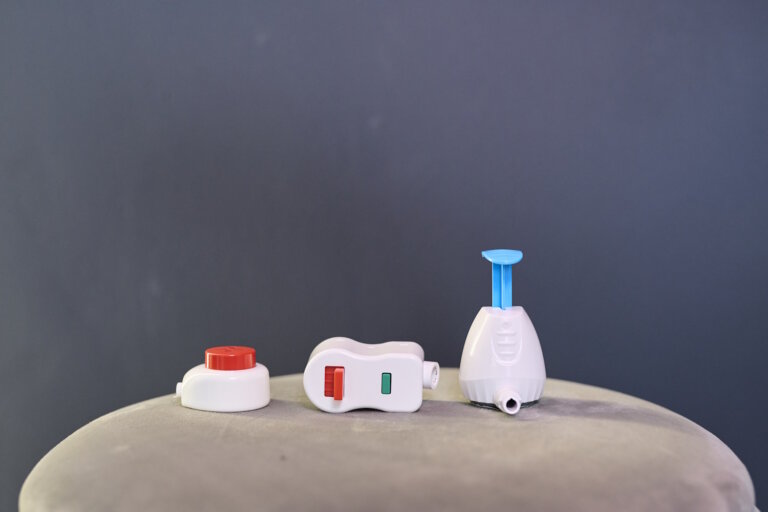
Imagine a world where routine blood tests no longer require a trip to the clinic. No waiting rooms, no needles, no appointments. Just you, at home, taking control of your health.
We can witness the first versions of this technology, but the promise is there, and some companies have already started to deliver results. Virtually painless blood collection is already possible with easy-to-follow instructions and compatibility with various lab tests. I’ve tested three of them already!
3) Robots taking blood: get used to it
A few years ago, it sounded outright crazy to take blood samples with a robotic device. But now, robots like Vitestro’s device have demonstrated the ability to draw blood with high accuracy, potentially surpassing human professionals in some instances and streamlining the blood-drawing process.
This new video shows their Aletta® Autonomous Robotic Phlebotomy Device performing a diagnostic blood draw.
The patient sits in, the robot finds a suitable vein with ultrasound, helps position the arm and performs sample collection and bandage application. If multiple tubes are needed, it will fill them one by one. Everything is automated.
The device is CE marked in Europe, but in the US, it is an investigational device and is not yet approved by the FDA. That will come too.
4) A shift in longevity from miracle drugs to an everyday approach
Longevity is no longer about waiting for a miracle drug that will either reverse aging or make aging a chronic condition we can treat. Maybe that will come. But longevity has recently shifted towards being an everyday approach that everyone can learn.
Just look at my own journey experiencing the world’s most comprehensive longevity package and what I have learnt along the way.
5) Discovering healthcare navigators and concierge services
In the age of digital health and lifestyle medicine, three new patient-centered professions are gaining prominence as healthcare becomes more complex and personalised: digital health coaches, who use technology (apps, wearables, AI insights) to provide tailored guidance on diet, exercise, mental well-being, and chronic condition support; digital patient navigators, who help individuals traverse the increasingly digitised healthcare system, improve access to services and address digital literacy gaps; and medical or concierge doctors, who offer enhanced, membership-based care with longer consultations, proactive lifestyle support, and closer follow-ups, blending traditional care with personalised wellness guidance: all reflecting a shift from episodic clinical encounters to continuous, technology-enabled lifestyle-oriented care.
6) The beginning of the HRV era
Wearables and digital health devices have always had eras, first focusing on fitness activities, then sleep, then ECG, then smartwatches, and the list goes on.
I think the newest era will be centered around understanding the importance of HRV or heart rate variability. HRV means the tiny fluctuations in the time intervals between consecutive heartbeats. These variations reflect the balance between the sympathetic (“fight-or-flight”) and parasympathetic (“rest-and-digest”) branches of the autonomic nervous system.
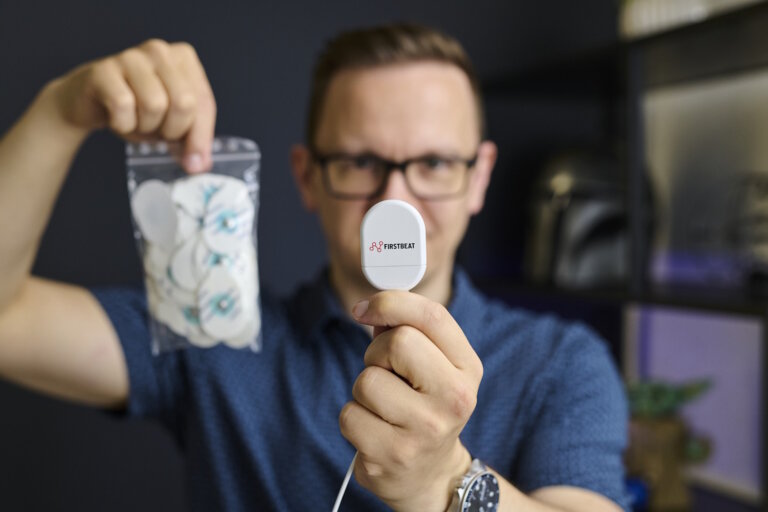
By continuously monitoring HRV along with heart rate, respiration rate, and movement, the sensor can distinguish between periods of stress, recovery, physical activity, and sleep. Advanced algorithms then interpret these signals to reveal how the body responds to daily demands, offering an objective view of physiological load and resilience. I tested one and shared my experience with it.
7) The year AI scribes break through
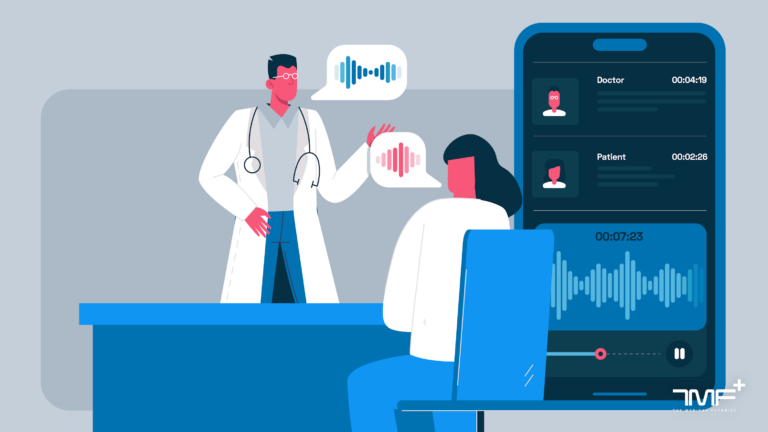
More and more health institutions share such stories about how AI scribes can help doctors focus fully on patients, improve visit summaries and reduce burnout. This is the promise of AI scribes: to reduce the administrative burden.
No matter what hurdles make their implementation hard, it still cannot be compared to physicians spending their precious time on administration. And it’s important that as the medical provider walks into an exam room, they let the patient know that they’re using a new note-taking tool that looks like any other app on a smartphone.
If consent and transparency are not part of the conversation, a lot of lawsuits will come to light. For example, a US medical practice started using AI scribes as part of a pilot to ease the administrative burden, and recently got sued because they “recorded conversations between doctors and their patients without written consent”.
8) Generative AI at pharma companies
This trend is based on a simple observation. Show me a pharma company that doesn’t use large language models to optimize workflows within the organization or generative AI in drug discovery. Then describe why they have lost their minds.
As proof of that, NVIDIA and Eli Lilly just announced the launch of a Co-Innovation AI Lab that will bring together a world-leading, multidisciplinary team of scientists, AI researchers and engineers to address the hardest problems in drug discovery. They will also pioneer robotics and physical AI to accelerate and scale medicine discovery and production.
My favorite kind of collaboration that I’ve been talking about for years: a pharma company teaming up with a tech giant, instead of looking at them as a competitor!
Expect similar news from other pharma companies; however, Lilly took the biggest step forward by working together with the leading tech giant in the AI race.
Trends I’m more cautious about
1) Earables having their momentum
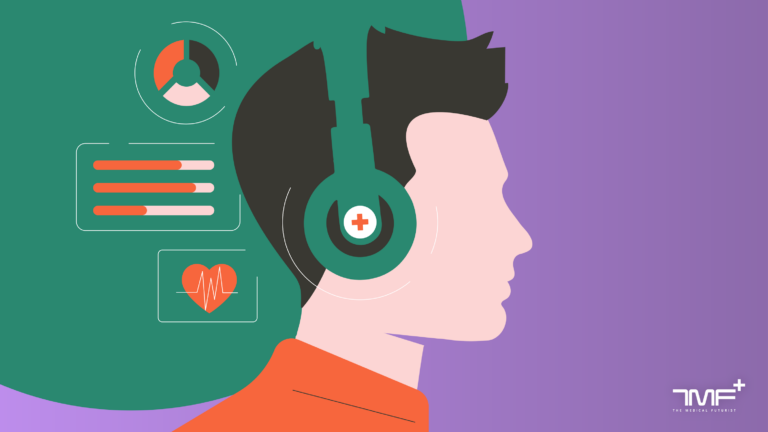
There are so many different types of wearables measuring health data and vital signs, that maybe hearing-related technologies have been left out of the conversations so far.
A comprehensive study of healthcare monitoring with earables analyzed how many things it’s possible today to measure or detect with devices put into our ears. The list is staggering: heart rate and heart rate variability and atrial fibrillation detection to blood pressure estimation, and tinnitus management.
2) AI getting into the practical patient journey
AI is no longer a distant promise in healthcare, but it has quietly become a companion at every step of the patient journey. From the moment someone checks a symptom at home to the way they’re triaged in an emergency department or guided through recovery after discharge, AI tools are weaving themselves into everyday care.
This transformation is less about robots replacing doctors and more about invisible digital helpers that translate reports, flag drug interactions, analyze scans, and even pick up subtle changes in a patient’s voice or vital signs. In this article, we explore how these technologies shape each stage of the patient experience — at home, on the road, in the hospital, and back home again.
But, if a patient cannot afford to use ChatGPT Pro or a skin checking app, will they suffer the disadvantages?
3) Has the time of medical tricorders finally come?
Think of the medical tricorder from Star Trek—a handheld marvel that turns uncertainty into clarity with a simple scan. It’s a decades-old concept and while some devices aimed at providing the benefits of combining multiple measurements in one device, they have failed.
However, we’re now witnessing the gradual shift from clinic-based testing to home-based diagnostics. I tested one device, BeamO, that might be built for that future.

Trends I don’t expect much from
1) Digital twins directly for consumers
The concept is amazing, but when you start using it in practice, the results will let you down. Recently, digital twins (AI‑powered, real‑time virtual replicas of individual patients) have emerged as one of the most transformative innovations in personalized medicine.
I tested such a service, and what I have learn along the way is that we might be in the phase where many companies will call their products digital twins, just like how many companies announced that they would be using machine learning, while in fact, it might have only been an Excel spreadsheet and a macro.
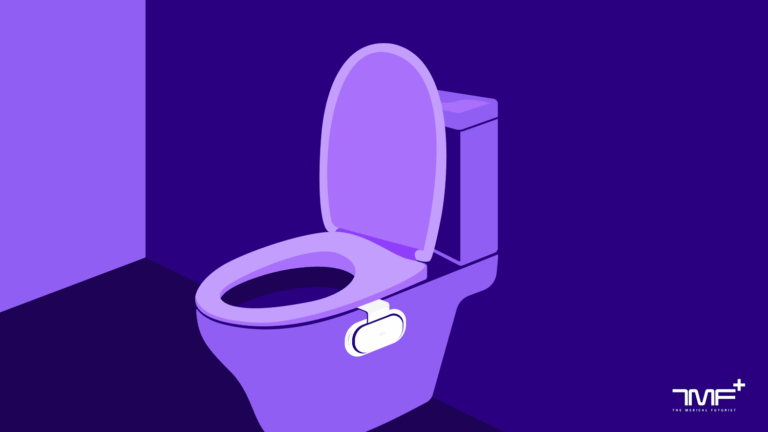
2) Digital health in our toilets
The technology behind smart toilets can provide people with greater visibility into the health of their internal organs and help them make informed decisions. But do we really want tech companies to invade our safest place on Earth?
This emerging trend might be apt for specific segments of the population, but it does raise newfound concerns.
3) Subscription-based wearables
I like the idea of buying a wearable device and benefiting from using it to improve my health. If I have to buy additional services to analyze more data, I cannot get to love the concept.
Still, it seems that companies developing health sensors or portable diagnostic devices are gradually seeing more value in subscription-based services than just purely selling their product.
See Eko, Whoop, Kardia or Withings as examples.
In the meantime, we at The Medical Futurist, will be here to analyze everything that matters in healthcare and medicine for you, even in 2026.
The post Top Digital Health And Healthcare AI Trends To Watch In 2026 appeared first on The Medical Futurist.