TIME – Read More
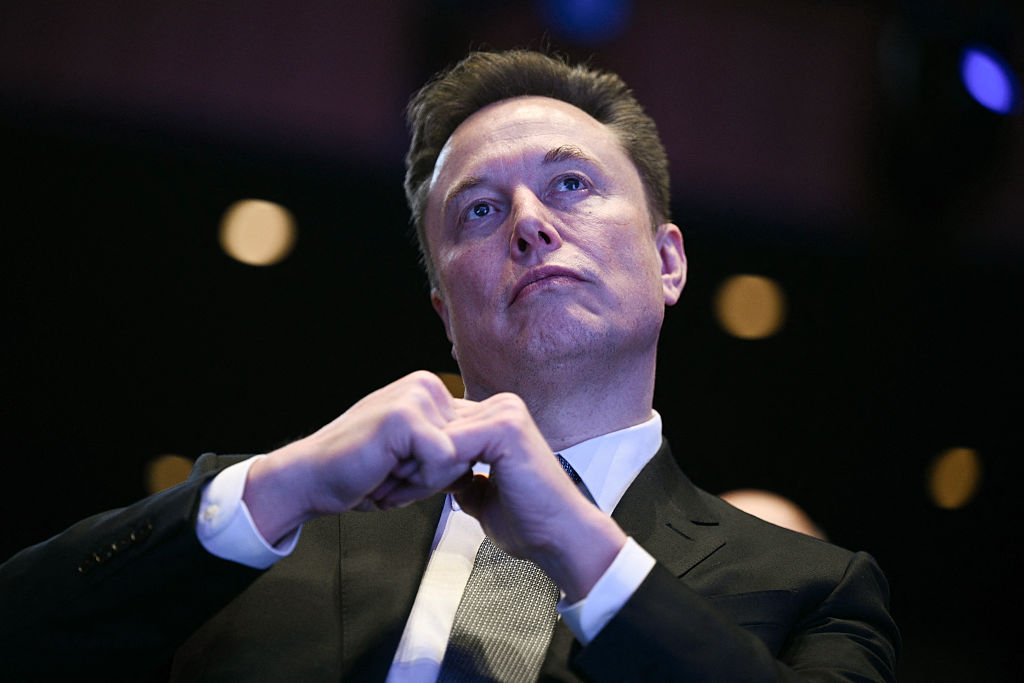
Elon Musk, the world’s richest man who also spent more than $250 million for President Donald Trump’s re-election campaign, said in May last year that he planned “a lot less” in political spending for future elections—including the upcoming midterms. But newly disclosed donations to Republican groups have since made him the biggest known donor ahead of the November elections.
For the 2026 election cycle, which began in January 2025, the Tesla and SpaceX CEO has already spent $366 million—of which more than $276 million went to Republican groups and his super PAC since July—according to new reporting by the New York Times and Reuters. Representatives for Musk gave the media outlets data on his political largess ahead of the Thursday deadline when many super PACs must disclose their third-quarter spending.
Of the $276 million, $158 million reportedly went to the Senate Leadership Fund, a super PAC tasked with helping Republicans maintain their majority in the chamber; it is one of the largest known political donations in history. Another $20 million went to the Congressional Leadership Fund, which was set up to re-elect House Republicans aligned with House Speaker Mike Johnson of Louisiana.
Musk’s America PAC, which was created for the 2024 elections, received over $76 million to try to reach Republican voters and boost turnout. America PAC is boosting Republican candidates in seven battleground states and nearly three dozen House races.
Other conservative groups also received funds from the U.S.’s most high-profile billionaire. The Lone Star Liberty PAC, which backs Texas Attorney General Ken Paxton’s campaign for the U.S. Senate, received $10 million. Paxton, a Trump-backed Republican, is in a tight race with Democratic state lawmaker James Talarico.
Another $10 million went to the Republican Governors Association, and $2 million to the Republican Attorneys General Association. The Times also reported that Musk has donated more money through groups that have not disclosed their donors.
Andrew Romeo, spokesman for America PAC, told the Times that the “robust investments have allowed the G.O.P. apparatus to get its message out so Republicans can have a fighting chance to defy history.”
Musk’s donations signal his commitment to the political right and improving his relationship with Trump and the GOP after a public falling out with the President last year and threat to create a third political party. Republicans are looking to defend their majorities in Congress this November, but the task has appeared much harder as Democrats have made major gains among voters disgruntled by Trump’s policies.
Musk’s evolving attitude toward political spending
Musk’s massive donations for the 2026 midterms are a far cry from his previously conservative approach to political spending, though his positions have changed over the years.
At a 2015 Vanity Fair event, Musk said he would “get involved in politics as little as possible,” adding that he spends only a nominal amount for his business interests. Federal Election Commission records show that in 2015, Musk donated $5,000 to Hillary Clinton’s campaign, and another $5,000 to the Democratic Congressional Campaign Committee.
But Musk shifted in 2017: his donations began to lean Republican, and he spent nearly seven times more on GOP campaigns than Democratic ones. In 2018, amid reports that he donated a large sum to a Republican House PAC, Musk posted on then-Twitter that he was “not a top donor to any political party.” Musk took over Twitter in 2022, reinstated Trump’s account, and, months later, rebranded it as X.
Since then, he’s continued to court the GOP through financing election efforts. During the 2024 election cycle, he created America PAC, though Musk denied reports at the time that he was donating as much as $45 million a month to boost Trump’s election campaign. He’s also targeted swing-state voters, even saying that he would give out a legally questionable $1 million prize to registered voters in a bid to boost turnout.
On an X livestream during the 2024 election, Musk said that America PAC “is going to keep going after this election, and prepare for the midterms and any intermediate elections.”
Musk then took a brief role in the Trump Administration as a special adviser to the President and led the so-called Department of Government Efficiency to reduce federal spending. He oversaw a government restructuring effort that disrupted services, eliminated hundreds of thousands of federal jobs, and led to numerous legal battles. As Musk officially stepped down in May 2025 amid a spat with Trump, he said that he thought he had “done enough” of political spending. But he included a caveat: “If I see a reason to do political spending in the future, I will do it. I do not currently see a reason.”
In 2025, Musk apparently saw a reason to channel more funds into political causes, namely midterm primary elections. He first threatened to help defeat lawmakers who voted for the Trump Administration’s gargantuan spending bill, vowing that he would help make them lose their primaries “if it is the last thing I do on this Earth.” Musk even suggested he would support Rep. Thomas Massie (R, Ky.), a vocal Trump critic, in his reelection campaign. (Massie would later lose the primary.)
The latest data on Musk’s spending isn’t surprising, given what’s at stake for him if Republicans lose.
House Democrats have called for probes into his companies’ government contracts that are worth tens of billions of dollars, as well as into his work running DOGE. He rejects accusations that his companies depend on those contracts: in an Oct. 2 post on X, Musk wrote that “roughly 90% of SpaceX’s revenue this year will be commercial” and that its government revenue for the last quarter of the year will be less than 5%. “SpaceX is FAR MORE commercial relative to the average company in America,” he said.
In a Bloomberg podcast published last month, New York Times reporter Maggie Haberman said that Democrats had privately told her they planned to subpoena Musk over DOGE if they gained the power to do so. House Democrats have had multiple unsuccessful attempts to subpoena him since Republicans repeatedly blocked them.