The Medical Futurist – Read More
There has been a lot of buzz around artificial intelligence (AI); and the healthcare field is no stranger. The promise of the technology range from addressing the shortage of healthcare providers to improving patient engagement in their care.
Among such promises, it might be challenging to identify the current uses of AI in healthcare. In order to better understand the upcoming potentials of the technology, it is important to understand its current state.
In this article, we put AI’s current potentials in perspective by sharing a collection of 8 examples where the technology already exists in practice.
1. Generating clinical notes during consultations
On average, physicians spend 16 minutes per patient encounter on electronic health records. Some of this documentation can be automated by AI technology to save hours for healthcare professionals and also reduce the risk of burnout.
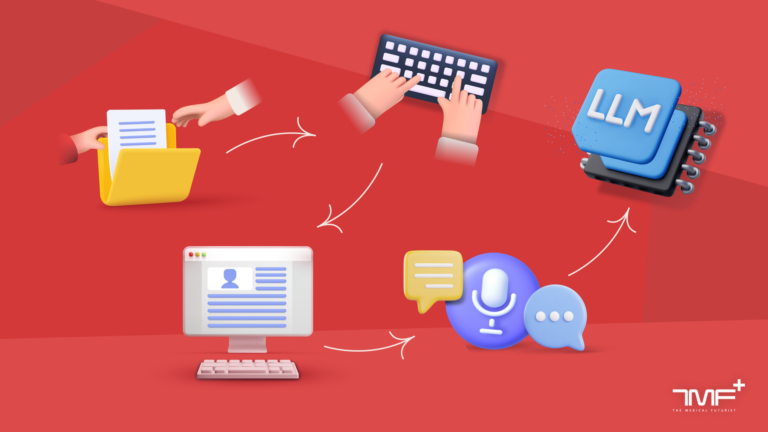
Real-time transcription and summarization tools like Nuance’s DAX Copilot, Lyrebird Health and Ambiance can automatically document patient encounters. By using speech recognition and natural language processing (NLP), they recognise clinical conversations, extract relevant information and generate summaries. In the case of DAX Copilot, 70% of users report improved work-life balance and a reduction in feeling of burnout.
However, there is the risk of hallucination with such tools. This can be a reason for significant concern in a healthcare setting and this highlights the need for the AI summary to be reviewed by humans.
2. Analysing radiology scans
Radiology is among the first medical fields to adopt AI in its midst. Companies like Aidoc and Qure.ai have developed AI tools that can identify abnormalities in radiology images with high accuracy.
The AI-driven diagnostics tool from Qure.ai processes around 10 million scans every year across more than 90 countries. In the Philippines, the technology has slashed the wait times for tuberculosis diagnosis from weeks to seconds.
Such tools aren’t favoured by every radiologists though, as recent studies have shown. AI can help some radiologists’ performance but it can also worsen that of others. This indicates the need to calibrate such tools to individual preference in order to maximise benefits.
3. Triaging patients
Triaging involves the initial assessment of patients’ condition to determine their priority of care and the adequate healthcare professional they need to consult. Traditionally, this has been undertaken on a first-come-first-served basis and can take several hours’ of patients’ time. AI tools can make triaging more efficient and equitable based on individual clinical needs.

Tools like Ada Health and Rapid Health’s Smart Triage use AI to assess symptoms and recommend appropriate care pathways. An independent study investigating the Smart Triage system found that the tool reduced patient waiting times by 73%, improved practice capacity and significantly streamlined appointments with sustainable staff working patterns.
4. Controlling assistive robots
In many instances, robots have been adopted as “medical staff” to handle monotonous tasks and AI can further assist in their tasks. The Medbot from Richtech Robotics and Unlimited Robotics’ Gary are robots that can assist in logistics tasks within healthcare institutions such as delivering medications and general supplies.
Medbot has an AI platform that helps the robot integrate in the workflow of organisations and streamline operations. Gary, which is also capable of disinfecting hospital rooms, has been found to increase nurses’ time with patients and improve staff productivity.
While such robots can optimise hospitals’ supply chain practices and save costs, they might not be accessible to every healthcare institution due to their upfront cost. Depending on hospital size and complexity, the cost to implement a system like Gary can Gary can range between $2–5 million.
5. Analysing pathology scans and samples
In recent years, the field of pathology has received an uplift with the advent of digital pathology. This replaces traditional microscope-based manual tissue analyses with digitised tissue sections that can be investigated on a computer screen. Such an approach can benefit from AI integration which can be used to apply advanced analytical methods.
Platforms like Paige and PathAI help pathologists detect cancer and other abnormalities with precision. With Paige’s AI model, pathologists have experienced up to 70% reduction in cancer detection errors. The tool can also reduce the time to diagnosis by 65.5%.
Researchers also favour the integration of AI in pathology but highlight the need to implement the technology under standardized usage recommendations and harmonisation with current information systems.
6. Detecting risk of falls using video cameras
Despite being preventable, falls are a common cause of injury, especially among the elderly. According to the CDC, 1 in 4 older adults report falling every year which, in some cases, can lead to death. Systems like the AI-powered Fall Detection solution by KamiCare and AVer MD720UIS camera monitor movement and assess fall risk in elderly patients. When a fall is detected, the system immediately alerts health teams to respond promptly and ensure patient safety.
As these solutions rely on a camera, privacy concerns arise. Measures that these companies have taken to ensure privacy include blurring faces to only detect movements.
7. Performing therapy as chatbots
Access to mental health services remains a challenge, with such services not reaching as many as 70% needing them. Furthermore, the WHO estimates that high-income countries have over 40 times more mental health workers than low-income countries.
To improve access to mental health services, companies have leveraged AI technology. Apps like Woebot and Wysa provide AI-driven cognitive behavioral therapy (CBT) support for patients in need of them. Woebot found that 75% of its users employ the app outside of traditional working hours or during weekends. This shows that access to mental health support can be improved when it is needed the most with such AI-based approaches.
It’s important to note that such apps function as support tools to be used in tandem with human support. They also won’t cover the whole range of therapies that professionals can provide but they do offer support in a field that is facing severe accessibility challenges.
8. Predicting patient deterioration in real-time
Early signs of patient deterioration can be subtle and challenging for clinical teams to identify. Up to 5% of hospitalized patients can experience signs of clinical deterioration but delays in adequate care can increase the length of stays or even mortality.
Tools like the Epic Deterioration Index use AI to monitor patient vitals and flag critical conditions in ICUs. In a Novant Health facility, the tool has helped reduce mortality by 22% and saved about 153 lives over 11 months.
Other similar options include eCART from AgileMD and PeraTrend from PeraHealth. Researchers have even found that eCART can perform better than Epic’s tool. We can expect such tools to become even more accurate at determining patients’ health status as their predicting prowess improves over time.
We hope that you have found these examples where AI is already used in practice insightful! We will be back with another article in this series that focuses on what AI can bring to healthcare in the near future. Stay tuned for it!
Written by Dr. Bertalan Meskó & Dr. Pranavsingh Dhunnoo
The post What AI Can Already Do In Healthcare In 8 Examples appeared first on The Medical Futurist.