
Latest Stories – Pain News Network – Read More
By Dr. Forest Tennant
In the 1970’s, when I first started treating intractable pain, my first cases were the bone pain of metastatic cancer, usually melanoma, breast, or prostate cancer. In those days, chemotherapy and radiation were just hopeful treatments, so pain management with opioids was essential.
Interestingly, a second group of patients that I treated had post-polio neuropathies – not unlike today’s neuropathies of HIV and Covid.
A third group had adhesive arachnoiditis (AA), which can be caused by the toxic dyes used in myelograms during epidural injections.
Clinically, the patients with AA had pain as severe as the bone cancer patients. This was a revolutionary finding since, in those days, metastatic bone cancer pain was believed to be the “worst” pain imaginable. Left untreated, persons afflicted with AA suffered the severest of pain, debilitation, wasting, a bed-bound state, and premature death.
Other pain conditions thought to be the “worst” include small fiber neuropathy, late-stage degenerative arthritis, Complex Regional Pain Syndrome (CRPS), trigeminal neuralgia, and Ehlers-Danlos Syndrome (EDS).
Today, most pain patients are dumped into a waste basket with only the diagnosis of “chronic pain” and given some assembly line symptomatic treatment.
Few pain clinics even attempt to determine the underlying cause of pain. Fibromyalgia is treated the same as AA or pudendal neuropathy. Dosages of opioids and other pain relievers are based on a pain scale, rather than a determination as to the underlying disease.
This sorry state has led some doctors to believe they will be prosecuted if they prescribe even low potency Norco for AA or CRPS. Another unfortunate consequence is that many parties now automatically view a “pain patient” as an addict with opioid use disorder.
Why AA Is So Painful
AA pain will occur when a spinal nerve is damaged and prohibits the normal flow of bioelectricity. Consequently, bioelectricity will accumulate around the nerve damage.
The cauda equina nerve roots are major carriers of bioelectricity. When they are damaged, clumped or scarred, there is substantial accumulation of bioelectricity and the pain is profound.
To keep bioelectricity and pain under control in AA, one needs a combination of medical and physical measures to prevent bioelectricity from accumulating.
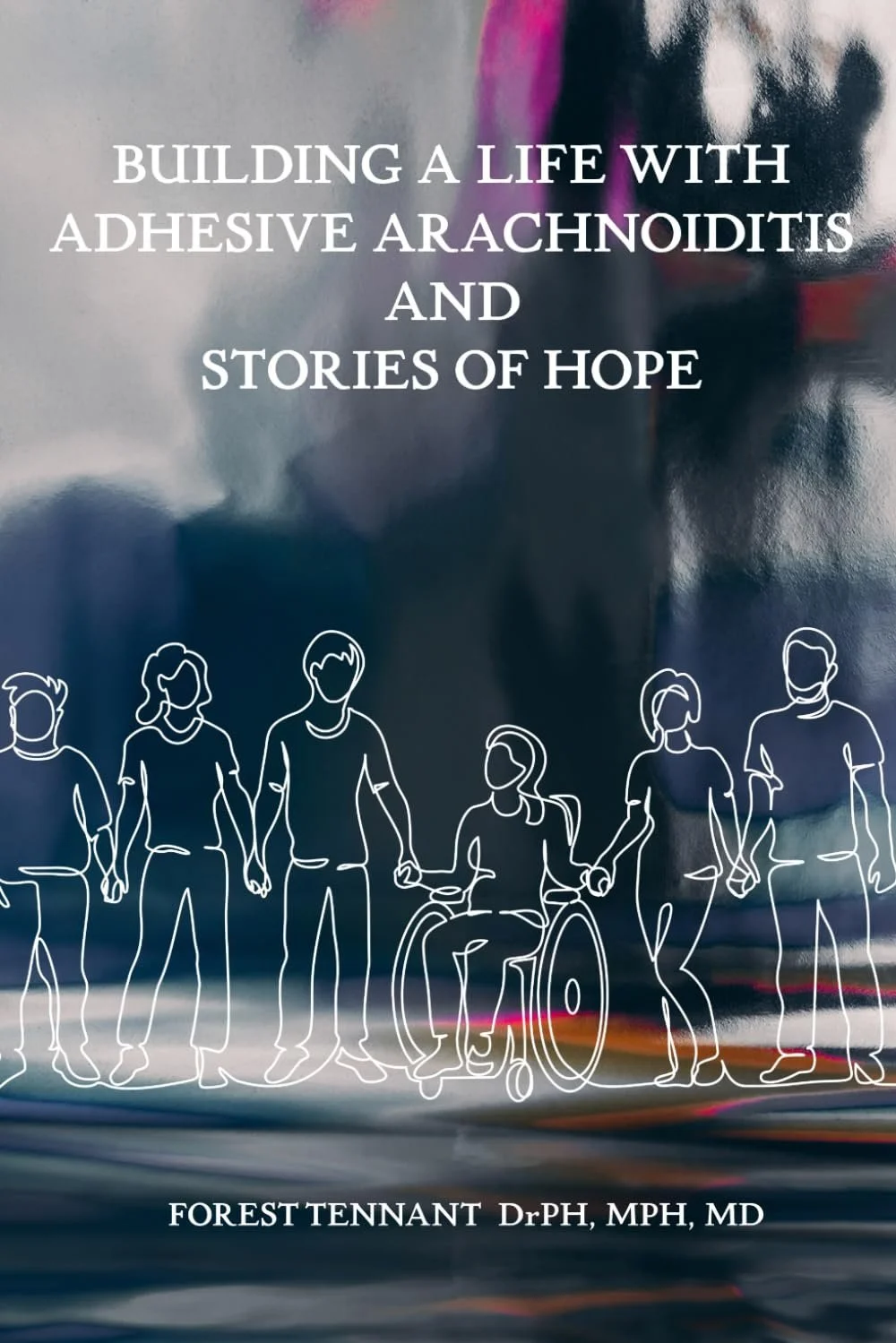
My latest book, “Building a Life With Adhesive Arachnoiditis and Stories of Hope,” describes these new clinical protocols and measures for the treatment of AA.
Patients, family members, and medical practitioners can all benefit from the book’s information on this rare disease. Included are chapters on medical management, pain control, restorative measures, physical therapies, and electromedical administration.
Stories from patients are also included in the book, not only to recognize the survivorship of the patients, but to share the measures they took to “build a life” with adhesive arachnoiditis.
Forest Tennant, MD, DrPH, is retired from clinical practice but continues his research on the treatment of intractable pain and arachnoiditis. Readers interested in learning more about his research should visit the Tennant Foundation’s website, Arachnoiditis Hope. You can subscribe to his research bulletins here.
The Tennant Foundation gives financial support to Pain News Network and sponsors PNN’s Patient Resources section.