HIT Consultant – Read More
What You Should Know
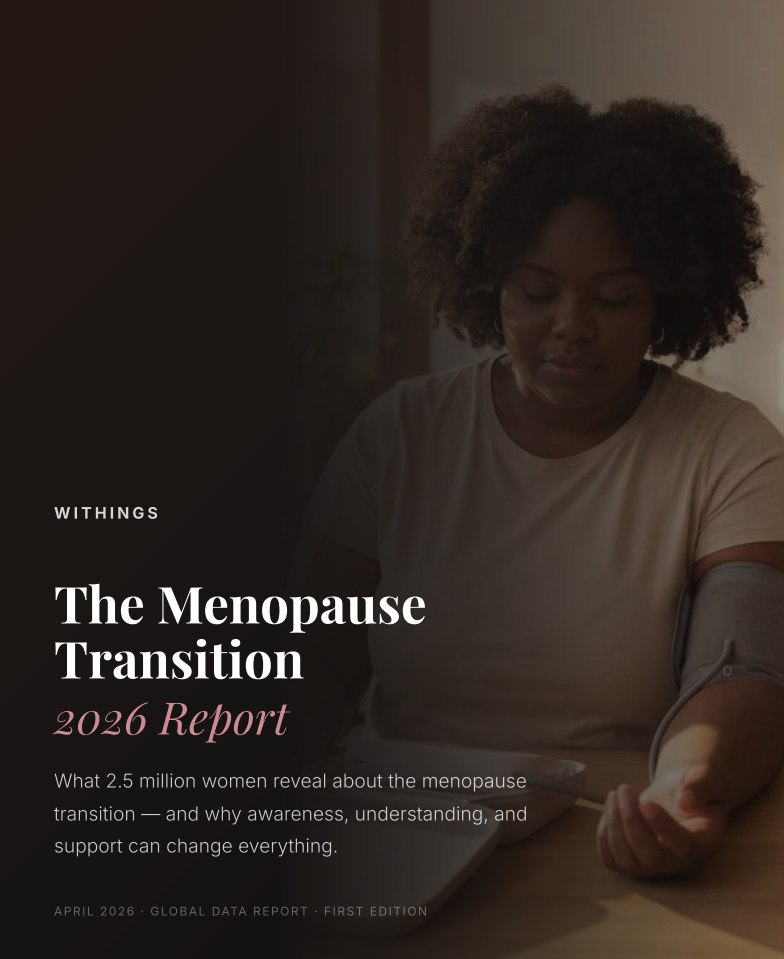
- New Withings report, The Menopause Transition 2026 analyzes real-world data from 2.5 million women across 11 countries to identify physiological shifts during the transition.
- Atrial Fibrillation (AFib) prevalence increases fourfold globally and 3.8x in the US between early reproductive years and late postmenopause.
- Heart Rate Variability (HRV), a marker of autonomic resilience, declines by 33% worldwide but only 17% in the US across the menopause stages.
- Arterial stiffness rises progressively by 27%, with Pulse Wave Velocity (PWV) approaching established cardiovascular risk thresholds.
- The steepest acceleration in cardiovascular risk markers occurs between Stage 4 and Stage 5, the years immediately following menopause.
For decades, menopause has been primarily viewed as a reproductive milestone. However, new large-scale data from connected health devices suggests it is actually a profound cardiovascular event. As estrogen—which promotes vasodilation and maintains healthy lipid profiles—declines, women lose critical autonomic and vascular protections. The result is a gradual convergence of women’s cardiovascular risk profiles with those of men.
Aline Criton, Chief Regulatory and Clinical Affairs Officer at Withings, notes that these findings reframe menopause as a “critical window for cardiovascular awareness and earlier intervention” because many of these shifts occur silently and earlier than expected.
The AFib Signal: Accelerating Risk Post-Menopause
Atrial Fibrillation (AFib) follows a steep trajectory as women move through the transition. In the US, prevalence climbs from 1.86% in early reproductive years to 7.0% by late postmenopause. Globally, the rise is even more pronounced, reaching 10.5% by Stage 6—a fourfold increase.
The report highlights that the risk accelerates most sharply in the postmenopause window (Stages 5 and 6), precisely when cardioprotective estrogen effects have been fully withdrawn. While men in the same age brackets still show higher absolute AFib rates, the female trajectory has historically been understudied, making these real-world findings essential for clinical awareness.
The HRV Paradox: Autonomic Resilience in the US
While American women in this dataset reported worse sleep scores and carried higher body fat than the global average, they demonstrated a unique form of autonomic resilience.
- Global HRV Decline: Median heart rate variability dropped from 43 ms to 29 ms, a 33% loss of autonomic adaptability.
- US HRV Decline: Median heart rate variability fell from 41 ms to 34 ms, a decline of only 17%.
This “HRV Paradox” suggests that while US women face higher traditional metabolic risks, their autonomic nervous systems maintain higher resilience than women worldwide. This may be influenced by factors like medication use, genetic diversity, or healthcare access that warrant further investigation.
Clinical “Translation” and Early Intervention
One of the most concerning findings is the Recognition Gap: 44.5% of women do not declare perimenopause in-app until age 50 or older, despite the fact that measurable physiological changes—such as rising visceral fat (+18%) and systolic blood pressure (+1.8 mmHg)—begin a decade earlier, in their early 40s.
Because nearly 70% of cardiovascular risk factors at menopause are modifiable through lifestyle interventions (such as resistance training to combat muscle loss and inward fat shifts), early awareness is critical. By tracking blood pressure trajectories and body composition over time—rather than relying on single, static readings—women and their doctors can act years before a clinical event occurs.
Report Background/Methodology
Cross-sectional analysis, Withings connected device users, United States, January 2025–March 2026. Reproductive stages defined by age-based proxies inspired by STRAW+10 (Stages of Reproductive Aging Workshop), not clinically confirmed: Stage 1 (30–39, Early Reproductive), Stage 2 (40–44, Late Reproductive), Stage 3 (45–49, Perimenopause), Stage 4 (50–52, Menopause), Stage 5 (53–59, Early Postmenopause), Stage 6 (60–65, Late Postmenopause). Minimum data thresholds applied per metric. All findings represent between-cohort differences, not individual trajectories. Subject to Withings user selection bias, device-specific populations, and bioimpedance estimation variance. Users declaring menopause excluded due to data quality. Withings users may not represent the general US population.
For more information about the report, visit https://www.withings.com/us/en/landing/menopause-transition