
MedTech Intelligence – Read More
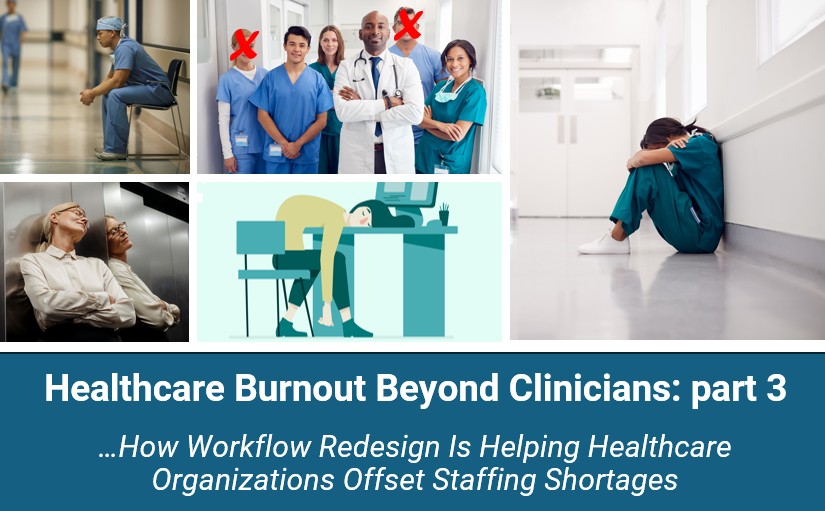
Clinician burnout dominates the conversation, but the administrators running simultaneous EHR migrations, AI pilots, CRM builds, and payer renegotiations are shouldering a transformation workload that most of the industry doesn’t see, and it’s taking a toll.
This 4-part series explores contributing factors – the operational risk of AI pilots that aren’t integrated with EHR infrastructure, how organizations are using workflow redesign to offset staffing shortages, or why contract negotiation has become a core strategic skill for healthcare administrators – and the shared burdens among healthcare leadership and their teams. Melissa Corneal, MBA, and Healthcare Administrator at Island Doctors in St. Augustine, Florida, discusses healthcare Burnout across the healthcare ecosystem and how MedTech is both, a solution and a problem.
Read part 3 of this series below…
Staffing shortages in healthcare are often framed as a workforce challenge, but increasingly they are exposing a more fundamental issue related to how work is structured and executed across the enterprise. While hiring remains an important part of the solution, it is becoming clear that workforce expansion alone is not sufficient to address the level of operational strain many organizations are experiencing today. The underlying pressure points are tied to workflows that were designed for a different scale of demand and have since evolved in fragmented ways, creating inefficiencies that are now more visible and more consequential in a constrained staffing environment.
From an administrative and operational perspective, the complexity of this challenge is most apparent in how work moves across functions such as patient access, electronic health records, revenue cycle, compliance, and coordination with external partners. These areas are deeply interconnected, yet the workflows that support them are often managed in silos, leading to frequent overlaps, duplicated effort, and delays caused by excessive handoffs. Under normal conditions, these inefficiencies may be absorbed over time, but when staffing levels are tight, they quickly become barriers to throughput and consistency. In this context, adding more people into the same structure can create diminishing returns, as it introduces additional coordination without addressing the root causes of inefficiency.
As a result, many organizations are shifting their focus toward workflow redesign as a more sustainable and effective response. Rather than approaching this as a large-scale transformation effort, leading organizations are taking a more targeted and practical view by examining how work actually progresses from one step to the next and identifying where unnecessary complexity can be reduced. The emphasis is on creating clearer pathways for execution, minimizing interruptions, and reducing dependencies that slow down decision-making and task completion, while still maintaining the standards of quality and accountability that healthcare delivery requires.
This shift is particularly evident in patient access and intake workflows, where multiple teams, including front desk operations, call centers, clinical staff, and administrative oversight, are involved in a process that is often fragmented by design. When each component operates independently, even minor inefficiencies can accumulate, resulting in delays that affect both patient experience and staff workload. Organizations that are making progress in this area are rethinking these workflows as integrated processes, aligning scheduling, eligibility verification, and documentation so that information is captured once and utilized consistently across the system. This approach reduces rework, limits unnecessary communication loops, and allows teams to operate with greater clarity and efficiency.

A similar pattern can be observed in revenue cycle operations, where traditional workflows often rely on manual intervention, disconnected systems, and reactive follow-up to resolve issues. In an environment where staffing is limited, this approach leads to persistent backlogs and delays in reimbursement, placing additional pressure on both financial performance and staff capacity. By redesigning these workflows, organizations are introducing more consistent data flow, leveraging automation where appropriate, and establishing clearer ownership across each stage of the process. This allows experienced staff to focus their attention on exceptions and complex cases rather than routine, repetitive tasks that can be standardized.
Electronic health record workflows also play a central role in this broader effort, as the EHR serves as the operational backbone for many administrative and clinical processes. Over time, however, the workflows surrounding the EHR have often evolved without a comprehensive reassessment, resulting in misalignment between systems and the processes they are intended to support. As organizations introduce additional technologies, including AI-enabled tools and CRM platforms, these gaps become more pronounced. Those that are seeing meaningful improvements are taking an end-to-end view, evaluating how systems interact within a unified workflow and ensuring that data flows seamlessly and actions are triggered in a coordinated manner, thereby reducing the need for manual intervention and follow-up.
Another important dimension of workflow redesign is the clarification of roles and responsibilities, particularly in environments where staffing shortages have led to a blending of functions over time. While this flexibility can help maintain operations in the short term, it often introduces ambiguity that results in duplicated work or missed tasks. Organizations that are approaching this effectively are aligning roles with the redesigned workflow, ensuring that responsibilities are assigned based on where they add the most value within the process. This not only improves accountability but also enables teams to operate more efficiently without increasing workload pressure.
It is also important to recognize that workflow redesign does not require large-scale disruption to deliver meaningful results. In many cases, incremental changes can have a significant cumulative impact, particularly when they address common sources of inefficiency. Improvements such as capturing more complete and accurate information at the outset of a process, reducing unnecessary approval layers for routine activities, and establishing clearer communication pathways between interdependent teams can collectively drive measurable gains in both efficiency and staff experience.
This approach reflects the broader reality that healthcare organizations are likely to continue facing staffing constraints for the foreseeable future, and that relying solely on hiring to resolve these challenges is neither practical nor sustainable. By focusing on how work is structured and executed, organizations are creating a more resilient operational model that allows them to manage demand effectively while maintaining quality, compliance, and financial performance.
For healthcare leaders, the implication is increasingly clear: operational resilience will depend not only on workforce levels, but on the degree to which workflows, systems, and roles are aligned to support efficient execution. Organizations that invest in this alignment are better positioned to navigate ongoing constraints and to deliver consistent performance in an environment that continues to grow in complexity.
Read Melissa’s full series Healthcare Burnout: It Reaches Well Beyond Clinicians
Part 1 – Burnout Reaches Well Beyond Clinicians
Part 2 – Positioning AI pilots for success within EHR-integrated environments
Part 3 – How Workflow Redesign Is Helping Healthcare Organizations Offset Staffing Shortages
Part 4 – Why Contract Negotiation Has Become a Core Strategic Skill for Healthcare Administrators
The post The Healthcare Burnout Backlash (pt 3): How Workflow Redesign Is Helping Healthcare Organizations Offset Staffing Shortages appeared first on MedTech Intelligence.